
Abstract:
Bloomberg reported on September 8, original title: China is building an AI future far away from big cities
Ulanqab is located on the grassland and does not look like a typical science and technology center city. But the city in China's Inner Mongolia Autonomous Region has been at the forefront of China's drive to move computing power from the crowded eastern metropolises to the western regions, which offer vast spaces and cheap green energy.
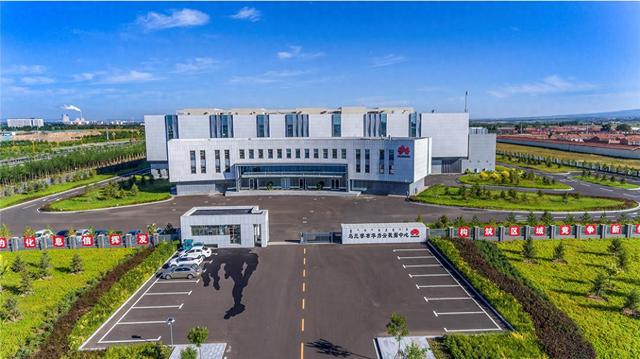
At lunchtime on a Friday, workers streamed from a data center construction site on the city's east side toward an intersection, a cluster of buildings that underscored the scale of the operation. It is located about 350 kilometers northwest of Beijing. Workers in hard hats gathered around a row of food trucks selling affordable meals, beer and cigarettes. “There are hundreds of workers every day, and they come in an endless stream,” said a female vendor surnamed Yin. She runs a stall at this busy intersection, selling chicken and tofu skin, among other things, to workers.
China will launch the national computing power project "East and West" in 2022. A new research report released by Bloomberg New Energy Finance on September 8 shows that more than half of China’s new and planned data center projects are located in the northern and northwest regions, including Inner Mongolia where Ulanqab is located. The report predicts that by 2028, these areas will surpass big cities such as Beijing and Shanghai to become China's largest source of computing power.
"Although the scale of existing local data center operations is relatively much smaller, northern and northwest China have become the main growth poles of a new round of development." Bloomberg New Energy Finance analysts wrote, "Lower-cost electricity, cooler weather, and more abundant land supply in these areas are attracting developers." According to Bloomberg's analysis, total power demand for China's data centers is expected to increase by 151% on the current basis by 2030. Currently, the Yangtze River Delta ranks at the top of Bloomberg's data center competitiveness rankings, but due to factors such as electricity costs, the scale of data centers in the region will be limited.
Before data centers were established, Ulanqab was mainly known as a summer resort. Today it is a burgeoning tech city, with empty lots stacked with aluminum racks, steel bars and wooden planks, cranes dotting the skyline, and workers working on the sparkling frames of tall buildings that will house even more powerful computing power in the future. The local development ambitions are clearly visible on the Chahar High-Tech Development Zone’s wide avenues named after global technology giants such as Apple and Huawei.
Inner Mongolia is only one of the eight national computing power hub nodes identified by China. Other hub nodes include Beijing-Tianjin-Hebei, Yangtze River Delta, Guangdong-Hong Kong-Macao Greater Bay Area, Chengdu-Chongqing, Guizhou, Gansu, and Ningxia. The move is seen as taking advantage of geospatial advantages across China. According to the plan, eastern cities will handle computing power needs that are extremely sensitive to delays, while work that can be completed farther away from users, such as cloud storage or model training, will be moved to the west. Designation as a national computing hub node will bring local investment and priority access to digital infrastructure opportunities. Currently, Ms. Yin and others are benefiting from the current data center construction boom. "Look around, how can this be bad?" she said. (Translated by Ding Ding)
Comments