
Abstract:
On October 2, local time, the website of the top international academic journal "Nature" reported an important recent achievement by Chinese scientists in the field of paleontology under the title "Amazing Fossils Reveal Dinosaurs' Unique Flight Evolution". Researchers conducted a multidisciplinary analysis of an extremely well-preserved feathered dinosaur fossil discovered in Liaoning and established a new genus and species of Microraptorinae - Norellraptor barsboldi.
The study found that although microraptors and birds can fly, their flight abilities evolved independently and were not inherited from a common ancestor.
This discovery has attracted much attention in the international academic community.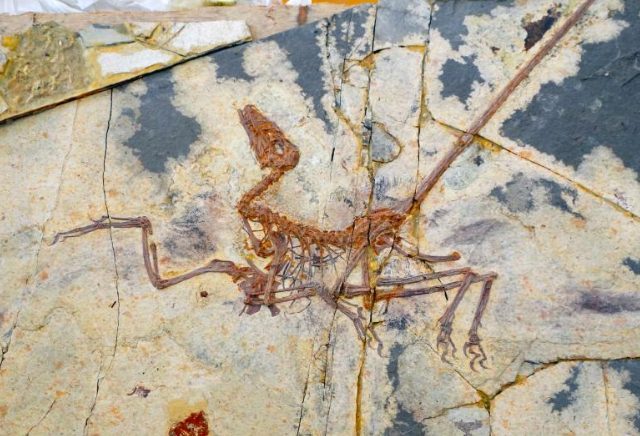
△Norrelosaurus fossil specimens collected by Hebei University of Geosciences Museum
From dominating the land to flying into the sky is a major turning point in the evolution from dinosaurs to birds. But
scientists are still debating how dinosaurs got their ability to fly.
One view is that flight actually appeared very early - the common ancestor of Anchiornithes (including troodontids, dromaeosaurs and true birds) may have been able to fly, and was later inherited, improved and carried forward by birds and some Anchiornithes respectively.
The flight ability of birds and some birds is "inherited".
Another view is that
Flight is not "inherited" but "invented" independently many times
: Different birds have each found their own way of flying during their respective evolutionary processes.In response to this problem, Wang Xuri, a researcher at the Institute of Geology of the Chinese Academy of Geological Sciences, cooperated with many domestic and foreign units such as Hebei University of Geosciences to conduct a systematic study of an extremely well-preserved microraptor fossil in Jianchang County, Huludao City, Liaoning Province, and achieved the following main results:
A new genus and species of Microraptorinae were established: Norysaurus barensis. The fossil has typical identification characteristics of Microraptorinae, and also has many combinations of characteristics that are different from other known members of Microraptorinae, supporting its status as a new genus and species.
Bone histological characteristics were determined: analysis showed that the animal was just three years old when it died.
Reconstructed the evolutionary model of flight characteristics: through comparative analysis of bone tissue characteristics and development patterns,
Confirmed that Microraptorinae and birds do not share a common origin of flight.
The flight abilities of the two evolved independently and were not inherited from a common ancestor.The relevant paper was published in the internationally renowned academic journal "Nature Communications" on September 29.
The "Nature" website reported that paleontologists welcomed the research.
Michael Pittman, a paleontologist at the Chinese University of Hong Kong, said: "This study provides important new evidence that further supports the hypothesis that the ability to fly evolved independently multiple times
. Microraptors and birds each evolved the ability to fly. ”Australian science news website "Science Express"
(ScienceAlert) also reported under the title "Revolutionary feathered dinosaur fossils discovered in China, indicating that flight evolved independently multiple times." The article proposes that both microraptors and birds have evolved the ability to fly, but did they inherit it from the same ancestor, or did they evolve independently?This study gives a clear answer: the ability to fly appeared independently at least twice. This is the so-called "convergent evolution"
——Two independent evolutionary branches reached similar results through completely different paths. Just like whales and fish: they both swim with fins, but their evolutionary paths are completely different.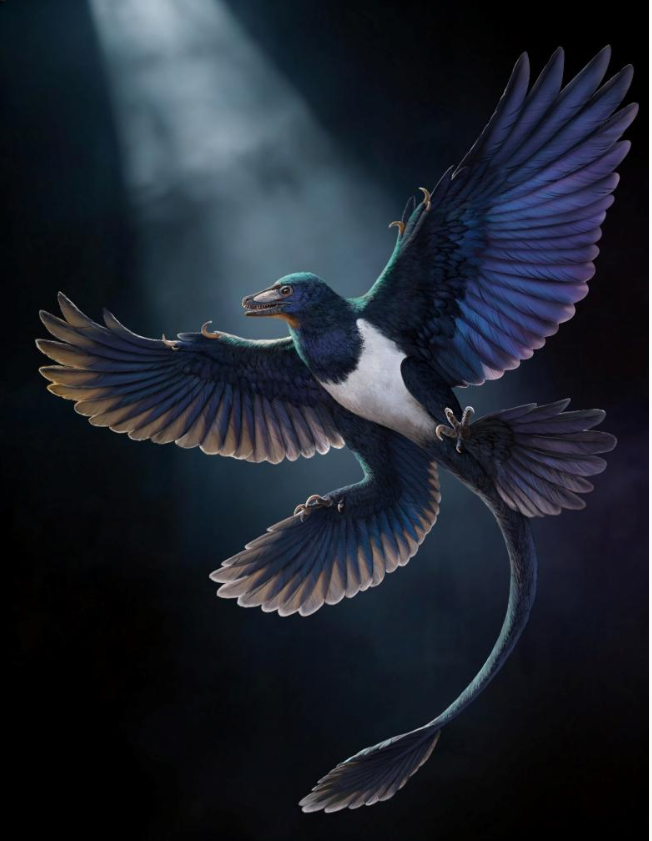
△Norrellone ecological restoration map (Zhao Chuang/drawing)
Flying is never an accidental success, but a tentative hand extended to the sky many times over a long period of time.
Comments