
Abstract:
US researchers have developed a new generation of facial health recognition model that can estimate a patient's biological age based on their facial features and directly assess the risk of death. The results of the study show that these facial images contain information related to the prognosis of cancer patients, which in the future may help doctors more comprehensively assess the patient's physical condition and provide a reference for the formulation of treatment plans.
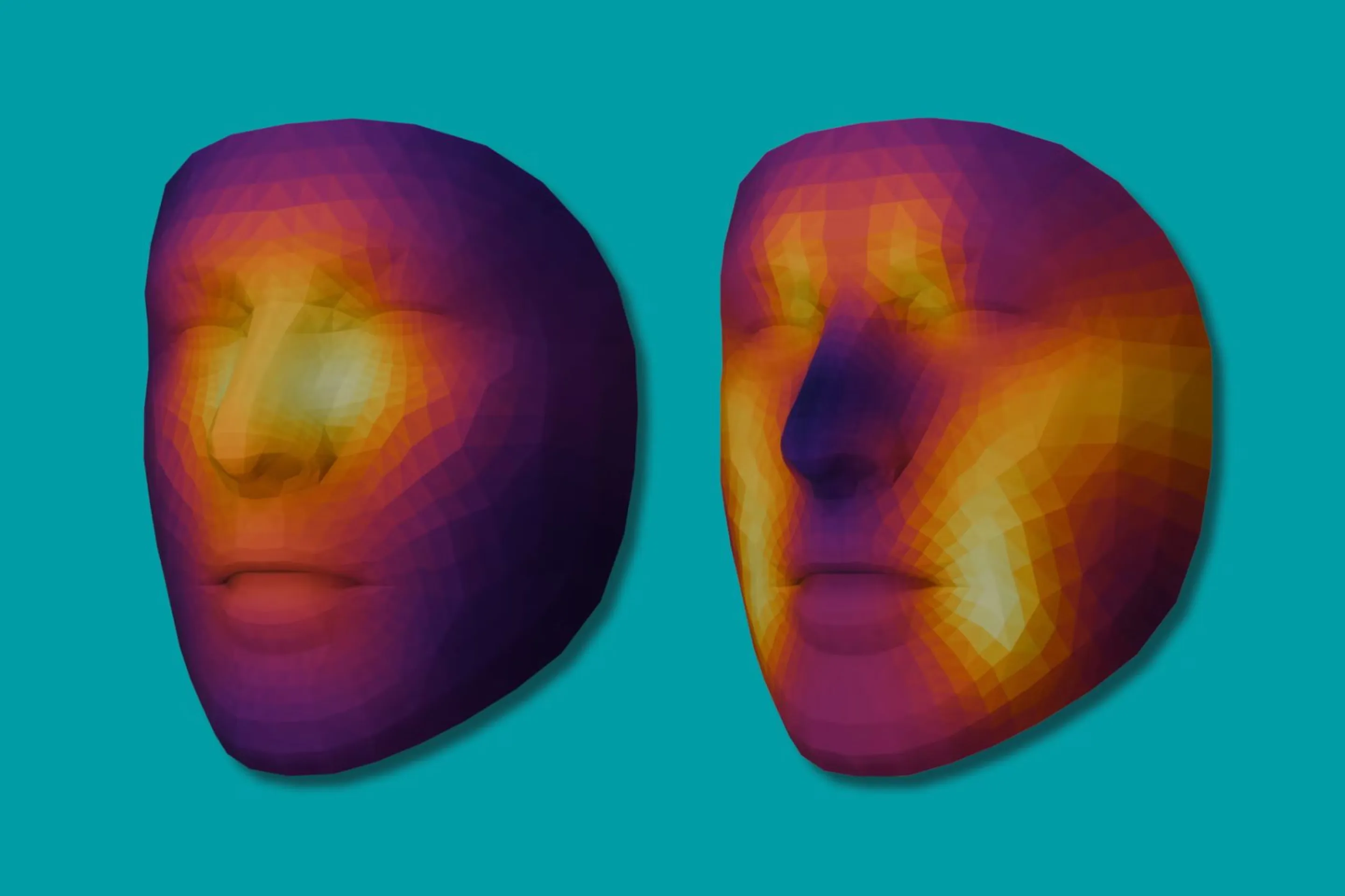
This basic artificial intelligence model called FAHR-Face was developed by a research team at Mass General Brigham, a comprehensive medical institution in Massachusetts, USA, and was trained using more than 40 million facial photos of different ages and ethnic groups. Based on this, the researchers developed two complementary analysis tools: FAHR-FaceAge and FAHR-FaceSurvival. The former estimates a person's biological age and uses this information to assist in assessing cancer prognosis; the latter predicts a cancer patient's survival risk directly from facial photos, rather than estimating age and then indirectly inferring the results.
The research team trained the model using clinical photos of cancer patients and their subsequent medical outcomes. Among them, FAHR-FaceSurvival used 34,363 facial photos of cancer patients for targeted training and was verified in an independent patient data set. In this way, the researchers hope to allow artificial intelligence to identify signals from facial images related to patients' physical conditions and survival outcomes.
Research results show that FAHR-FaceSurvival has strong risk discrimination ability. According to the model prediction results, about half of the patients in the highest 10% risk range of death died within 90 days; while the proportion of patients in the lowest 10% risk range was about 2%. If compared according to quartiles, the risk of death in the highest risk group was also significantly higher than that in the lowest risk group, with an adjusted hazard ratio of 3.23.
Researchers also found that the gap between the biological age estimated by artificial intelligence and the actual age is also related to the survival outcomes of cancer patients. Among patients who received radiation therapy, those whose faces looked at least five years older than their actual age had a 21 percent higher risk of death during an average follow-up of about four years. Those whose faces looked at least five years younger than their actual age had a 17 percent lower risk of death.
This does not mean that a person who looks younger is necessarily better at fighting cancer. Biological age in the study is a metric estimated by artificial intelligence based on appearance and is not a direct measure of cellular aging, organ function or immune system status. It likely reflects a combination of body exertion, muscle and soft tissue changes, and other health-related factors, but exactly which specific physiological signals the model identifies is still not fully understood.
By analyzing the attention area of the model, the researchers found that the facial locations that the two tools focused on were different. FAHR-FaceAge mainly analyzes the nasolabial folds from the nose to the corners of the mouth, forehead and temple areas; FAHR-FaceSurvival focuses more on under the eyes and around the bridge of the nose. This suggests that predicting biological age and predicting survival risk may rely on different facial information.
The research team believes that this technology may in the future help doctors better assess a patient's physical reserve and frailty before deciding whether to use surgery, radiation therapy or systemic drug treatment. For patients who are older, have complex medical conditions, or lack complete traditional biomarker data, facial photo analysis is expected to become a low-cost, easy-to-operate auxiliary assessment method.
The study also found that there is a link between lifestyle and the biological age of the face, with smoking being the most prominent link and faces appearing older. Excessive alcohol consumption and drug use are also associated with similar phenomena. The researchers also said that FAHR-FaceAge showed certain stability under different shooting angles, lighting, expressions and makeup conditions, and maintained relatively stable estimation results after most plastic surgeries tested, but rhinoplasty surgery would bring about smaller changes.
Still, researchers and outside experts stress that the technology cannot yet directly replace a doctor's judgment. The accuracy of a model's predictions does not automatically mean that it improves actual treatment outcomes. Future research still needs to confirm whether adding facial analysis results to the medical history, examination data and physical assessment already known by doctors can further improve prediction accuracy and truly help patients achieve better treatment results.
In addition, the patient groups used for model training are mainly from high-income countries. How to ensure that it is suitable for different ethnic groups, age groups and medical environments is still an important issue. Since facial features can be related to ethnic background and pre-existing medical conditions, the AI may also inherit biases in the training data. Therefore, more extensive independent validation and prospective clinical studies are needed before large-scale application.
Relevant research results have been published in "The Lancet Digital Health". The research team hopes that in the future, more quantifiable health indicators can be extracted from an ordinary photo, so that facial analysis can become a supplementary tool for clinical risk assessment, rather than determining a patient's treatment opportunities based on appearance alone.
Comments