
Abstract:
iFixit, a well-known repair organization, recently completed a comprehensive disassembly of Apple’s first foldable screen mobile phone, iPhone Duo. After analyzing the internal structure of the device in detail, the researchers not only demonstrated Apple’s design ideas for thinness and repairability, but also found some clues that may be related to the internal screen damage issues recently reported by users.
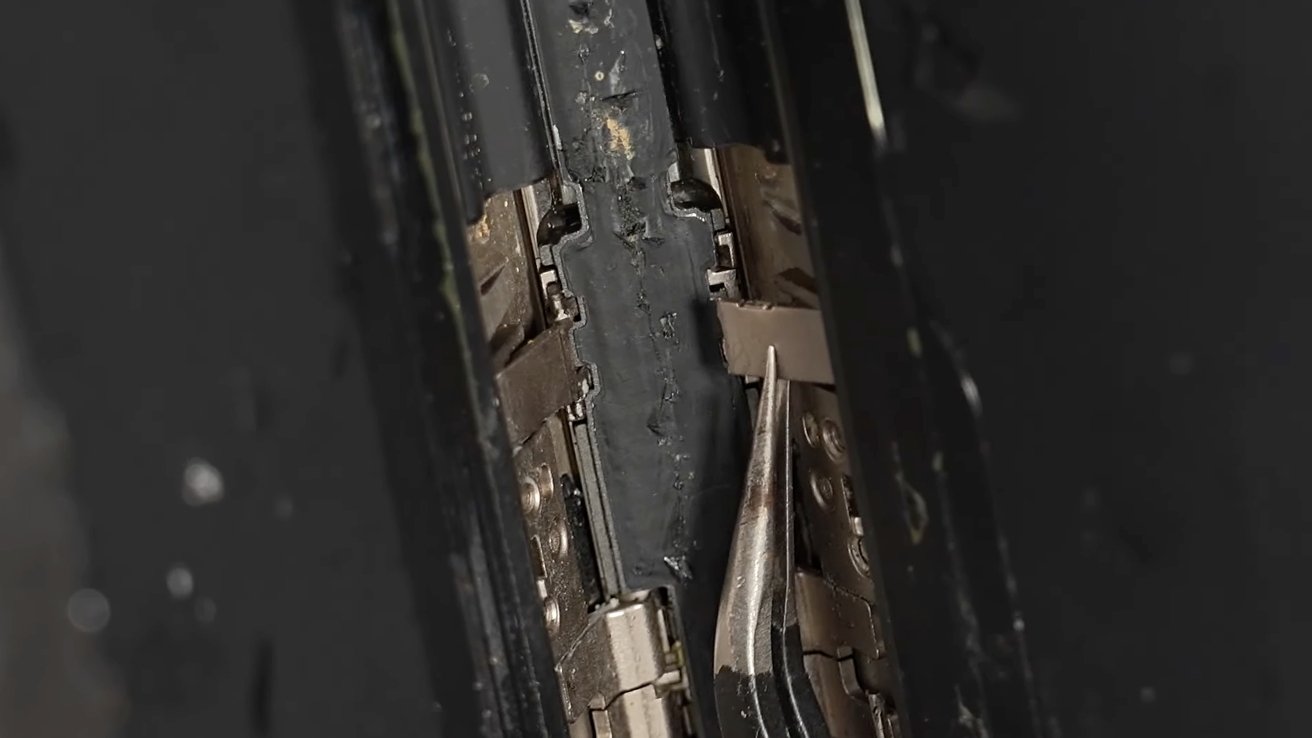
Before the disassembly began, iFixit first conducted a fluorescent dust test on the iPhone Duo to evaluate the device’s dust resistance. Although the phone has IP68 dust-proof and waterproof certification, tests showed that a small amount of dust still entered the USB-C interface, speaker grille and frame gaps. Some of these particles entered the hinge area and caused the hinge to make obvious abnormal noise when opening and closing. However, compared with competing products such as Samsung Galaxy Z Fold8 and Google Pixel Fold series, the amount of dust entering the hinge is significantly less.
The researchers said that the overall performance of Apple's hinge design is encouraging, but it still cannot completely prevent tiny particles from entering the moving parts, so it is not recommended that users frequently use the device in high-dust environments such as beaches. Previous durability tests have shown that dust entering the hinge may affect the normal operation of the internal magnetic closure structure.
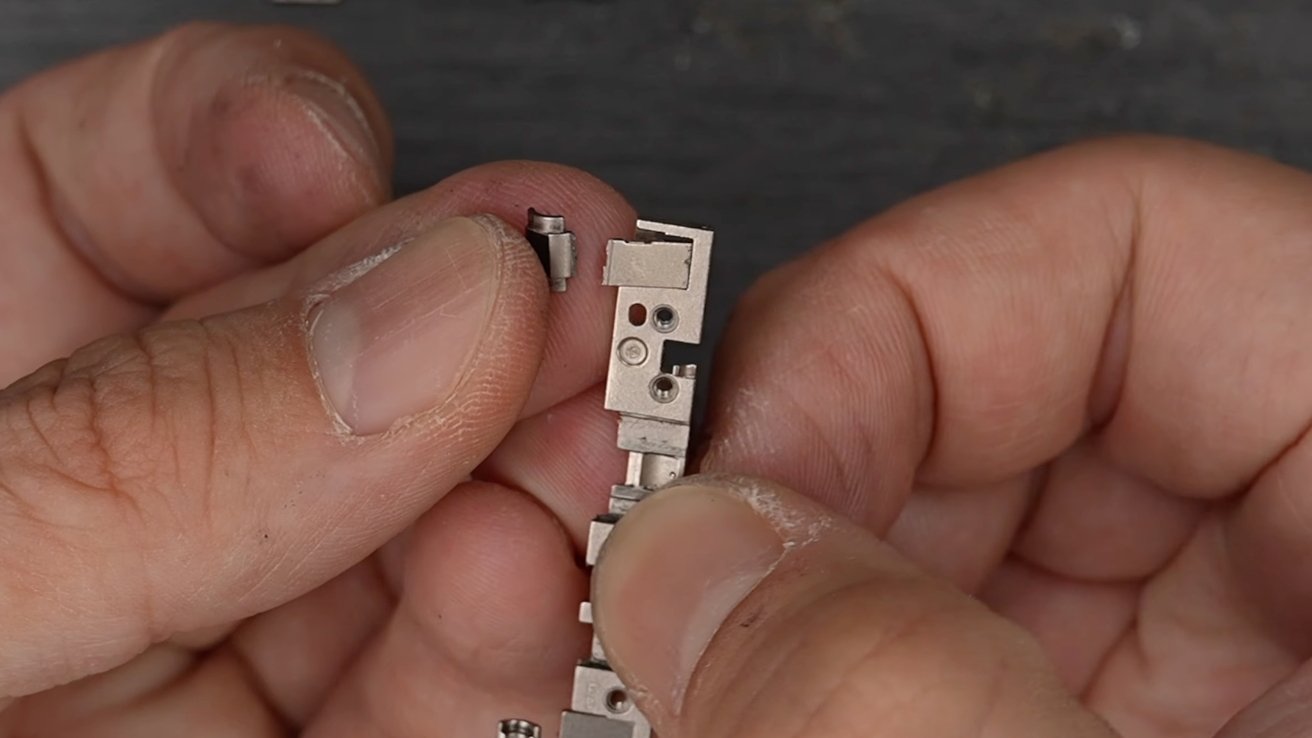
During the disassembly process, iFixit confirmed that Apple uses a complex waterdrop hinge structure on the iPhone Duo. The system consists of gears, springs and multiple linked metal components, which can reserve bending space for the flexible display when the phone is folded, thereby reducing the mechanical pressure on the screen. At the same time, Apple also uses special guide mechanisms to control the movement trajectories of each component to reduce fatigue damage caused by long-term opening and closing.
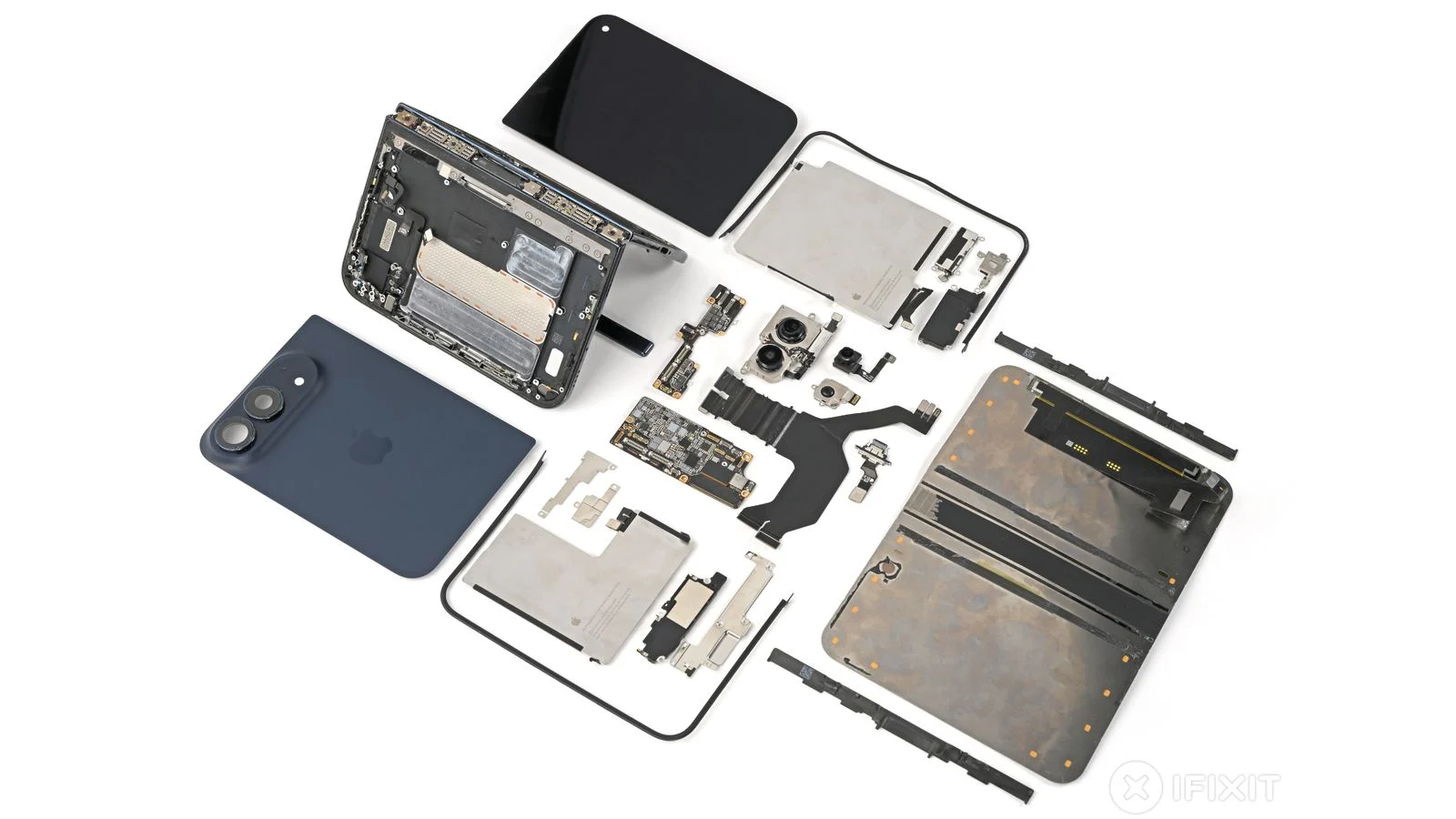
In the display part, Apple designed a screen system composed of ten layers for iPhone Duo. The outermost layer is covered with a special nano-textured protective layer to weaken reflections and visually reduce the presence of creases. iFixit found through microscope observation that the surface of this layer of material is covered with fine convex structures, which can effectively disperse light, making the creases look less obvious.
Apple has also specially designed the protective layer repair. Teardown crews found that the protective layer can be peeled off the screen surface relatively easily, allowing for low-cost replacement in the future. However, Apple does not recommend that users remove this layer of structure by themselves.
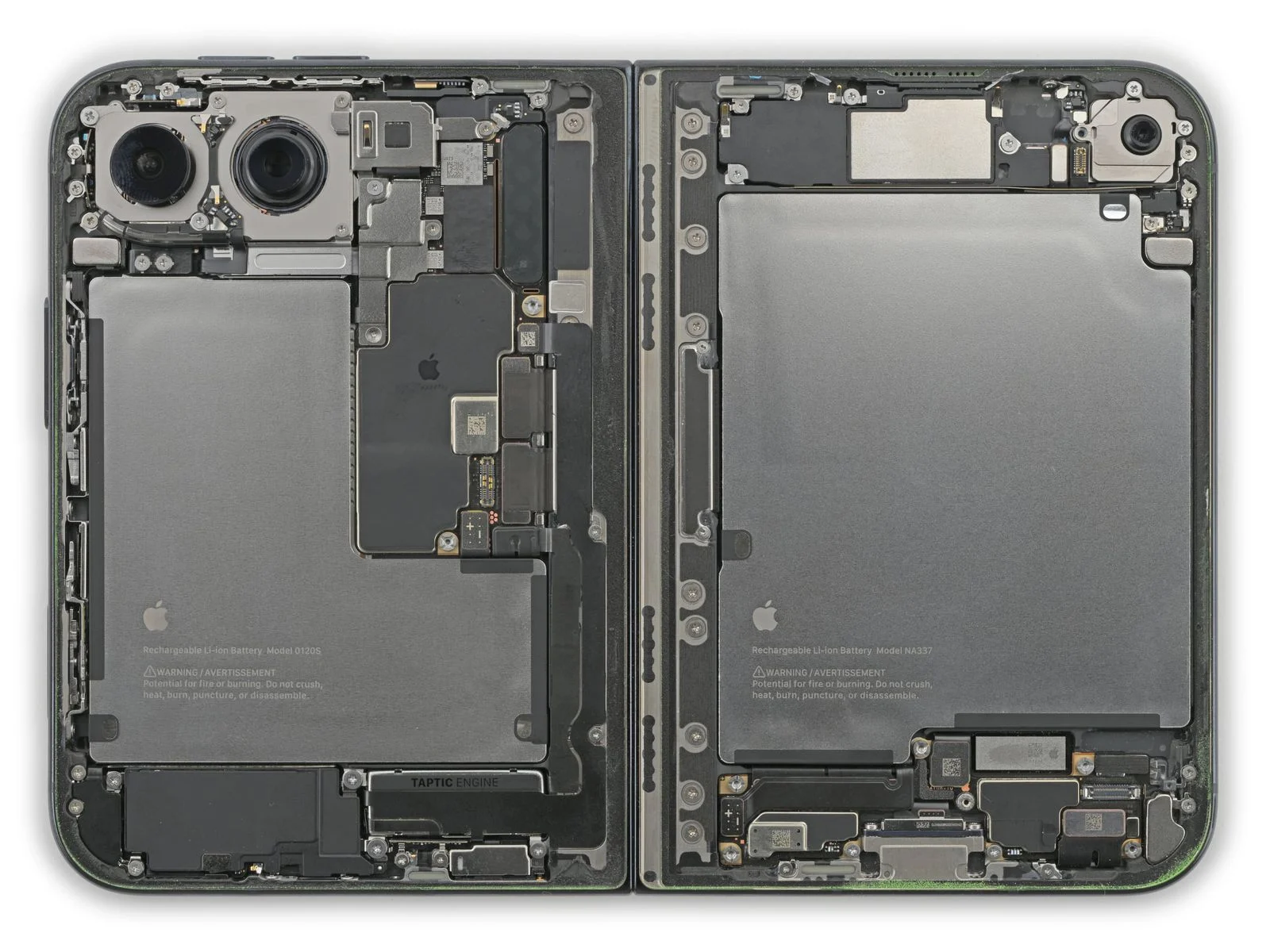
In terms of internal structure, iPhone Duo becomes the first iPhone to adopt a single-layer motherboard design since iPhone 8. Apple has abandoned the stacked motherboard solution that has been common in recent years to reduce the thickness of the fuselage and free up more internal space for the folding structure.
The battery part inherits the repairable design promoted by Apple in recent years. The device adopts a current-release battery adhesive fixation solution, which only needs to apply a specific current to weaken the adhesive strength, greatly simplifying the battery removal process. iFixit even rated it as one of the best battery replacement solutions for foldable screen phones.
In addition, the external screen is relatively easy to disassemble, and a large number of internal components can be repaired through the direction of the external screen. Although the inner screen module still needs to remove a large amount of adhesive layer to take it out, the overall structure is significantly better than most existing folding screen products. Based on the disassembly results, iFixit gave iPhone Duo one of the highest repairability ratings in the field of foldable screen mobile phones.
What has attracted the most attention from the outside world is the internal screen damage problem that some users have recently experienced. Since the launch of the product, a small number of users have reported hearing abnormal noises during the normal opening and closing process, followed by bright lines, black lines, or partial display failure in the center of the screen.
After analysis, iFixit believes that the problem may not necessarily come from the breakage of the screen glass itself. Pressure concentration, dust particles entering the hinge, stress accumulation caused by long-term bending, production tolerance deviations, and even internal connection wiring failures may cause similar failures.
The researchers specifically pointed out that most failure cases occurred near the same location. This area is also close to the hinge support structure, the flexible connection cable channels that span the sides of the fuselage, and the intersection of multiple structural edges. Due to the complex mechanical changes here, stress concentration may occur during the repeated folding process, thereby increasing the risk of damage to the display system.
However, iFixit also emphasized that there is currently no evidence that all devices have the same problem. The number of existing failure cases is still limited, so it is not yet possible to determine whether this is a general design flaw or a production issue in individual batches. As more devices are put on the market, it remains to be seen whether Apple needs to adjust the relevant structure.
Comments