
Abstract:
For a long time, the paleontological community has generally believed that early tetrapods separated their heads from shoulders and evolved independent necks in order to allow their heads to rotate more freely, thereby more effectively foraging and avoiding predators in water or on land. However, a new study challenges this hypothesis that has been popular for decades: the earliest necks were actually quite stiff, giving the head very limited room for movement.
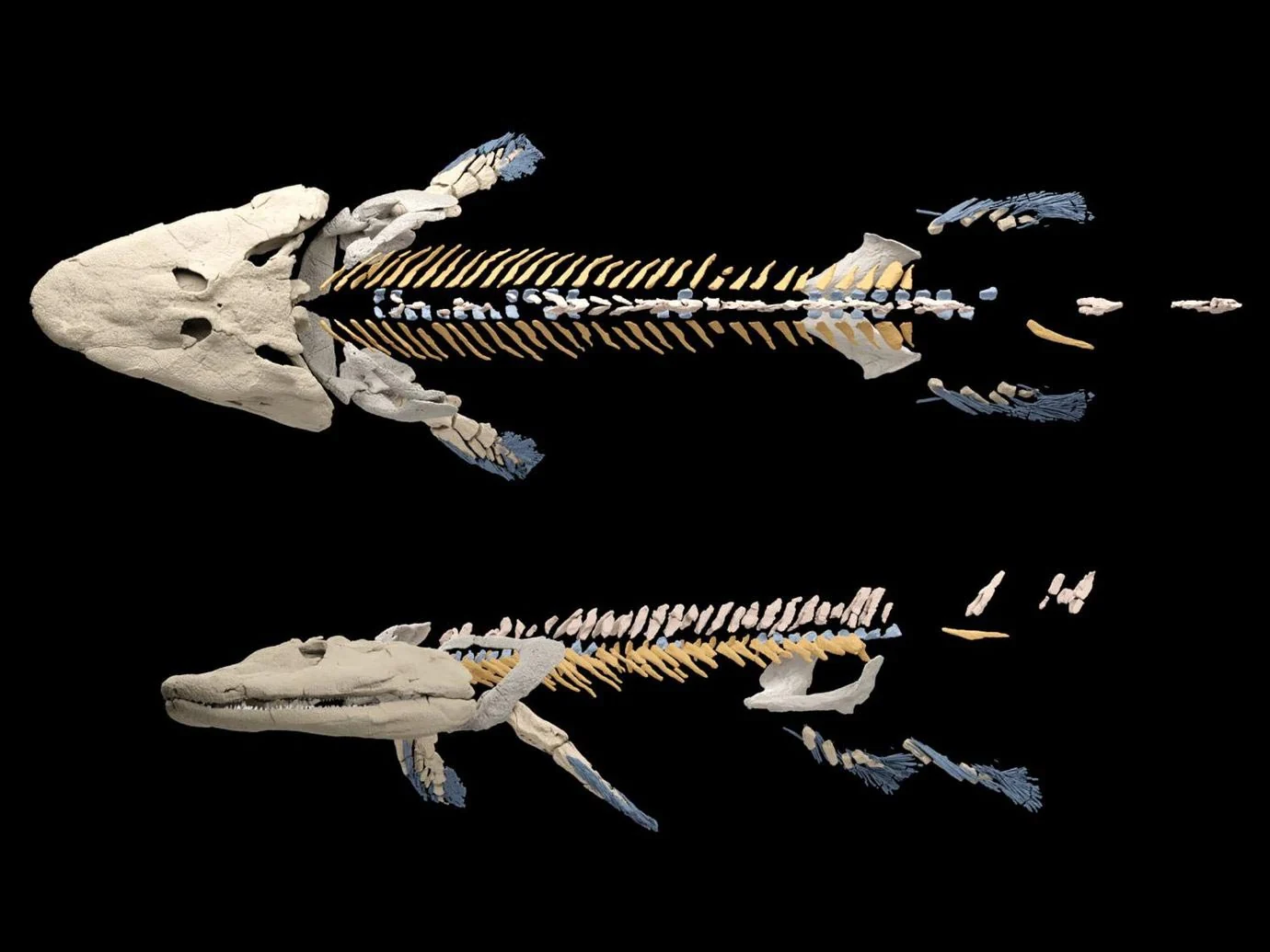
In fish, the straps are attached directly to the skull, so the fish can only turn its entire body if it wants to look left or right. About 380 million years ago, some animals that were transitioning from water to land began to grow separate necks from their bodies. But new research shows that this structural change did not give their heads much freedom of movement. The study combined new fossil evidence with modeling of mechanical tests on living fish, showing that these early necks remained stiff. This international study was conducted by Tom Stewart, Assistant Professor of Biology at Pennsylvania State University, and the results were published in the journal Nature on October 14.
The Devonian period is about 420 million to 360 million years ago. Fossils from this period record many animals that have both aquatic characteristics and characteristics related to terrestrial life. Some of them had thick fins that may have been strong enough to support their body weight, allowing them to prop themselves up in shallow water or propel themselves along the bottom; at the same time, clearly differentiated necks also began to appear in these transitional fish.
Stewart said this is a very interesting period in Earth's history, when the first forests are forming and the Earth is undergoing dramatic reorganization. Understanding exactly when and how our lineage made the transition from water to land, and which anatomical systems changed, is an important part of this history. Interestingly, many of the changes that occurred in bones about 380 million years ago are still reflected in our own bodies today.
This type of transitional fish includes Tiktaalik, whose fossils were found on Ellesmere Island in the Arctic Circle in Nunavut, Canada. Stewart said this batch of material is important because Tiktaalik is one of the closest relatives to limbed vertebrates, and it helps us reconstruct many of the intermediate steps in the transition to life on land, such as the switch from sucking in the water to biting on land, and from swimming to walking.
For the ancestors of tetrapods (vertebrates with four limbs), being able to look down or to the sides may have helped them find food and avoid predators in shallow water or on land. The scientists therefore reasoned that independent head movement might be of greater value in such an environment than in deep water. Stewart said Tiktaalik was first described in 2006, and for decades it has been reasonably assumed that this separation of the head and shoulders must have allowed the head to move more freely. Therefore, the hypothesis that "neck mobility is the evolutionary driving force for this change in the body structure of tetrapods" has been dominant, at least until now.
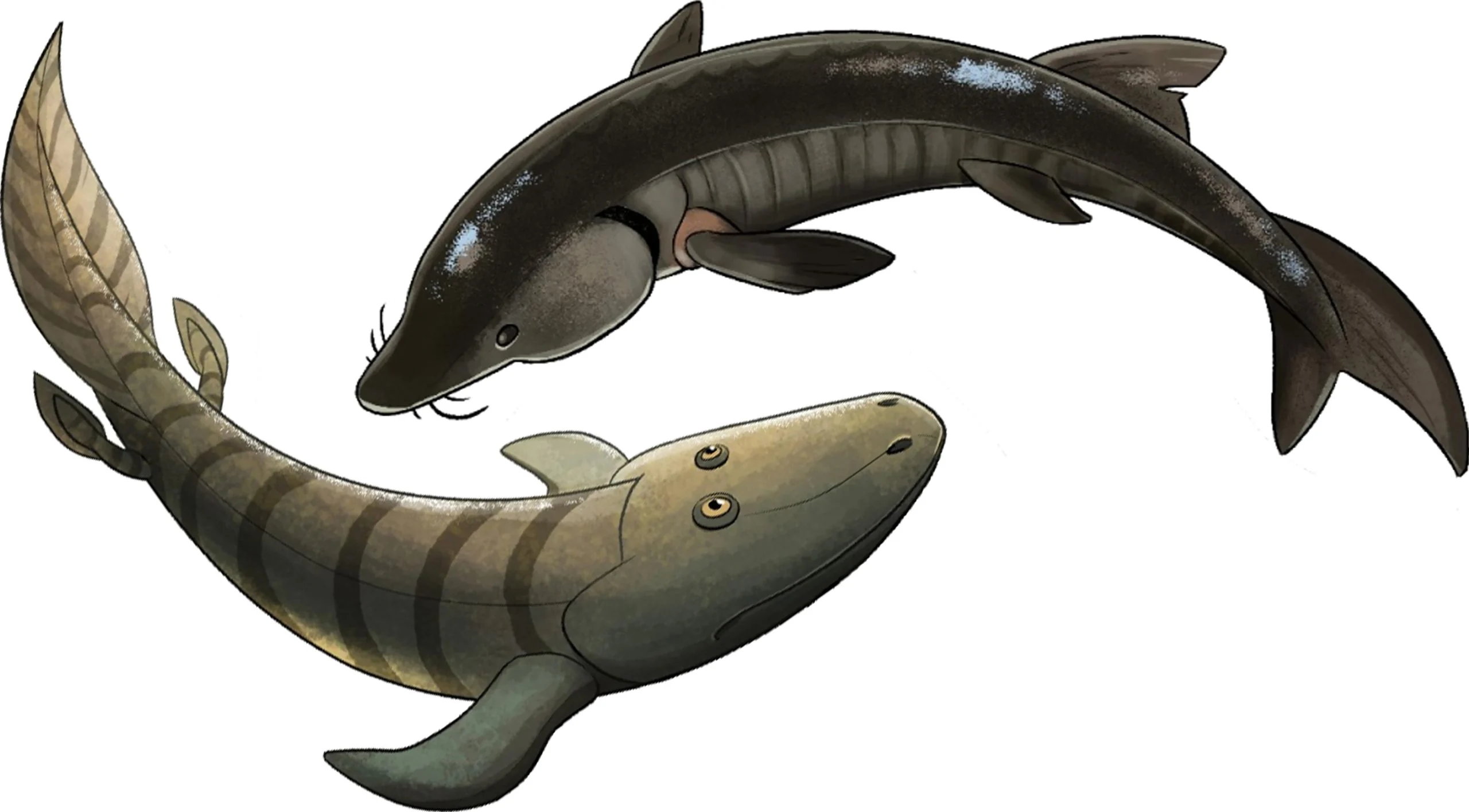
To test this explanation, one must reconstruct a spine that is different from that of most vertebrates today. Early tetrapods and their relatives had a rod-like tissue called a notochord that ran the entire length of their spines; their vertebrae were very small, arranged around this giant mass of soft tissue, and their mechanical behavior was very different from the joints between the vertebrae in modern animals. Stewart explains that the spines of fish undergoing these changes are mostly made of soft tissue, which is not as easily preserved in fossils as bones. In this case, modern animals can be used as a reference to the past, just as living birds help us understand extinct dinosaurs.
Spines built around a notochord are rare today, but were once common throughout the history of life. The sturgeon, a distantly related fish sometimes called a "living fossil" because of its original features, still retains this spine, making it a useful subject for studying mechanical properties missing from the fossil. "We want to understand how these early four-legged animals lived and how that was reflected in changes to their bodies," Stewart said. It is very difficult to reconstruct where an animal lives, how it moves and what its behavior is. What makes this study noteworthy is that it combines fossil data with studies of living animals to reconstruct what the anatomical changes we see mean for their behavior from a mechanical and functional perspective.
The researchers measured the stiffness of the notochord of modern sturgeons and then applied these material properties to neck models of early tetrapods and transitional relatives such as Tiktaalik to test whether separating the shoulders from the skull would actually allow the head to move freely given the existing spinal structure. Dana Konessel, the paper's first author and a postdoctoral researcher at Uppsala University in Sweden, said she conducted this study to find out how much impact this anatomical change had on these animals. The spine structure of sturgeons is similar to that of early tetrapods, but it does not appear to be particularly rigid, so she was surprised to find that almost all such animals lack significant head mobility after modeling.
These estimates only take into account the spine itself. Muscles, skin, and the bones embedded in the skin of many of these animals may further restrict movement, meaning that the range of motion of a real animal's neck may be smaller than the model suggests. These animals raise their heads no more than fish levels, and sometimes less, and the kind of head twisting we can do when we shake our heads is not possible in these animals, Konessel said.
Since the head gained little room for additional movement, the researchers suggest that the emergence of an independent neck is more likely the result of anatomical changes associated with locomotion with the forelimbs, with greater flexibility more of a later benefit than an advantage that initially prompted the separation of the head and shoulders. "We know that tetrapods did eventually acquire greater neck mobility, which was clearly ultimately advantageous, but early tetrapods were not able to enjoy this advantage due to anatomical constraints," Konessel said.
The paper is titled "Modeling Neck Mobility in Early Tetrapods Using Existing Analogies" and the authors include Dana E. Cornesel, Cassandra M. Donatelli, Han Linfang, Thomas A. Stewart, Andrew L. Traynor, Benjamin K. A. Otto, Marcos Martinez, Tetsuo Miyashita, Emily M. Standen, and Hilary C. Martin. The research was supported by a Steven Cohen Student Research Award from the Society of Vertebrate Paleontology and funding from the Natural Sciences and Engineering Research Council of Canada.
Comments