
Abstract:
Coming home to a four-legged furry friend with a wagging tail can relieve the stress that has built up throughout the day. Since ancient times, humans have found comfort in petting dogs. A large body of research acknowledges the well-being benefits of pet ownership, but the mechanisms driving these benefits remain unclear.
In a recent study published in Biological Psychology, researchers at the University of Innsbruck in Austria invited 64 dog owners and their pets to the lab to study whether petting dogs helps people cope better with stress, and whether physical contact is key to this effect on the brain and body.
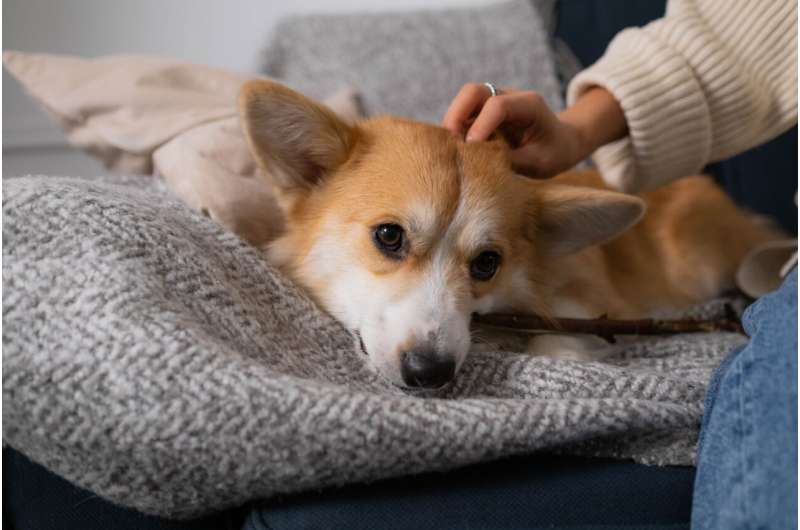
Petdling a dog may help your body better cope with the next stressful situation. Image source: Pexels
After completing a set of stress-inducing tasks, participants who petted their dogs did not recover faster on measures such as heart rate or brain wave patterns. However, this touch helps the body buffer against subsequent stress. As a result, they showed calmer biological responses when faced with a second stressful task.
Studies in humans have shown that simple actions like holding hands or receiving a shoulder massage can lower heart rate and ease the body's response to stress, prompting researchers to study whether touching animals provides similar benefits.
However, previous studies have not been able to determine the role of touch. Participants can often touch, look at and speak to the animals simultaneously, making it difficult to tell whether the physical contact itself is providing any benefit. The few studies that directly compare touch and no-touch interactions have produced mixed results.
In this study, researchers designed experiments to isolate how touching a dog affects a person's brain, heart and emotional state during and after stress. Fifty-one women and 13 men, with an average age of 34, took part in the study with their pet dogs. Dogs must be at least 2 years old, healthy, and comfortable in their new environment.
The team tracked the participants' brain activity and used electrocardiograms to monitor heart activity before, during and after the test. They also asked participants how they felt at key points in time, from calm to excitement, from negative to positive, and from out of control to in control.
Researchers initially predicted that petting a dog immediately after a high-stress task would aid physical recovery, but physical touch provided no immediate recovery advantage. Whether participants petted the dog or sat near it without touching it, brainwave patterns and heart rate measures returned to resting levels at similar rates. However, petting the dog during the five-minute break after the stressful task made a difference when participants were faced with the stress again.
When the participants later faced a second stressful task, their bodies showed a much weaker stress response. This was evident in the brain recordings, which showed that alpha wave activity remained higher throughout the second experimental block after participants touched the dog, indicating reduced brain activation. Participants who recovered without touching the dog in the first block did not show similar effects.
The experiments also revealed that how participants felt during stress did not always reflect how their bodies responded. The emotions they reported often differed from what heart rate and brainwave recordings showed.
Petting a dog doesn't make stress go away in the moment, but it does seem to help prepare the body for the next challenge, pointing to physical touch as one way pets may enhance their owners' overall well-being.
Related paper information:
https://doi.org/10.1016/j.biopsycho.2026.109366
Comments