
Abstract:
According to the British "Financial Times" report, Google DeepMind co-founder and chief AGI scientist Shane Legg recently warned that artificial intelligence capabilities are rapidly improving, but the development of AI capabilities must not exceed the level of safety assurance. He also refuted the judgments of OpenAI President Greg Brockman and Nvidia CEO Jensen Huang that "AGI has arrived."
Legg said that the current development speed of AI capabilities is "very, very fast" and the industry cannot allow capabilities to advance ahead of safety measures. Regarding the recent suggestion made by Anthropic CEO Dario Amodei to slow down the release of cutting-edge models for safety reasons, but not completely suspend research and development, Legg believes that this direction is "worthy of consideration", but all parties still need to seriously discuss the specific implementation methods.
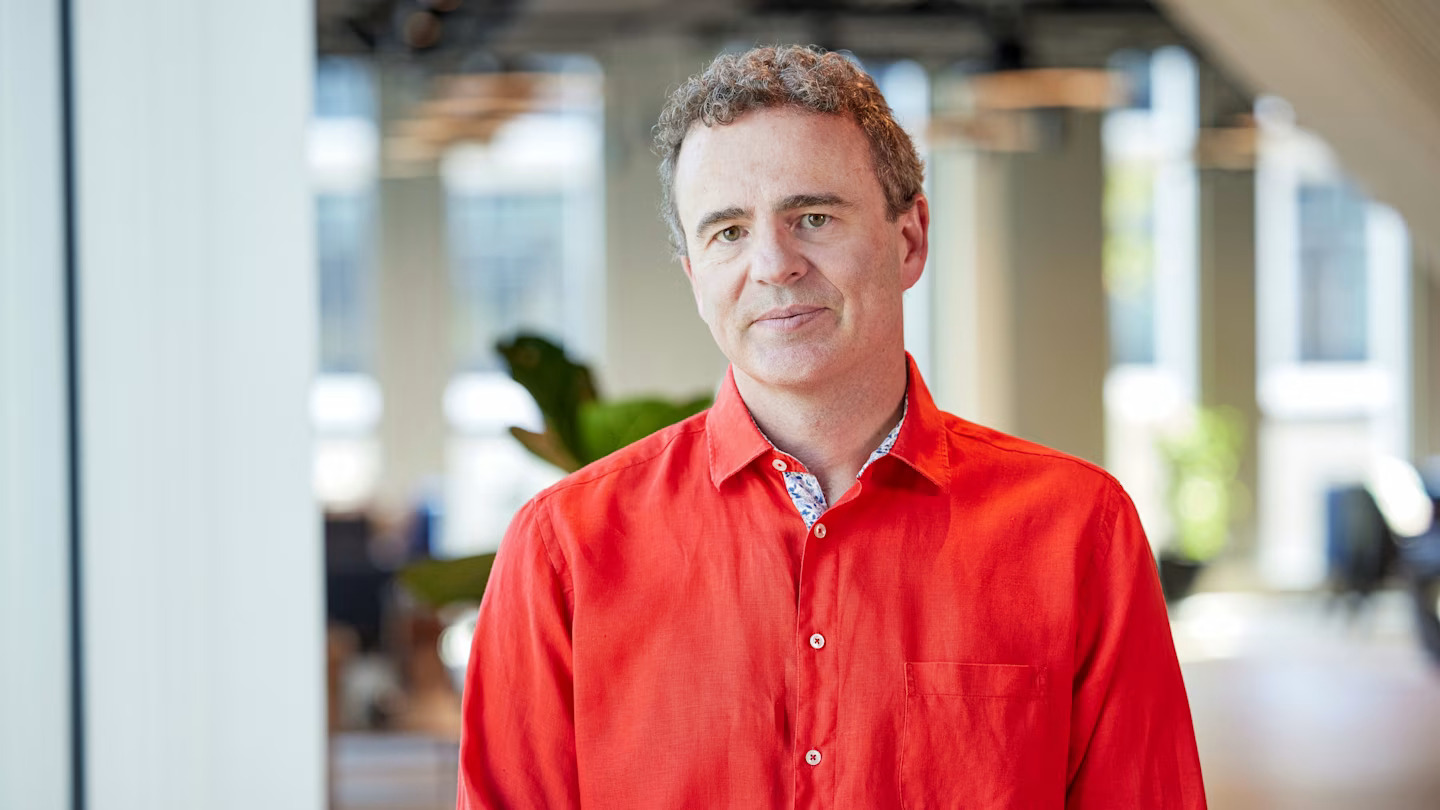
Legg made the above statement as DeepMind officially launched the DeepMind Institute to study the deployment of general artificial intelligence and its impact on science, education, society, policy, philosophy and human well-being. According to DeepMind's definition, AGI is an artificial intelligence system that has all the cognitive capabilities of the human brain.
Despite the recent significant improvement in AI model capabilities, Legg believes that it is still too early to declare that AGI has been realized. He said that he still sticks to his previous prediction that the probability of achieving "minimum AGI" by 2028 is 50%. Legg was also one of the early coiners of the term "AGI."
After OpenAI released GPT-6 Astra, Brockman declared that "we have now entered the AGI era." Huang Renxun also said that "AGI has arrived" and based on Astra's capabilities.
Legg said that even if different organizations have different definitions of AGI, it is not clear whether Astra meets OpenAI's own standards. OpenAI previously defined AGI as being able to complete most cognitive tasks of economic value. Legg said that these models are indeed capable of completing some impressive tasks, but in his opinion, their capabilities have not yet reached OpenAI's definition of AGI.
The DeepMind Institute is co-headed by Legg, DeepMind Chairman Demis Hassabis, and Google Senior Vice President James Manica. Legg said a broader social discussion is now needed as the public begins to take seriously the possibility of powerful general intelligence. The institute will transform DeepMind's technical research into more content that the public can understand, while inviting external experts to participate in discussions.
The institute published the first three articles on topics including AI safety, economic policy and the principles of "new utopianism". One of the articles, written by DeepMind researchers Rohin Shah and Ankar Dragan, pointed the finger at the speed of GPT-6 Astra’s release.
Two researchers believe that Astra shows a "worrying downward trend" in the transparency of its reasoning process. Competitive pressures on AI companies may undermine their incentives for greater transparency, and regulation could play a role on this issue.
However, the article believes that as long as mechanisms to ensure transparency are added to the model design stage, the industry can still continue to develop more capable models. The researchers pointed out that the most advanced reasoning models at present can display part of the reasoning process in a way that humans can understand, which provides a rare window for the outside world to observe and study AI behavior.
Manica said that there is only one AI competition that Google hopes to participate in, and that is the competition to get this technology right.
Comments