
Abstract:
Democrats took control of both chambers of Congress on Tuesday night, a stark repudiation of President Donald Trump and his economic record as voters voiced their displeasure over soaring prices, government corruption and a surge in building artificial intelligence data centers. The election also further intensified the political game surrounding data centers and artificial intelligence infrastructure. Texas is a core region for data center planning, and Hinojosa called during the campaign to put a moratorium on new construction projects until the state introduces stricter regulatory rules.
The election results also dealt a heavy blow to technology billionaires and corporate interest groups. These entities have invested hundreds of millions of dollars in funding Republican candidates who are expected to be friendly to their plans to deploy large-scale AI data centers across the United States.
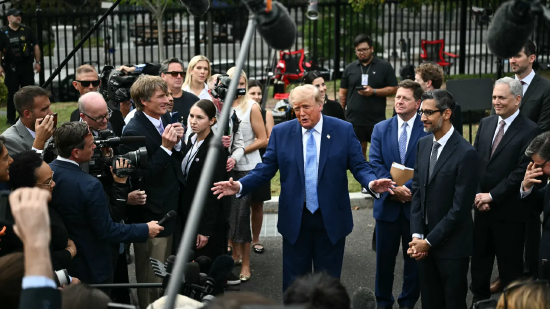
September 29, 2026 On the same day, US President Trump was interviewed by the media after holding a meeting on artificial intelligence with technology executives at the White House in Washington, USA.
The Democrats took control of Congress on Tuesday night and severely refuted Trump and his economic governance performance. Voters are broadly dissatisfied with rising prices, government corruption, and a boom in building AI data centers.
The Democratic Party achieved two significant victories in Texas, a traditionally Republican state: James Tarasico defeated Ken Paxton and became the first Democrat elected to the U.S. Senate in the state in the past four decades. Gina Hinojosa defeated Governor Greg Abbott and became the first Democratic governor of Texas since Ann Richards left office in 1995. Texas most intuitively reflects the power of this blue wave: in this Republican stronghold that has long been regarded as impossible for the Democratic Party to invade, the Democratic Party swept the state's key election seats.
The above-mentioned victories are only part of the overall rise of the Democratic Party. In South Carolina, Democratic candidate Anne Andrews unexpectedly defeated Darlene Graham, winning an election that was originally expected to be won by the Republicans. In Ohio, Sherrod Brown defeated Republican Senator Jon Huster. The Democrats also won flipped Senate seats in Iowa and North Carolina, and won key races in Georgia and New Hampshire.
The election results meant that many of the candidates promoted by Trump suffered heavy defeats. Paxton, Graham, and Huster were all Trump's key endorsement targets, and they still lost the election despite the president's personal support from a large number of platforms.
This election further intensified the political struggle over the regulation of data centers and artificial intelligence. Texas is a hub for data center planning and construction, and Hinojosa's campaign platform proposed halting new projects before the state government introduces more stringent regulations. Although the Texas State Legislature is still in the hands of Republicans, her victory will significantly enhance the Democratic Party's say in the state's data center construction planning.
The election results also dealt a blow to tech billionaires and the corporate lobby. They invest huge sums of money to support Republican candidates, hoping that these politicians will give them the green light to roll out large-scale AI data center projects across the United States. Elon Musk, the world's richest man and the largest personal political donor in this election cycle, has spent record amounts of political donations, but failed to help the Republican Party retain power and also failed in the Texas election.
Exit polls show that voters' aversion to corruption and the growing influence of billionaires has turned Musk's huge political expenses into negative political assets. Tarasico repeatedly criticized Musk during the campaign, accusing him of trying to spend money to "buy his own federal Senate seat."
"Tonight's results are a wake-up call to the corporate special interests and billionaires who manipulate the economy." Congressman Chris Pappas said. He defeated former Republican Senator John Sununu to win the vacant Senate seat in New Hampshire.
The election results may reshape the relationship between the technology industry and Washington. The new Congress, which takes a tougher stance, is likely to increase scrutiny of technology companies and the boom in building AI data centers. As it became clear that the Democrats would win, the market reacted immediately: The Dow Jones Industrial Average and the S&P 500 both fell on Tuesday night.
Dissatisfaction at the economic level is also an important driver of the Democratic Party's success. A large number of voters blame tariff policies and regional conflicts for the deterioration of their economic situation, and the high cost of living continues to trouble ordinary people.
The Democrats control both the House of Representatives and the Senate, and have strong checks and balances during Trump's remaining two years as president. They can veto some of his policy agenda and increase congressional oversight. The results of this election sent a clear signal: Even promises to reduce the cost of living cannot eliminate voters' dissatisfaction with prices, corruption and the direction of the country's development.
Comments