
Abstract:
Digital billboards have been hacked one after another in many countries recently. Large electronic displays originally used to broadcast commercial advertisements and public information suddenly switched to indecent content, and related images appeared in public places in Egypt, Malaysia, Brazil and other countries. The hacker group claimed responsibility and claimed that the attack process was so simple that "anyone with basic abilities can do it."
The most high-profile case in this incident occurred in Giza Province, Egypt. A large digital billboard located on the "July 26th Axis", an important traffic artery connecting Cairo and the western city, suddenly played an indecent video, causing a large number of drivers to stop to film and upload it to social media. The video also showed a signature message left by the attacker and a Telegram channel name, and the incident quickly spread on the Internet.
The Egyptian Ministry of Interior later confirmed that the incident was a cyber attack. Investigation revealed that the billboard in question was operated by a local advertising company, which used the services of an international advertising content distribution platform. After the international platform website was hacked, unauthorized content appeared in the advertising display systems of multiple countries at the same time. At present, the local government has initiated legal procedures to investigate.
Arabia United Advertising Company, which operates the billboard, said that after discovering the abnormal access, the company immediately closed the affected screen and is working with relevant departments to trace the source and technical details of the attack. The company stressed that this was an unauthorized external intrusion.
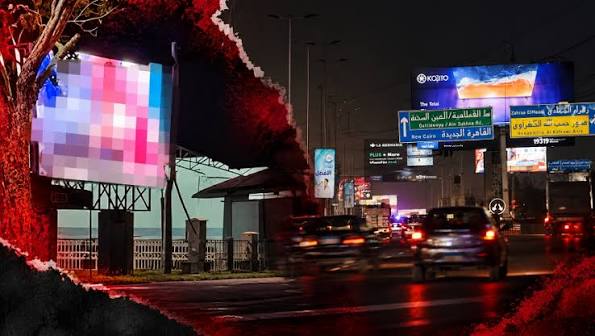
A similar situation was also confirmed in Kluang City, Johor, Malaysia. The local city council said that multiple public LED displays were hacked and played inappropriate content. For safety reasons, the relevant display screens have been turned off. The government and suppliers are jointly investigating the cause of the incident and evaluating safety protection measures.
Similar cases were also reported in the city of Campomayor in the Brazilian state of Piauí. A local LED advertising screen located near a main road was controlled by hackers and played indecent videos. The operating company urgently cut off the power supply to the equipment, apologized to the public, and reported the incident to the police.
In addition to the above-mentioned countries, there are reports on the Internet that advertising screens in more countries have been subject to similar attacks, but the relevant situation has not been widely officially confirmed. However, multiple investigations have shown that this incident had obvious characteristics of transnational coordination.
A hacker group called "Leakers$" later publicly claimed responsibility. The group said they did not directly compromise each billboard, but instead exploited a set of software vulnerabilities used to remotely manage the content of LED displays. Using automated scanning tools, they allegedly discovered thousands of vulnerable systems exposed on the Internet in about two hours.
According to the attackers, a large number of device management interfaces are directly exposed to the Internet and lack the most basic access control and security protection measures. Once these systems are found, attackers can remotely take over ad playback content and push arbitrary images to the display.
The hacker group claimed that their goal was not to extort, blackmail or obtain financial benefits, but to reveal serious problems in network security in the global digital advertising industry. They said the incident exploited a real software vulnerability rather than a sophisticated nation-state cyberattack.
After the incident, network security experts once again warned that more and more public infrastructure systems are connecting to the Internet and relying on remote management platforms, but many operating agencies have clearly insufficient investment in security. Digital billboards, information display systems, and other Internet-connected public equipment are likely to become targets of hackers if they lack timely updates and security protection.
The intrusion of a multinational billboard also once again exposed the security risks faced by IoT devices and digital infrastructure. As the digitalization of global cities continues to increase, how to ensure the safe management of large-scale networked devices is becoming an important issue that government departments, advertising operators, and technology suppliers must face.
Comments