
Abstract:
The experimental project XNU Linux successfully launched a complete macOS 27 desktop on an ARM64 Linux system, providing a new path for users to run Apple operating systems without using traditional virtualization. This development is of great significance to the group of enthusiasts who are keen to create customized macOS desktops, commonly known as black apples.
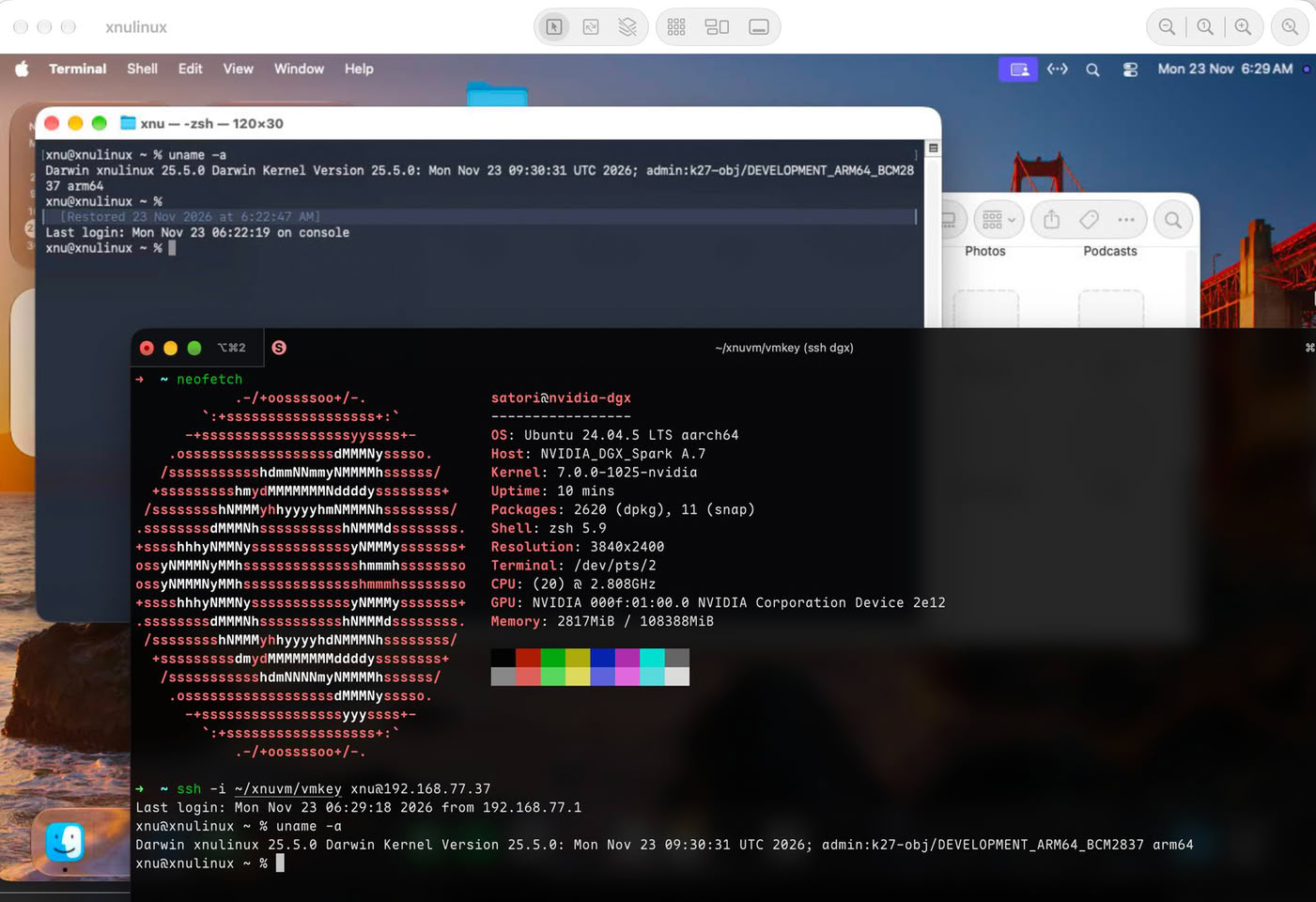
The project utilizes Apple's open source XNU kernel and modifies it into a module that can be loaded in Linux, allowing macOS and Linux processes to run on the same hardware. Instead of converting macOS applications into a Linux executable format, XNU Linux chooses to integrate the Apple kernel directly into the Linux environment, allowing the macOS process to run natively on the host CPU without the need for an intermediate hypervisor.
XNU Linux is mainly composed of two components: xnu.ko is responsible for running the managed XNU kernel, and fki.ko provides interfaces for accessing Linux resources, including memory, network, timers, storage and other functions. This design enables macOS processes to directly use the host hardware without the need for additional virtualization layers.
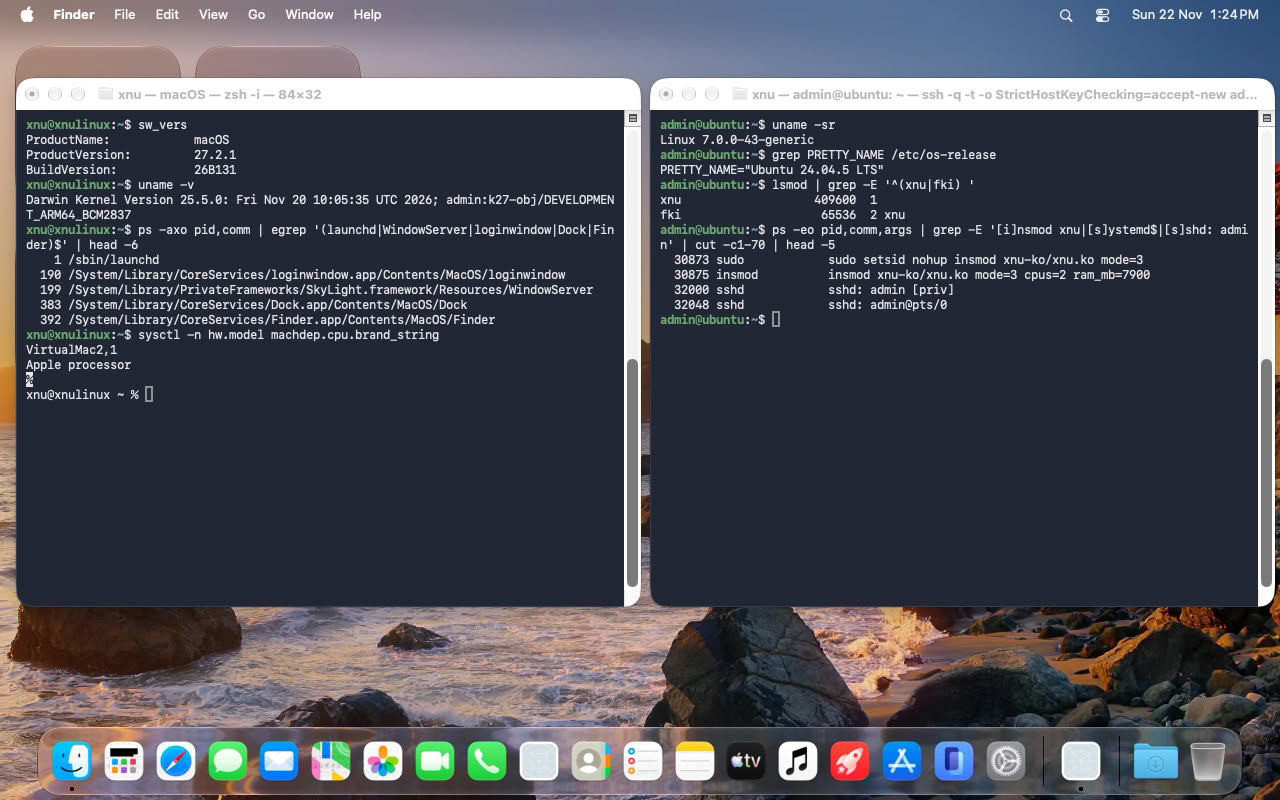
The project has been tested on an NVIDIA DGX Spark running Ubuntu, and an Apple Silicon Mac running Linux in a virtual machine. The system successfully entered the macOS desktop. Finder, Dock, WindowServer and login windows can all work normally, and Safari and Chrome browsers can also run. During a brief stress test lasting about 30 minutes, Spotlight and file system operations remained available.
Graphics support is also part of the project. XNU Linux forwards macOS Metal workloads to Vulkan and Mesa through a bridging layer, and then delivers them to the host GPU for processing. However, this feature currently requires a compatible Virtio-GPU configuration; in the NVIDIA DGX Spark demonstration, the system still used CPU-based rendering.
The project also has significant hardware limitations. The current solution requires an ARM64 processor that supports pointer authentication, 4 KB memory pages, and at least 16 GB of memory. Users must also provide their own macOS 27 installation media. Since macOS has made a lot of optimizations for Apple's self-developed M series chips, traditional x86 architecture PCs do not currently support this solution.
Although still in the experimental stage, the emergence of XNU Linux demonstrates the possibility of hosting the Apple kernel directly in a Linux environment. If graphics, compatibility, and stability are improved in the future, it may open up new space for cross-platform system enthusiasts and the Hackintosh community to explore.
Learn more:
https://github.com/AFK-surf/xnulinux
Comments