
Abstract:
British Railway Police conducted a six-month real-time facial recognition pilot at London train stations. During the period, more than 500,000 faces were scanned, but only one alert was issued to the suspect watch list, which was ultimately confirmed to be a misidentification; no arrests were directly prompted by this recognition alert.
According to documents obtained through a disclosure request, the pilot cost taxpayers £320,786 on equipment rental and police staffing over 18 deployments, with officers investing nearly 100 hours. The pilot, which took place between February and July this year at some of the capital's busiest transport hubs, aimed to help police catch offenders and those breaching court orders.
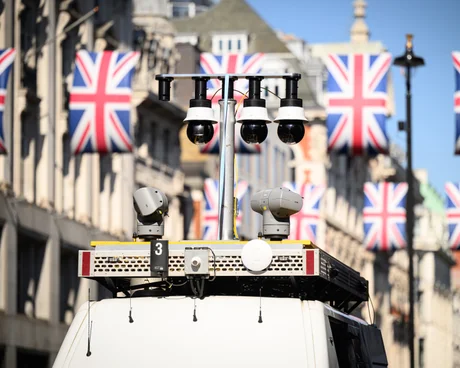
British Rail Police announced last month that it would extend the pilot by four months and expand its deployment to London Underground stations. TfL backed the extension of the pilot, saying the technology would screen people on police watch lists at key stations chosen for maximum effectiveness and would be used specifically to combat violent crime against women and girls, whose travel patterns may be affected by their experiences of sexual harassment and offending.
Fraser Sampson, the former British Commissioner for Biometrics and Surveillance Cameras, said that the police must prove that the use of this technology is proportional. Factors such as deployment location, time period, composition of the monitoring list, and the possibility of the target person appearing need to match each other. He currently serves as a non-executive director of facial recognition company Facewatch. He pointed out that the use of facial recognition in retail establishments to prevent pickpockets and protect employees is two different scenarios from the police using it to arrest people on public transportation networks: the success of a store can mean that the target person does not enter the store, while the success of police law enforcement means catching the person; from this perspective, the railway pilot seems to have little effect.
Sampson also said that the effectiveness of the system depends on the police surveillance list: people who are not on the list will not be "seen" by the real-time facial recognition cameras, and the system will not retain their images like CCTV. However, this technology processes special categories of personal data and must be used in an appropriate, necessary and proportionate manner. The police will need to explain how each deployment meets these conditions, and the oversight board proposed in the Information Commissioner's Office's recent report should be held to strict account.
More than half of police departments in England and Wales have deployed real-time facial recognition on the streets, according to analysis by Liberty Investigates. The Metropolitan Police and the London Mayor's Office announced this summer that fixed facial recognition cameras would be installed in London's West End; London Mayor Sadiq Khan subsequently confirmed that the technology will also be used on Oxford Street, which has just been converted into a pedestrian zone.
The Joint Committee on Human Rights of the British Parliament recently released a report calling on the government to legislate to address the threats posed by artificial intelligence to human rights, and listed the promotion of real-time facial recognition technology as a case where the "risk is particularly obvious". Labor MP for Clapham and Brixton Hill Bel Ribeiro-Eddy said real-time facial recognition was a serious breach of privacy and the government should suspend its rollout until stronger safeguards were put in place, including a sound legal framework.
A spokesman for British Rail Police said the pilot was launched to understand how the technology could be most effectively used to identify wanted criminal suspects and people who might threaten the safety of passengers and staff. During the pilot period, officers also made a number of related arrests for assault, theft, possession of offensive weapons, breaches of criminal behavior orders and disturbing public order, and found people wanted by courts or other police forces; however, as these actions were not directly prompted by facial recognition alerts, they were not included in the technology's performance data.
The police said that during the pilot period, they continued to adjust the way the technology is deployed in the railway environment, including the preparation of locations, operating procedures, equipment and monitoring lists. The police department stated that the expansion of the list was carefully controlled and followed railway police policy; a smaller list was initially used to ensure reliable data quality, governance mechanisms and safety and security measures.
Comments