
Abstract:
Garrett Langley, CEO of Flock Safety, an American surveillance technology company, recently defended mass surveillance technology again, publicly stating that if society wants to reduce crime rates and increase the probability of criminals being held accountable, it must accept a certain degree of privacy transfer. The remarks quickly sparked new controversy and brought the issue surrounding the balance between public safety and personal privacy into the focus of public opinion again.
Langley expressed these views during the TechCrunch Disrupt 2026 conference. In the face of continued doubts about the Flock surveillance network, he emphasized that technological progress itself does not mean perfection, but means getting things done in a better way. In his view, if we hope to build a society where criminal acts are easier to detect and held accountable, technological development should not be stopped because of controversy.
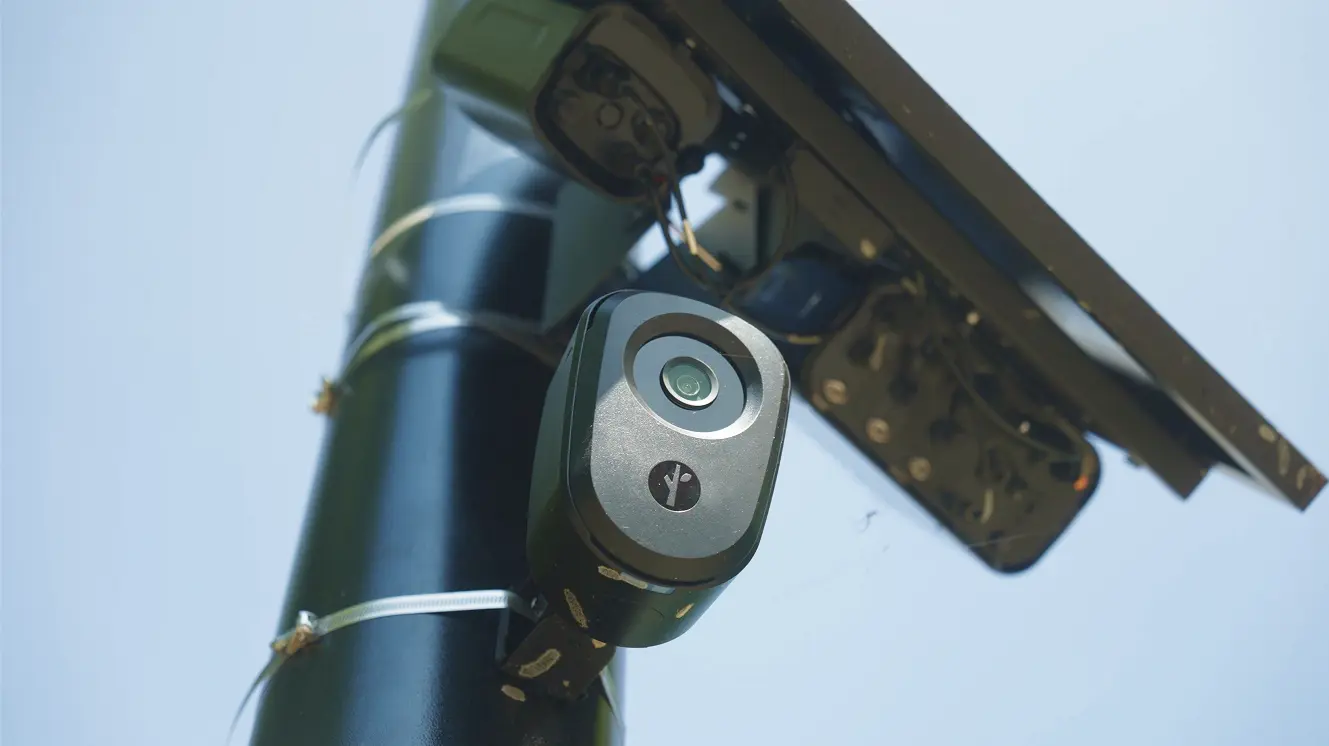
Flock Safety has become one of the most controversial surveillance technology companies in the United States in recent years. The company mainly develops automatic license plate recognition systems (ALPR), surveillance cameras and related analysis platforms. Its products are widely used by police, community homeowners associations and enterprises to track vehicle activities and assist in criminal investigations.
However, the development of Flock is also accompanied by increasingly strong opposition. In the past few months, lawmakers from multiple political camps in the United States, human rights organizations, and privacy advocacy organizations have criticized the company's surveillance scale as exceeding public acceptance. Some local governments have terminated cooperation with Flock, and some employees have even chosen to leave due to the controversy.
Although Flock has always claimed that its cameras do not perform facial recognition and do not actively track personal identities, independent researchers have found that the company's "FreeForm" natural language search system allows investigators to filter target subjects in surveillance videos based on clothing color, visible tattoos, race, gender and other characteristics. This capability has been criticized as a disguised expansion of the scope of personal surveillance.

In addition, some new devices launched by Flock also have automatic tracking functions. For example, the Condor PTZ camera developed by the company can automatically identify and follow the movement of pedestrians, and continuously record target activities on public streets.
Another controversial feature is "Convoy Search." The system analyzes large amounts of license plate scan data across the United States to look for vehicles that often appear together or travel together, thereby helping law enforcement agencies identify potential associates, associated persons or vehicles that may be involved in criminal activity. Flock promotes it as an important tool that can help police uncover hidden networks.
Faced with public concerns about privacy risks, Langley did not directly respond to specific questions about surveillance abuse during the event, but repeatedly mentioned cases in which the police used the Flock system to solve cases. He believes that the overall social benefits of technology far outweigh the risks.
However, these claims have also been challenged by researchers. Flock has long promoted that its technology can help solve about 10% of reported crimes in the United States each year, which is equivalent to about 700,000 cases. It also claims that the accuracy of license plate recognition reaches 96%. However, critics point out that these figures lack independent verification and that some data sources and statistical methods are not transparent.
Previously, the Roseville, California Police Department analyzed nearly 1,500 Flock alerts. Research results show that about 71% of the alerts failed to produce effective results, and the system misread license plate numbers and incorrectly marked innocent car owners, raising further doubts about accuracy.
The controversy surrounding Flock is not limited to technical aspects. A growing number of privacy protection organizations are concerned that the expanding surveillance network across the United States is gradually establishing a database that records citizens' activities over a long period of time, and the corresponding legal supervision and accountability mechanisms are not yet mature.
Supporters believe that such systems have already shown significant results in areas such as crime fighting, missing persons searches, and vehicle theft investigations. Opponents warn that any mass surveillance measures in the name of public safety could erode civil liberties without adequate oversight.
As artificial intelligence and smart surveillance technology continue to develop, the debate sparked by Flock is transcending the scope of a single company. How to choose between security and privacy has become an important issue that continues to be discussed in the U.S. technology community, the legal community, and the public.
Comments