
Abstract:
On September 24, Reuters issued an article focusing on the development of China’s live streaming industry, especially the impact of AI on the industry. In the past decade, China’s “lipstick king” Li Jiaqi has been a representative figure in the live streaming shopping industry, helping to promote the development of this niche business into one of the most important retail channels in China. Li Jiaqi is famous for selling billions of dollars worth of beauty products to more than 100 million fans.
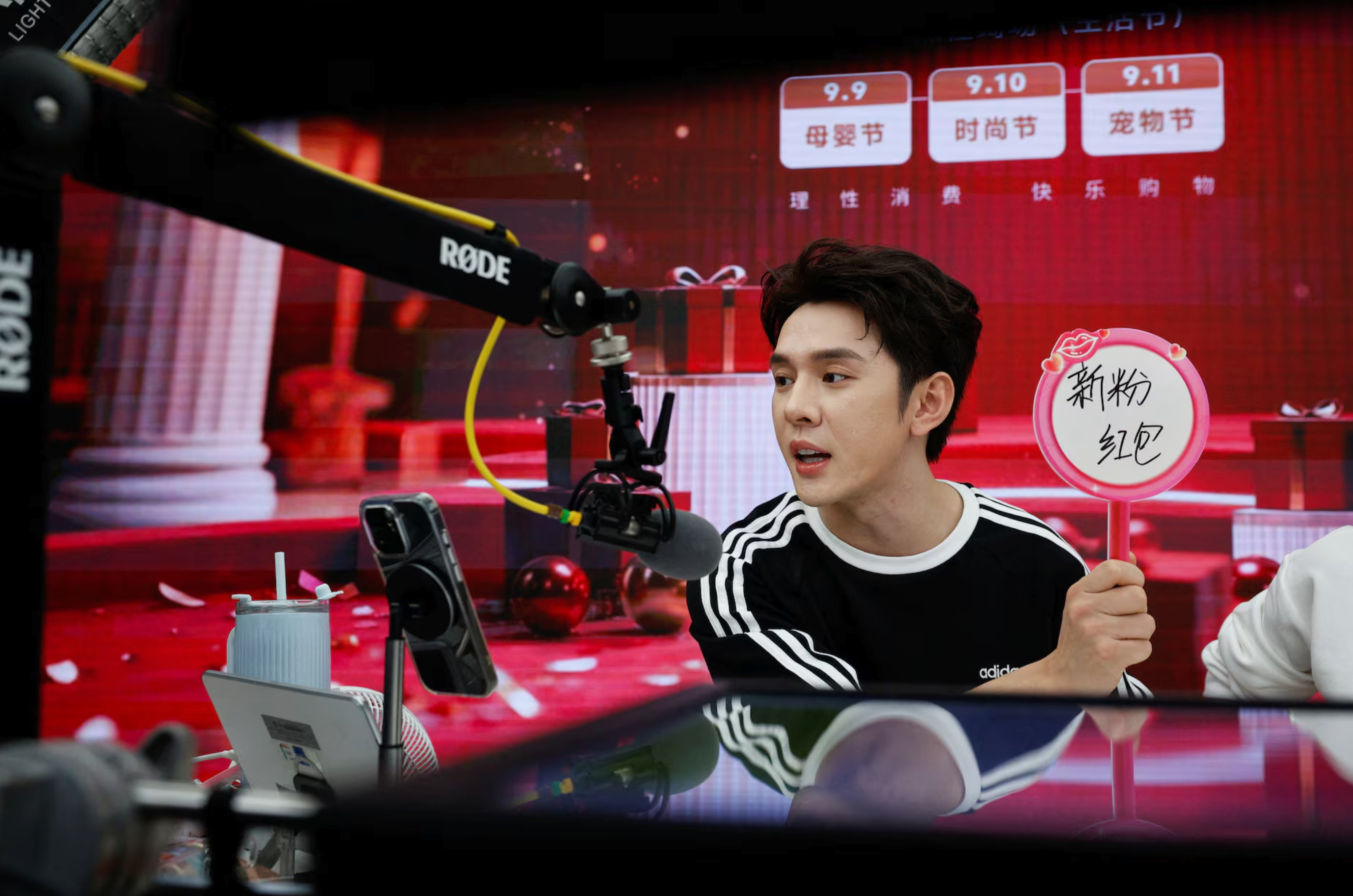
Li Jiaqi
Nowadays, although the industry growth is slowing down and AI is reshaping this field, Li Jiaqi still believes that the future of live broadcast e-commerce will still be inseparable from anchors like him.
"Growth may not be as rapid as four or five years ago." said Li Jiaqi, who started live broadcasting in 2016. But he added that the industry has entered a "stable and healthy development stage."
Live streaming has reshaped Chinese people’s shopping habits. In 2025, China's online retail sales will account for more than 36%, while in 2021 it will be less than 18%.
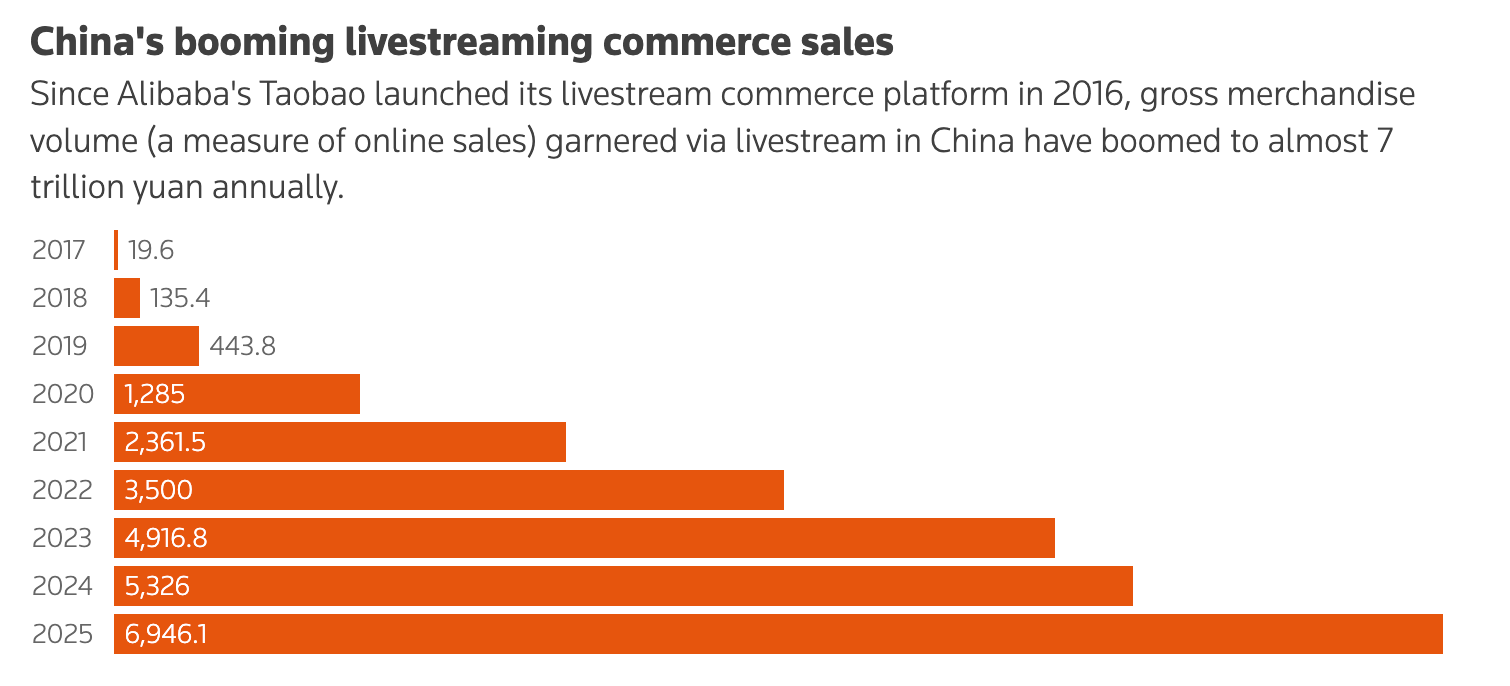
China's annual live broadcast merchandise transaction total is close to 7 trillion yuan
Ashley Dudarenok, founder of digital consulting firm Chozan, said: "The industry is still growing, but it is much more difficult than before. Merchants need to compete more fiercely for consumers' wallets, and consumer expectations are as high as ever, but budgets are lower."
AI quickly reduces costs
In this context, AI is rapidly reducing costs.
E-commerce platforms and merchants are increasingly deploying digital anchors, who can live broadcast around the clock at a fraction of the cost of live anchors, which raises questions about how many live broadcast practitioners are still indispensable.
JD.com will provide its AI anchor services to merchants for free in December 2025, and claims that the adoption rate has increased significantly within three months. The company added that AI anchors can reduce live broadcast operating costs by 80% to 90%.
“AI is already changing the live streaming e-commerce industry,” Li Jiaqi said. “We have been studying how to integrate AI into live streaming e-commerce.”
Cannot replace the anchor
But he believes the technology also has limitations. "I don't believe that AI can replace real-person anchors," he said. "AI will always be just who I was yesterday, but who I am today can provide new ideas and new perspectives."
Li Jiaqi regards AI as a tool to improve efficiency rather than to replace anchors. When he is resting, an AI version of himself can accompany the audience live into the night.
He is even more skeptical of AI’s ability to influence purchasing decisions. "Human beings are constantly thinking. AI is also thinking, but its thinking is based on human beings' previous thinking," he said. "That's why I think AI and live streaming e-commerce are complementary. AI will not replace live anchors."
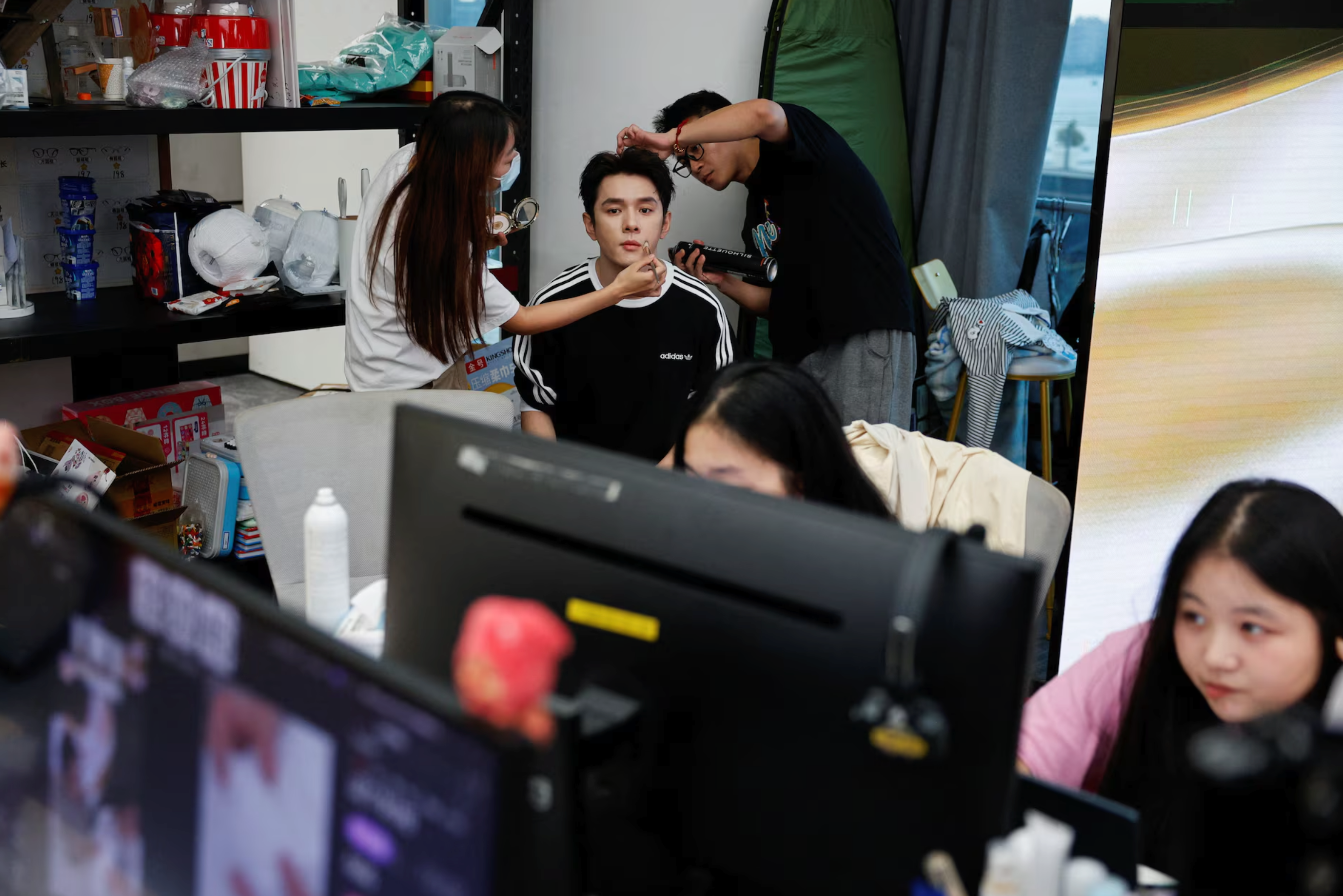
Li Jiaqi’s live broadcast team
Others in the industry agree. Lu Lin, a 23-year-old anchor at Shanghai's Rongmomo Live Broadcasting Center, said it was still difficult for digital anchors to replicate the trust and judgment that drives sales.
For example, she said that when faced with a customer who explained his height and weight, "AI may answer: 'You should wear M or L size,' but the live anchor will say something more detailed. This is not only answering questions, but also building trust with customers."
In September 2025, clear labeling regulations for AI-generated content will take effect. TikTok, owned by ByteDance, has banned live broadcasts entirely generated by AI and requires disclosure of the use of digital anchors.
Some Internet celebrities caused dissatisfaction among viewers after revealing that avatars generated by AI appeared in their place.
“I think live broadcasters are a bit like an endangered species, but it depends on the situation.” Chozan founder Dudarenok said. She added that as AI-generated content becomes more common, consumers may return to favoring the realism of live broadcasters.
“I don’t think they (live anchors) will disappear completely, but those anchors who are less successful, they will have to use better tools or change careers.” Dudarenok said.
As the industry gradually moves away from the discount-driven model that drove growth in the early days, profitability has become a priority for brands, said Zhang Junling, vice president of Shanghai Rongmomo Live Broadcast Center.
He said that as profit margins continue to shrink, brands’ reliance on celebrity anchors is also weakening. In a fiercely competitive environment, large-scale systems, technology and operational capabilities have become more important.
“Competition is no longer just between a single live broadcast channel or a single anchor.” He said.
Comments