
Abstract:
According to the Monterey Bay Aquarium Research Institute (MBARI) in the United States, researchers have rarely photographed a tube-eye fish (scientific name Macropinna microstoma) with a completely transparent head in the deep sea of the Pacific Ocean. This is the first time the institution has recorded this species in 4K quality, and it is also the first time it has been photographed from the new flagship research vessel "David Packard".
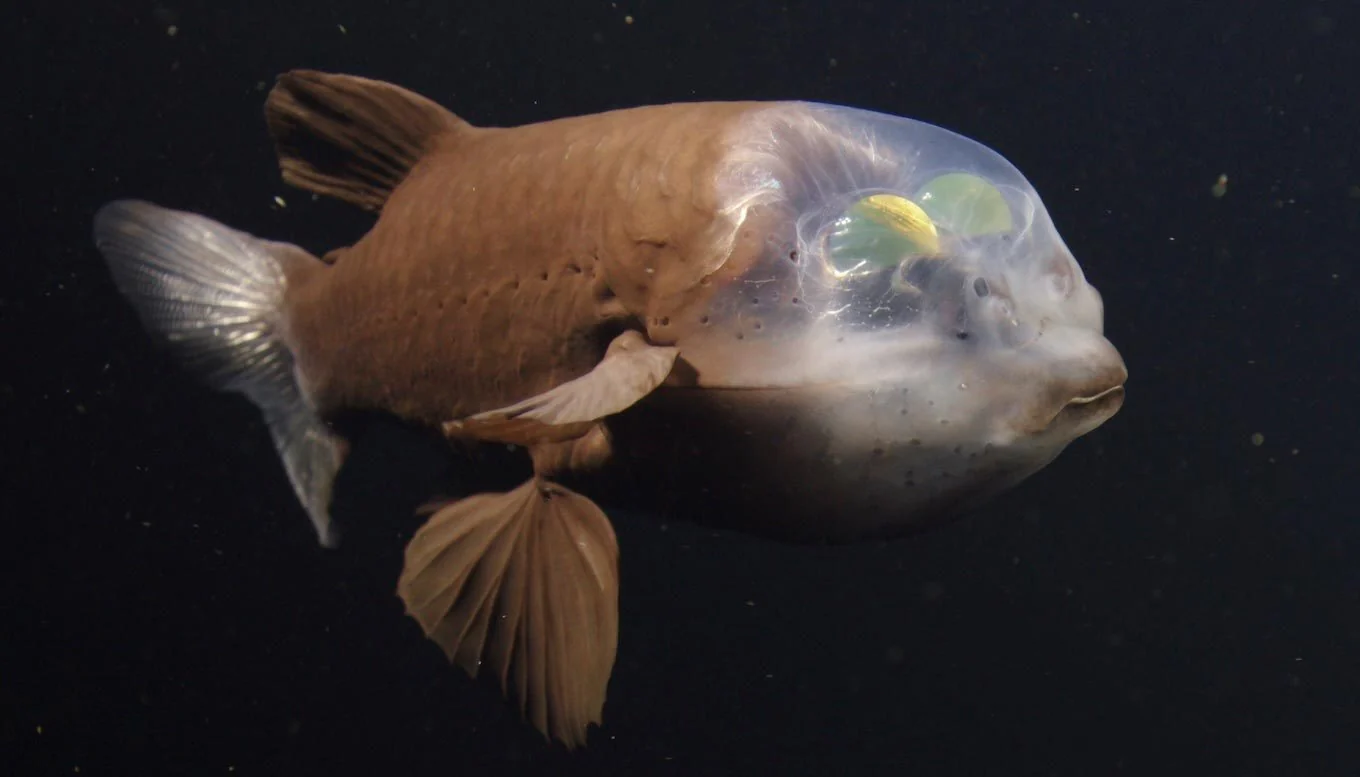
The original deep-sea survey for the day has ended. The remotely operated submersible "Dockricketts" was being "flyed" back to the surface by its pilot to prepare for recovery. Research specialist Shannon Johnson suddenly saw the fish on the screen and immediately called for a stop to surface. The fish appeared about 600 meters underwater and about 90 kilometers offshore. For the scientists on board, this was only the 11th encounter with this species in MBARI's history.
At the time, senior scientist Steven Haddock and the MBARI Biodiversity and Bio-Optics team were conducting an eight-day "Dive for Vulnerable Drifters" expedition, studying gelatinous animals such as jellyfish, siphonophores and ctenophores. The team combined scuba diving in near-surface open water with remotely operated vehicle surveys at depths hundreds of meters, photographing and collecting animals to understand how they adapted to life in the deep water column.
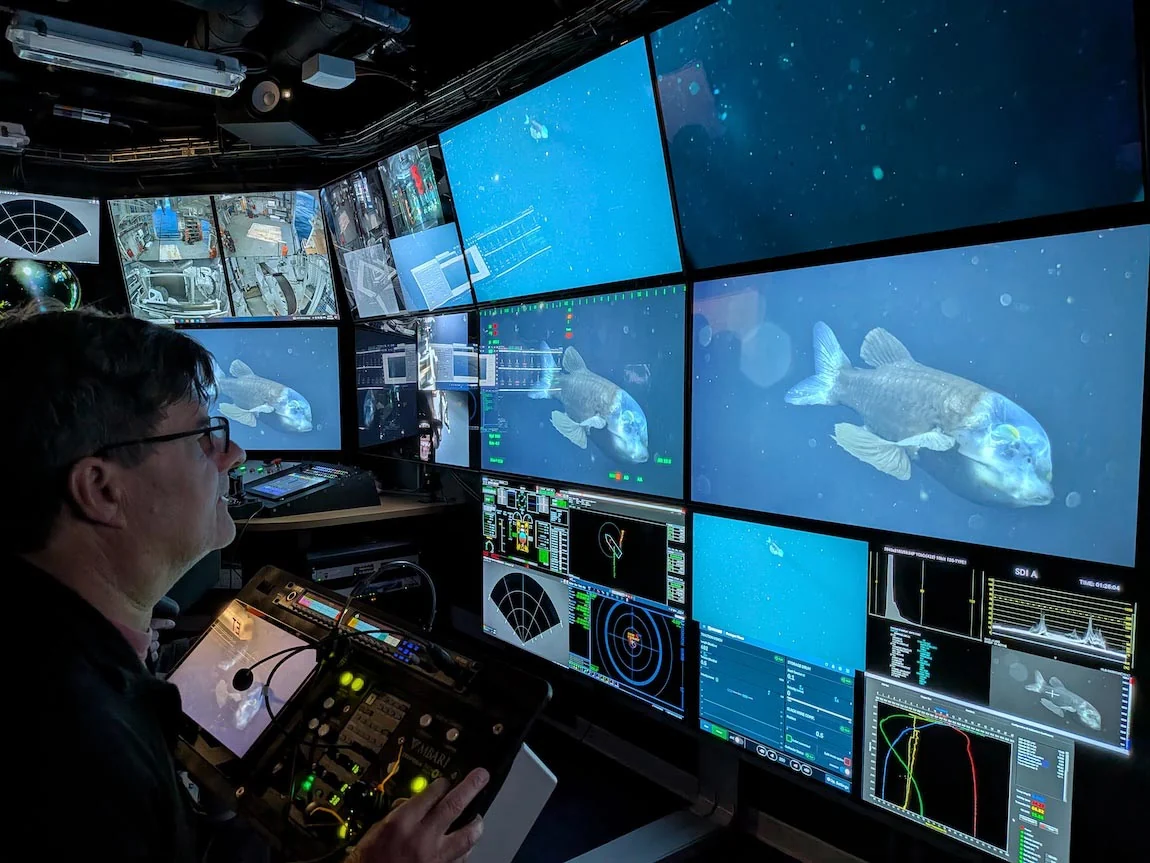
Most scientists have moved to the ship's wet laboratory, preparing to register the specimens coming up with the submersible. When the news came that the tube-eyed fish had appeared, everyone ran back to the control room. The encounter was an unexpected end to a long and productive week of expeditions. Haddock said: "Seeing the pipeeye fish is a rare courtesy. Crew members from all positions on the ship crowded into the control room and were fascinated by this wonderful animal. Deep-sea animals inspire imagination and bring wonder and awe. We hope that this feeling can arouse people's heart to protect the largest living space on earth."
The team used the Docrickets' high-resolution 4K camera to observe the fish for about 20 minutes, examining its body and behavior, and trying different lighting conditions to present its transparent hood. Cameron Law, the submersible pilot and technician, also maneuvered it close enough to shoot it with the submersible's virtual reality camera. The resulting 3D stereoscopic images are expected to be used for future science popularization and public education.

In nearly 40 years of ocean exploration, MBARI has completed approximately 7,000 remotely operated vehicle dives and recorded more than 41,000 hours of deep-sea images. The agency last saw this species in 2021. This summer, MBARI researchers and Schmidt Ocean Institute conducted an expedition in the mid-Atlantic and recorded another species of tube-eye fish, Winteria telescopa.
Early observations by MBARI senior scientist Bruce Robison and research specialist Kim Reisenbichler have partially revealed how this fish uses its peculiar eyes to find food. In the dark twilight zone of the ocean, it relies on its broad fins to remain stable, hovering and looking up for the silhouette of its prey. Once food is found, its huge tube-like eyes rotate under a transparent dome to keep the target in view. This gelatinous shield also protects the eyes as it feeds on small crustaceans from the stinging cell tentacles of deep-sea siphonophores.
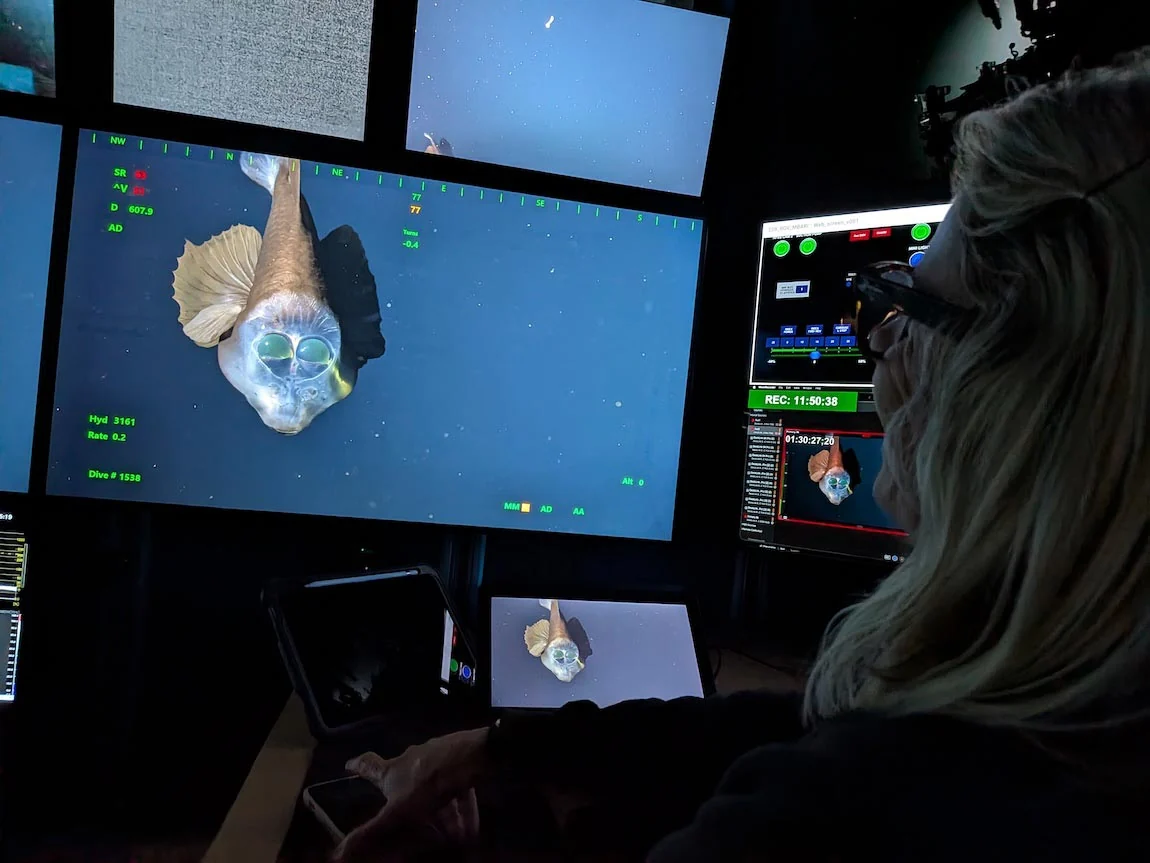
The researchers did not collect the tubefish, but the images captured will support continued research on this elusive species. The Biodiversity and Bio-Optics team studies how marine animals interact with light and has done extensive exploration of the deep-sea visual system. This close observation of the eyes of tube-eye fish will help people better understand vision in the twilight zone. The pigment in the fish eye lens is thought to have a similar function to the green pigment in the eyes of the strawberry squid (Histioteuthis heteropsis), a deep-sea neighbor the team has previously studied.
"Tubeye fish remind us of the unexpected ways animals have evolved to thrive in the mid-ocean," said Haddock. "Many of them survive by capturing tiny optical cues, such as a shadow passing overhead, setting off an evolutionary competition that pits bioluminescent camouflage against increasingly sophisticated visual abilities."
Comments