
Abstract:
Earlier this year, the Artemis II mission sent astronauts around the moon and back safely for the first time in more than half a century. The historic mission also took a "heavy" toll on Earth's outermost ionized atmosphere, the researchers noted.
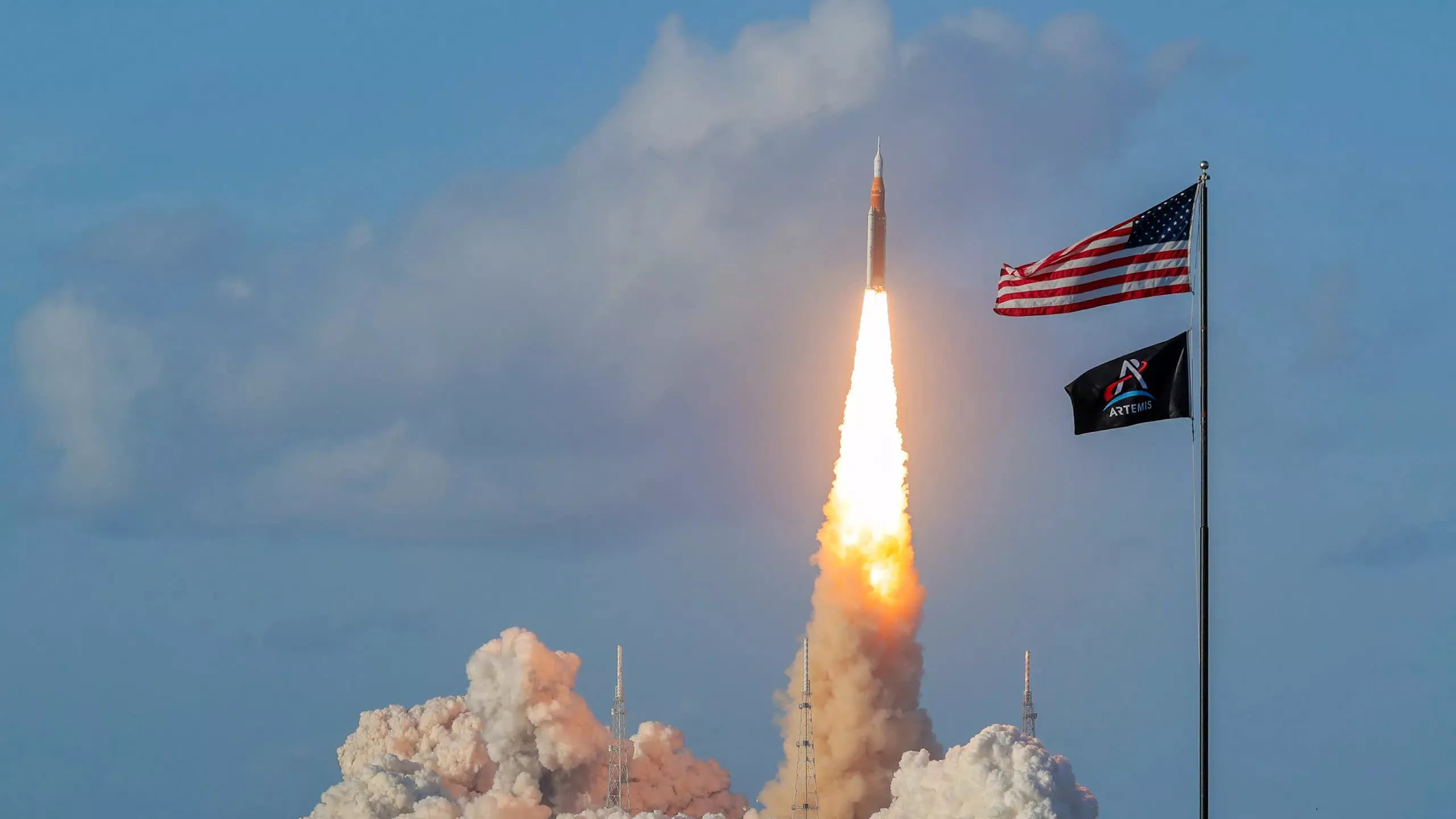
The "Artemis 2" mission implemented in April this year created two huge holes in the Earth's ionosphere. The resulting significant disturbance may affect GPS positioning accuracy. A new study from Taiwanese researchers reveals how modern launch systems affect the atmosphere and how future deep space exploration missions will ripple out into one of the most important on-orbit systems in our daily lives.
The research was completed by a team of scientists from National Cheng Kung University in Taiwan and published in the preprint online version of the journal Geophysical Research Letters. Researchers used a network of ground-based high-precision GPS receivers to detect the impact of Artemis 2's launch. The network is also currently used by US scientists to measure the tiny movements of Earth's tectonic plates during earthquakes.
This ground-based network detects how rockets' passage through the atmosphere affects free electrons in the ionosphere by measuring the delay in GPS signals as they travel from orbiting satellites to receiving networks. The ionosphere is the ionized part of Earth's upper atmosphere, located approximately 48 to 965 kilometers (about 30 to 600 miles) above sea level.
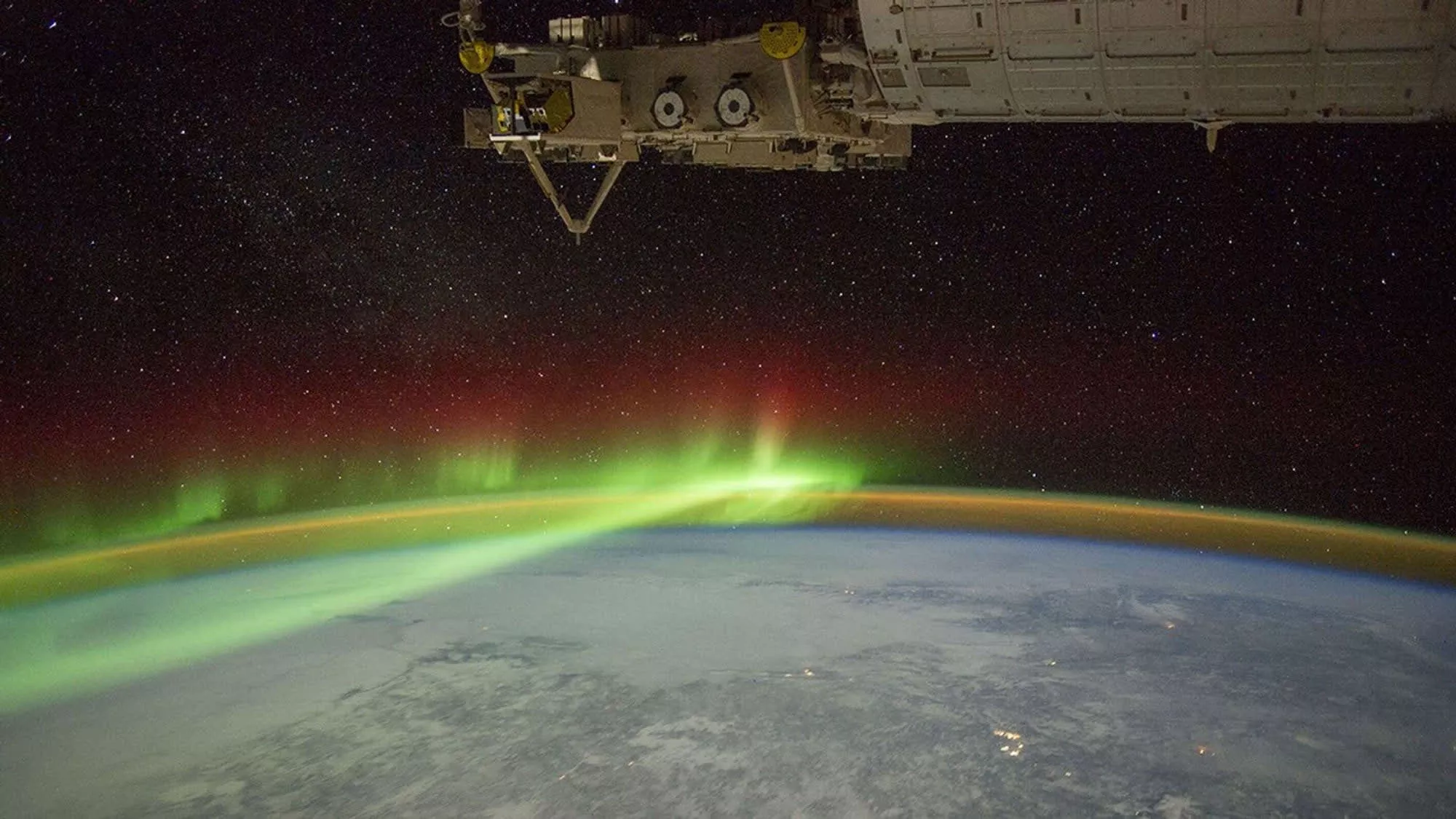
The ionosphere plays a key role in the propagation of radio signals around the world, and any disturbance in its electromagnetic field will also affect GPS signals. According to the new study, Artemis 2's first launch was more powerful than any other rocket launch. NASA's Space Launch System (SLS) caused disturbances in the ionosphere that were ten times more severe than those observed during SpaceX's Starship tests.
Researchers said that "Artemis 2" created two huge electromagnetic holes in the Earth's ionosphere. The first was caused by the SLS launch vehicle's 65-meter (213-foot) core stage, and the other was left by two subsequent engine ignitions of the system's upper stage. Both holes span 5,000 kilometers (about 3,107 miles), enough to offset the ground position reported by GPS systems by several meters.
Professor Lin Jianhong, one of the co-authors of the study, said that disturbed GPS signals "may not only have a strong impact on autonomous vehicles, but also affect drone positioning."
Lin Jianhong said: "Even a positioning error of only a few meters is enough to make a self-driving car change lanes."
The GPS satellite constellation orbits about 20,200 kilometers (12,552 miles) above sea level, well above the ionosphere. But GPS signals must penetrate all layers of the lower atmosphere before reaching users’ smartphones, ground stations and self-driving cars. Lin predicts that future missions - including missions to the lunar surface and Mars - may further exacerbate potential interference with GPS services.
Comments