
Abstract:
On September 24, according to Bloomberg, Meta released a lightweight virtual reality (VR) headset priced at $1,299 on Wednesday, which looks like glasses. The new headset is better than Apple's products in terms of price and size, and is expected to make its headset product line profitable.
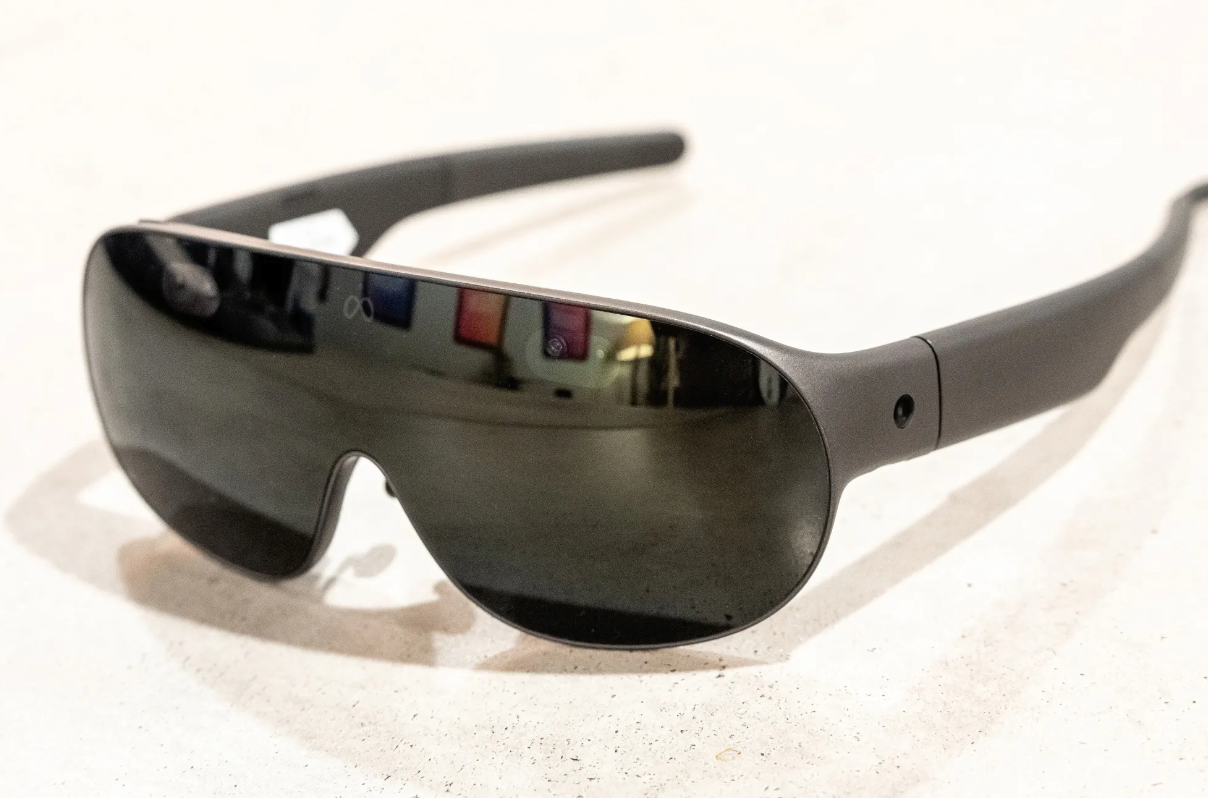
The new headset looks like glasses
The new headset, called Meta VR Glasses, represents a major shift in headset design. Its processor, cooling fan, battery and other computing components are housed in an external device that clips to a user's pocket or sits on a desk. Previous Meta models integrated these components into the headset body, while Apple's Vision Pro only placed the battery in an external device.
It has many of the same features as Vision Pro and Meta’s existing Quest headsets, including immersive video playback, office applications, use as an external monitor for Mac or PC, web browsing, gaming, video conferencing, and voice assistants.
However, it moves the computing hardware outside the headset, significantly reducing its weight. Meta VR Glasses weigh about 100 grams, about one-sixth the weight of Apple's headset and about one-fifth the weight of the Quest 3S. The lighter design makes the headset comfortable to wear during long demonstrations, including watching immersive highlights of NBA games, browsing Meta's redesigned operating system, and working on a PC.
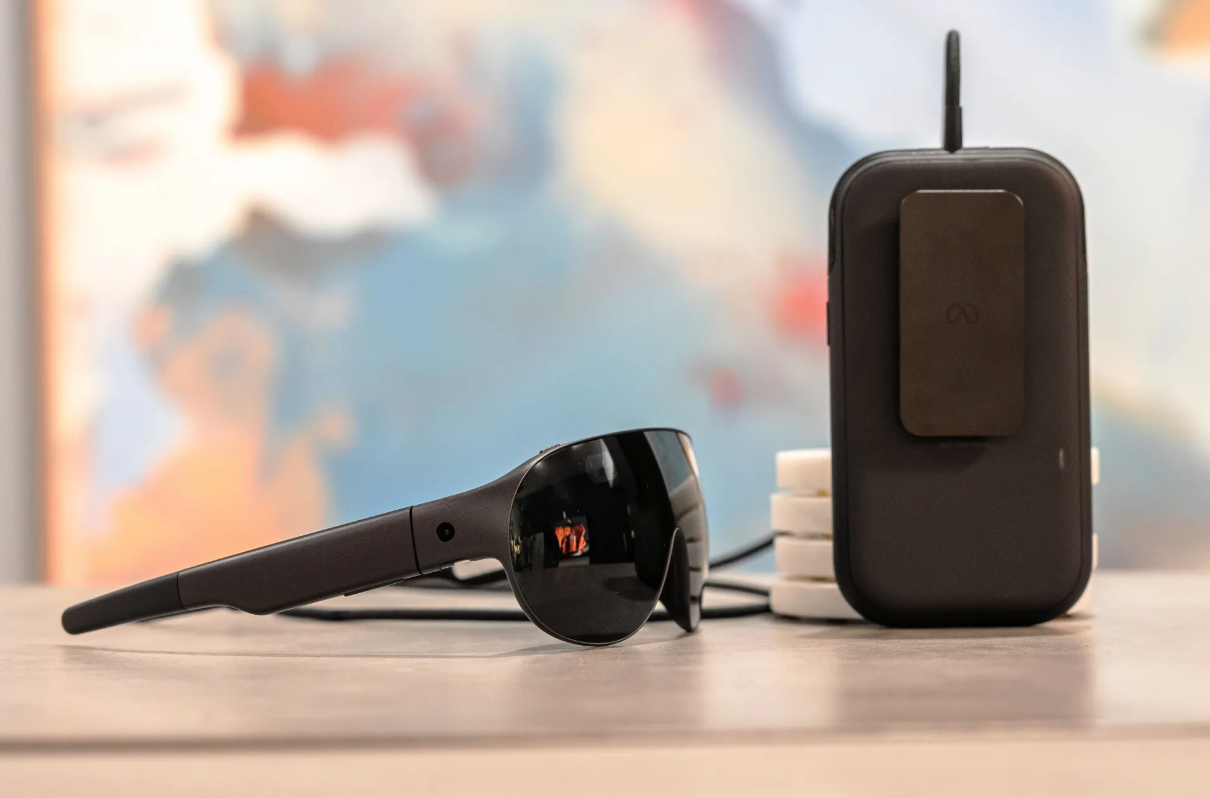
New headsets put computing hardware externally
Meta Chief Technology Officer Andrew Bosworth (Andrew Bosworth) said in an interview that the company is "somewhat grateful to Apple." He said that many partners in the entertainment field initially became interested in immersive computing because of Vision Pro, and praised Apple for giving the entire industry "the confidence to explore split architecture" and helping to inspire Meta's design of placing computing hardware in external devices.
"I think they've really led the way for us in these areas and done a lot of groundwork," Bosworth said. But he changed the topic and said, "Other than that, there is not much comparison between the two," pointing out that the Meta device is cheaper and lighter.
"We all know they (Apple) missed the point, because you can't wear that thing for long," Bosworth added, "It's not glasses, it looks silly when you wear them."
Meta VR Glasses cost $1,299, about one-third the price of Apple’s $3,699 Vision Pro, but more than twice the price of Meta’s $599 Quest 3. The new device can last up to 3 hours on a single charge, which is slightly longer than the Vision Pro and twice as long as the Quest 3. It can also be used always connected to a power source.
However, its display parameters are inferior to those of the Vision Pro, with a resolution of about 2.5K per eye, compared to 4K for Apple devices. However, in actual use, the text and graphics remain clear, and the difference between the two is not particularly obvious. The device also uses Qualcomm's new Snapdragon Reality Elite processor, while the Vision Pro comes with two chips, including an M5 processor.
One of the main new features of the new headset is an advanced lifelike video conferencing mode that uses holographic technology and AI to create a virtual version of the user. In demonstrations, these holograms looked almost identical to real people, which is a big leap over the virtual avatars Meta has used in VR environments in the past. This feature will also be available on Meta Ray-Ban glasses with displays.
Bosworth and other Meta executives also said the business model for the new headsets is changing. Previously, the company assumed that losses from Quest hardware could be offset by profits generated from the app store and virtual goods.
Given the pricing of VR Glasses, Meta is expected to not lose money on every device sold. Meta said in a statement: "We are working hard to make VR a profitable ecosystem in the next few years."
Comments