
Abstract:
Google is about to go to heaven. Pichai announced in a long post that the first in-orbit test of the Suncatcher project will be launched on October 1, with a computing power approximately equal to that of a server on the ground.
As early as November last year, Google had already disclosed the Suncatcher project.
It is defined as Google's "long-term research", with the goal of exploring how to put computing power into space for large-scale operation. At that time, Google announced that it was cooperating with the satellite company Planet and planned to launch two prototype satellites in early 2027 to verify this idea and whether the satellites could communicate with each other using lasers.
It is said that the end of computing power is energy. If placed in space, it can not only receive stronger solar energy for a long time, but also do not need to build a data center for the server.
However, all this is just an appearance. Behind Suncatcher, there is actually an intersection between the ultimate romantic fantasy that Google had when it was founded, and the current business reality based on AI.
What kind of project is this?
To be precise, what Google sent to the sky this time was a satellite code-named MVP (Minimum Viable Product, Minimum Viable Product). It took a ride on SpaceX's Transporter-18 mission and was launched by a Falcon 9 rocket from the Vandenberg Space Force Base in California. It entered a low-Earth orbit that is almost always illuminated by sunlight.
The satellite is about the size of a refrigerator, and the satellite platform is provided by Planet Labs, a satellite imaging company in San Francisco.
The satellite is equipped with four TPUs developed by Google, and the combined computing power is approximately equivalent to a server in a data center on the ground.
Powered by solar panels, the output is about 1 kilowatt, which is almost enough for a microwave oven or hair dryer. Google's plan is that Suncatcher will run for about a year. The satellite itself can stay in orbit for up to 6 years before re-entering the atmosphere and burning up.
Pichai said that this mission is mainly to test the performance and heat dissipation of the hardware to see whether the TPU can withstand the three major barriers of emission, radiation and heat dissipation.
Orbit is also key.
MVP entered a "dawn-dusk sun-synchronous orbit" (dawn-dusk SSO). It allows the satellite to always fly close to the earth's twilight line and be illuminated by sunlight almost all the time.
On the ground, solar panels are limited by light intensity, day and night, cloudy and rainy days. But it is different in outer space. The radiation of solar energy is stronger. The electricity that the same panel can emit can be up to 8 times that of the ground, and it can provide almost continuous power supply.
Google plans to use 81 satellites to form an array with a radius of about 1 kilometer and an average orbital altitude of about 650 kilometers, and then use laser inter-satellite links (free space optical communications) to bring them together into a computing cluster.
Although there is a lot of space in orbit, these satellites still have to be "squeezed" together. This is because for space computing power to equal that of ground data centers, communications between satellites must be fast and stable.
Currently, the speed of laser links between satellites is mostly between 1 and 100 gigabits per second, and they are designed for "long distance and low bandwidth".
But don’t forget that Google’s core purpose is to train AI, so this array requires “extremely short distance and extremely high bandwidth.”
According to Google's predictions, to run distributed training, a single link needs to reach an aggregate bandwidth of 10 terabits per second. As the distance gets closer, the required received optical power drops significantly.
The accuracy is almost equivalent to having two high-speed satellites aimed at each other's coin-sized target several miles away.
As mentioned earlier, Google engineers have to pass three hurdles to send AI chips to space.
The first level is the launch itself. It takes about 10 minutes for the rocket to fly into the sky. The satellite will undergo continuous acceleration. Some components may instantly withstand 50 to 100 times the acceleration of gravity, and must also survive severe vibrations.
Before launch, the team tested the satellite in three axes to simulate the vibration frequency of the rocket.
The second level is radiation.
Cosmic rays and solar activity in space may cause "bit flips" in electronic components. It means that a single particle collision can change a bit from 0 to 1, thereby causing calculation errors.
In order to combat radiation, Google put the TPU into the accelerator at the University of California, Davis, bombarded it with a 67 MeV proton beam, and let it run AI tasks.
Preliminary results show that the chip withstood a radiation dose equivalent to a mission of more than 5 years.
However, there are still some uncorrectable errors in video memory. Google said that this error rate is "probably acceptable for inference." As for the impact on training, continued research is needed.
The third level is heat dissipation.
Space is a vacuum, there is no air convection, fans are completely useless, and AI chips generate great heat.
Therefore, Google's plan is to use a layer of deformable "thermal interface material" to connect the chip to a heat pipe made of aluminum and copper, and then conduct the heat into a heat sink to radiate into space.
The problem is that the heat sink has limited capabilities. Therefore, in this test, the TPU could only run intermittently, for about 15 minutes each time, and had to shut down after running to wait for the heat sink to dissipate the heat.
Google will run the Gemini model on this satellite for testing, but it will not be able to make it work continuously.
The project is led by Travis Beals, a senior director at Google, whose department is called "Paradigms of Intelligence."
Pichai emphasized that this is a stepping stone to the "orbital data center" and not a product launch.
In 2027, Google also plans to launch two more prototype satellites to specifically verify laser inter-satellite links.
As for when Suncatcher will turn from a "project" to a "product," Pichai said it will have to wait many years.
What’s the motivation for it all?
It’s no secret how power-hungry training and running large models is.
In 2026, all hyperscale data center manufacturers in the world will be looking for electricity all over the world. From the data center corridors of Virginia, USA, all the way to Ireland. There is almost all the electricity on the ground that can be grabbed.
Google’s idea is that instead of competing for electricity, land, and water on the ground, it is better to look for opportunities in outer space.
In addition to solar energy itself, there are no residents, no farmland, and no community opposition in space. It also eliminates the hassle of building a data center for servers, connecting them to the power grid, and consuming water for cooling.
Google stated in the paper that the power output from the sun is more than 100 billion times the total electricity generated by mankind.
Another major feature of Suncatcher is its modularity.
In many science fiction works, space research centers are usually "megastructures" that are very large and filled with computers.
But Google did not choose this approach. And this "integrated" solution was specifically discussed in the paper. The conclusion is that this structure must be assembled on site by humans or robots in space. Collision avoidance is more troublesome, and the structural strength requirements will also increase the weight and complexity.
Google's choice is to use a batch of smaller satellites to fly in a very close formation.
The benefit of this is scalability. If you need more computing power, just send a few more satellites. In theory, you can stack them up infinitely like building blocks until the entire morning and evening orbital zone is filled.
Theoretically it makes sense, but it doesn’t mean it’s economically feasible.
Google has done some calculations and found that the cost of sending a kilogram of payload into low Earth orbit is approximately US$1,500 to US$2,900. However, this price is only an idea. The specific situation depends on the launch demand at that time. The actual cost may only be higher.
Google said that for Suncatcher to actually work, the cost would have to drop to about $200 per kilogram.
Why $200?
Because the cost of electricity for data centers in the United States is approximately US$570 to US$3,000 per kilowatt per year. If the launch cost can be reduced to US$200 per kilogram, then if the launch cost is spread over the entire life of the satellite, calculated per kilowatt, it may be roughly equivalent to the energy cost of a ground data center.
Google said that achieving the goal of $200 per kilogram requires two prerequisites: SpaceX’s Starship is successfully put into use and can be launched 180 times a year.
Therefore, Google predicts that it will not be possible until at least 2035.
By then, the launch and operating costs of space-based data centers, calculated per kilowatt per year, may be equal to the energy costs of terrestrial data centers of the same size.
Of course, by that time, the electricity cost of the ground data center itself will also change, which may be higher or lower.
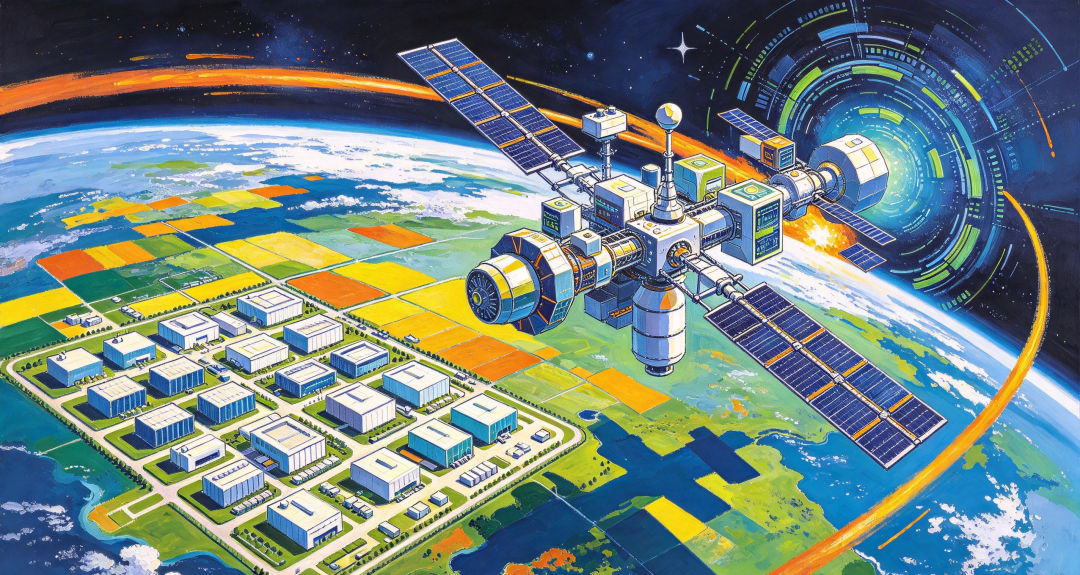
Although 2035 is far away from us, the space race has already begun.
Musk has long said that SpaceX "does" a space data center. After Pichai posted a post announcing that he was the MVP, Musk responded to him with two rocket emojis.
Musk then said: "The total amount of computing power in space will obviously approach 100% of all computing power."
Amazon founder Bezos also said something similar. He said that in 10 years, there will be gigawatt-level data centers in space. Former Google CEO Eric Schmidt acquired the rocket company Relativity Space and also wants to send data centers to the sky.
Starcloud, a startup company, has put a satellite equipped with Nvidia H100 into orbit and said it will one day build a 5-gigawatt space data center spanning a 4-kilometer solar array.
Google’s MoonShot
If you only understand Suncatcher from a business perspective, there is actually nothing to talk about. After all, spending a lot of money to send chips into space is just to save some electricity?
Because business is just the outer layer of it. The real root of this project is a culture called "moonshot" that Google has planted since its inception.
The story begins in 2005.
That year, Stanford professor Sebastian Thrun led a group of students to build an unmanned vehicle named Stanley and participated in the Grand Challenge organized by the U.S. Defense Advanced Research Projects Agency (DARPA).
The competition requires autonomous vehicles to traverse a 132-mile off-road course in California.
Stanley finished the entire race, won the championship, and became famous in one battle.
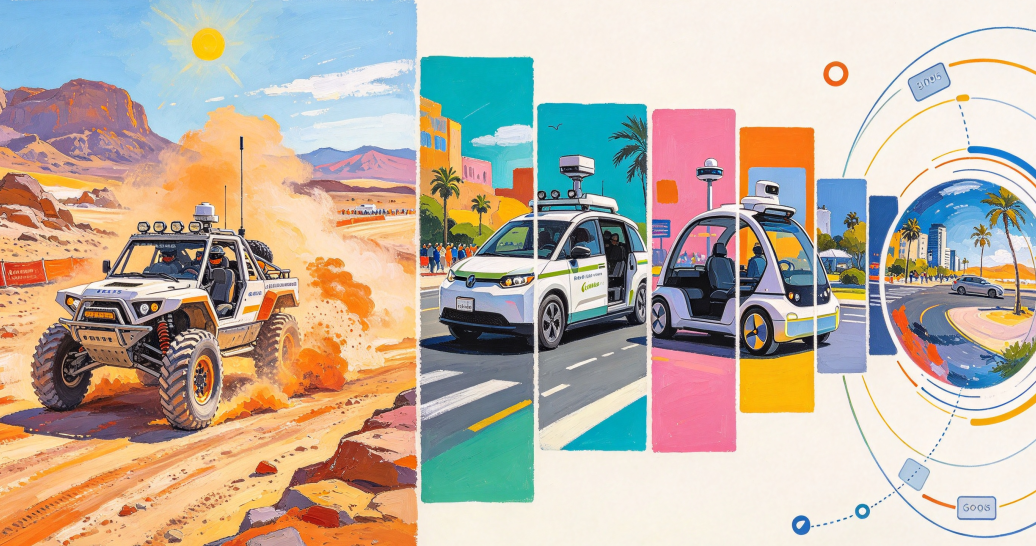
Among the spectators at that game were Google founders Larry Page and Sergey Brin, who were said to have dressed up in disguise.
They not only come to watch the game, but also prepare to come to the game to recruit people.
In 2007, Page invited Thrun to Google, with almost unlimited resources.
Tron did not disappoint. The 360-degree in-vehicle camera system he installed on self-driving cars later became Google Street View. In January 2009, he launched the autonomous driving project Project Chauffeur. This project eventually grew into today's self-driving Waymo.
So Page gave him an unprecedented position - Google's first "director of other affairs". Specialize in things that “investors can’t understand, but are cool”.
Tron alone is not enough. Page also fell in love with another man, Astro Teller.
Taylor holds a PhD in artificial intelligence from Carnegie Mellon University. Before joining Google, he started his own business continuously, including the wearable company BodyMedia and Cerebellum Capital, an AI investment fund.
Page once said that what he liked was Taylor's resume of "turning crazy ideas into business", so he recruited him as the "new product director."
On September 12, 1962, then US President John F. Kennedy gave a speech at Rice University, "We choose to go to the moon in this decade", that is, we decided to go to the moon in 10 years. The time came in 1969, and Apollo 11 actually went up.
Since then, the word moonshot has come to mean in English an ambitious goal that is “open, time-limited, technically outrageous, but must be accomplished by mobilizing resources.”
Both Page and Brin attended Montessori schools. Page once said: "We all went to Montessori schools. I think it is the kind of training of 'disobeying rules and orders, being self-driven, constantly asking questions about the world, and doing things differently from others' that makes us a little different."
In 2010, a semi-secret laboratory emerged within Google, namely Google X, led by Taylor and Thrun, specifically designed to carry this "moon landing" culture.
Taylor said that the Apollo project was the spiritual prototype of X, making the impossible possible.
He also concluded a counter-intuitive rule: it is easier to get people to do something that is 10 times better than to do it 10% of the time. Because a 10% improvement means you are still smarter than everyone else on the old path; and a 10x goal will force people to completely change their path.
Later, Google X directly changed its name and became X, The Moonshot Factory. Because of this, Taylor was later dubbed "Captain of Moonshots".
X is different from ordinary corporate research institutes. Ordinary Research Institute is busy making improvements to the parent company's main business, while X's mission is to solve problems outside of Google's core business. It doesn’t have to rely on revenue targets or delivering products on time.
Looking back at Suncatcher now, everything falls into place.
In its official blog, Google clearly ranked it alongside its two “predecessors”, namely quantum computing, which started more than 10 years ago, and autonomous driving 15 years ago.
Suncatcher is a new addition to Google’s moonshot tradition.
Like its predecessors, it looked crazy when it was first born. But it is precisely this culture of "trying the impossible first regardless of whether it is cost-effective" is the core reason why Google dares to send servers to the sky.
Comments