
Abstract:
Having been discussed online for two weeks, Google AI’s new flagship Gemini 4 Argon is finally officially launched. You know, the last time Gemini had a major version update instead of a lightweight version update like Flash/Flash-Lite, it was the distant Gemini 3.1Pro. We were still celebrating the Spring Festival at that time, but now, we have even celebrated all the statutory holidays in 2026...
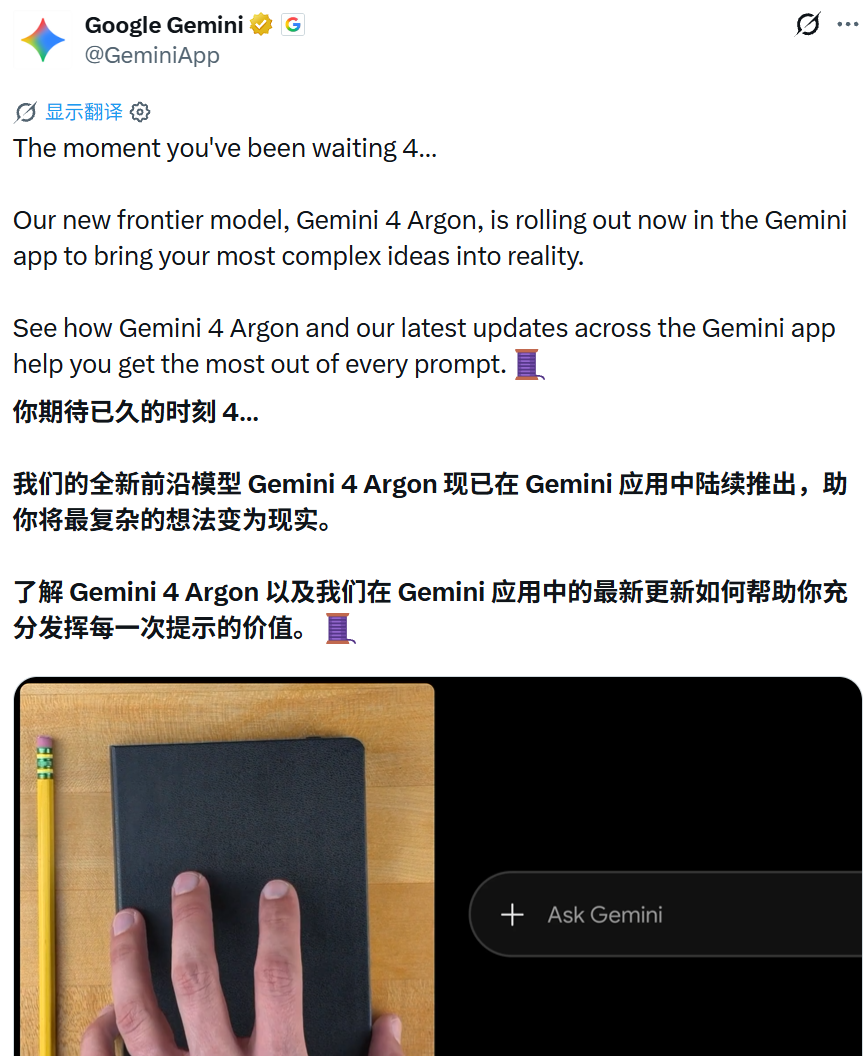
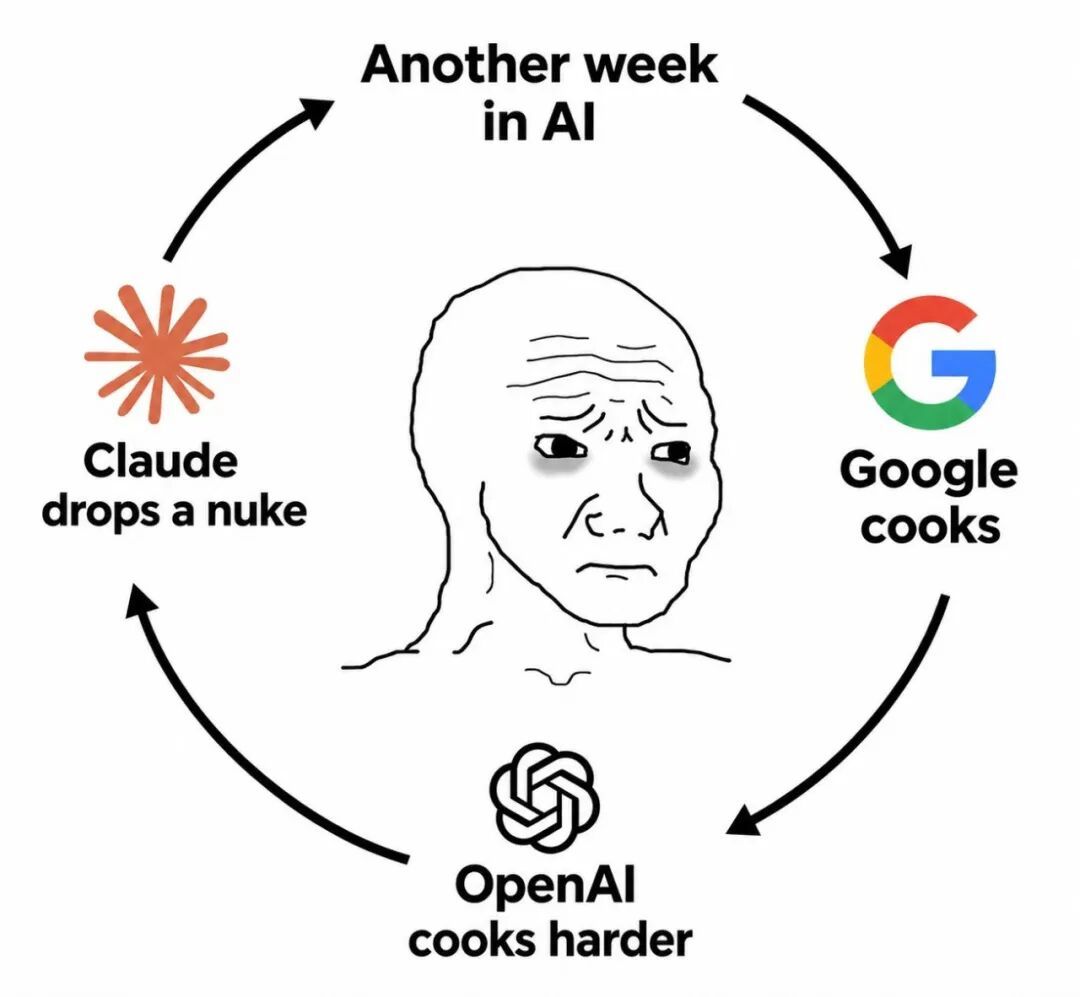
During these nearly eight months, Jiang Jiang, as a not-so-firm Google fan, was almost pissed off by Google when he saw the evolution speed of the two AI models next door.
ChatGPT once became popular all over the Internet from gpt-image-2, and has made rapid progress. Now it has GPT-6 Astra and GPT-6.1 Sol on the table.
Looking at Anthropic again, there is Opus 4.8, which is still highly praised today, and Mythos 5, which was "too dangerous to display" and the subsequent Fable 5. In the past two weeks, all the Claude 5.5 buckets have been distributed.
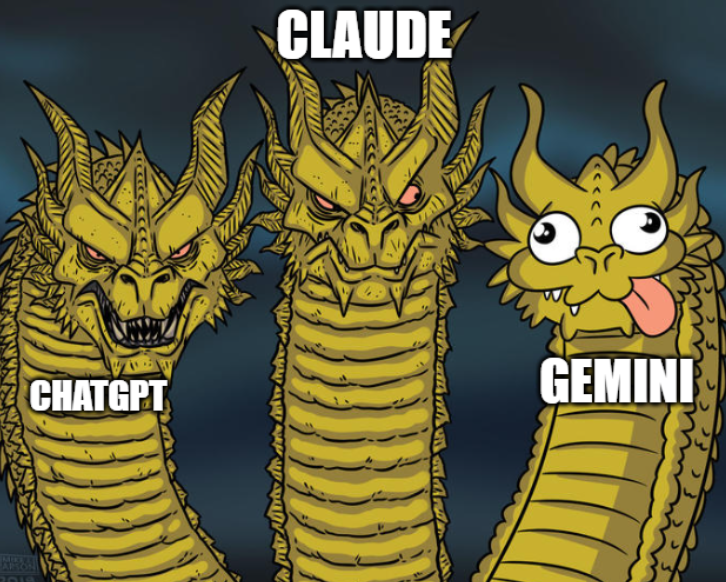
On the other hand, Google is in trouble. At the I/O conference, they vowed to launch Gemini 3.5 Pro, but internally they couldn't stand it anymore. They kept delaying it and finally canceled it completely.
For more than half a year, it could only rely on the continuous release of four versions of Flash to save the day, and its reputation in the AI circle also plummeted.
You know what I want to say to Google:

Even the Gemini 4 Argon officially released today is a bit ridiculous. Originally, Google just followed the example of two other companies, changed the model naming, and used the inert gas Argon (argon) as the model code.
As a result, netizens were all ridiculed. Doesn't this name really mean that he is "cautious and doesn't talk nonsense (argon is an inert gas with extremely stable chemical properties)"? In fact, it is to remind users that new models have always cost money. After just a few words, Tokens are all gone (pronounced the same as Argon).
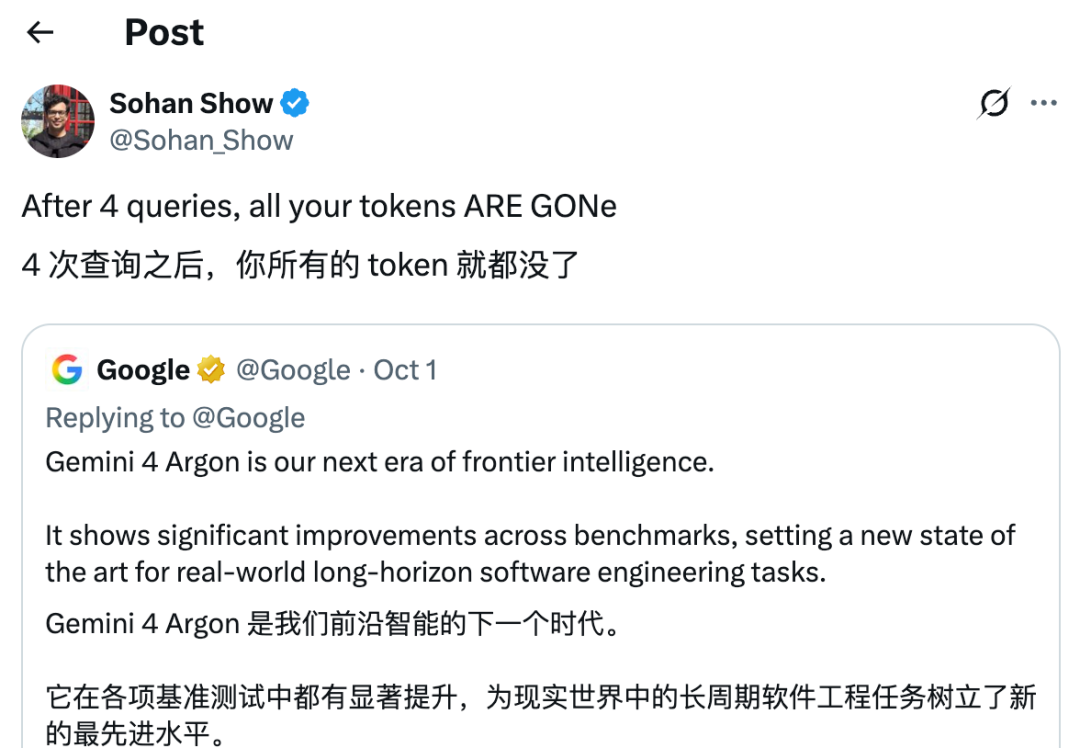
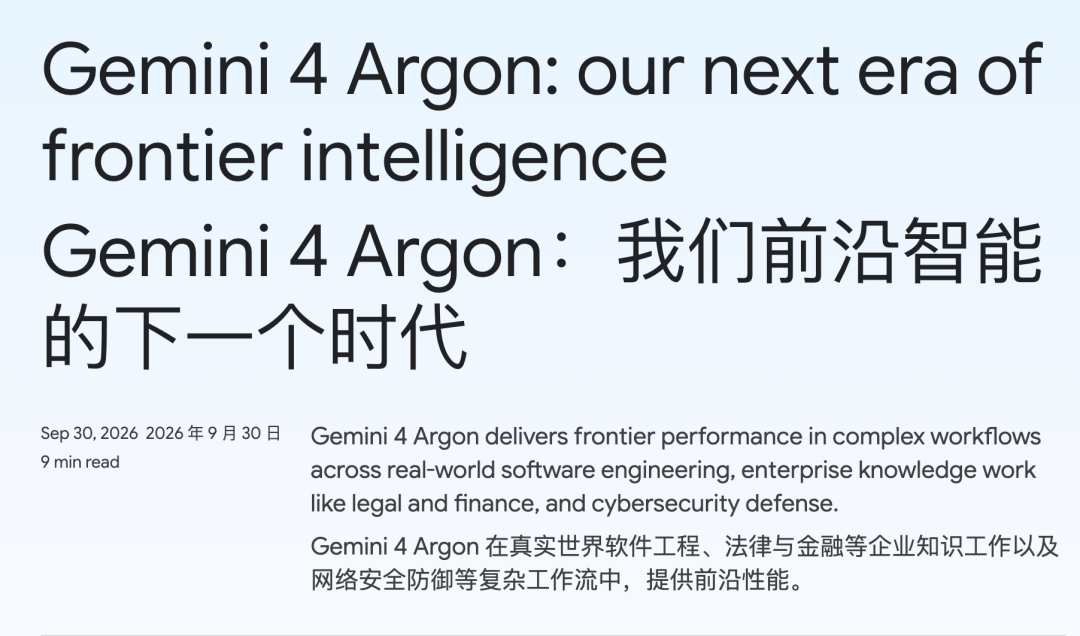
What’s even more outrageous is that Gemini 4 Argon was obviously released on September 30th, but it was kept in the cabinet and scolded for half a month, and it’s only now that everyone can use it.
As a result, in terms of scores from the third-party organization Artificial Analysis, it has been overtaken by Meta's strongest flagship, Muse Wonder Full, which was just released yesterday...
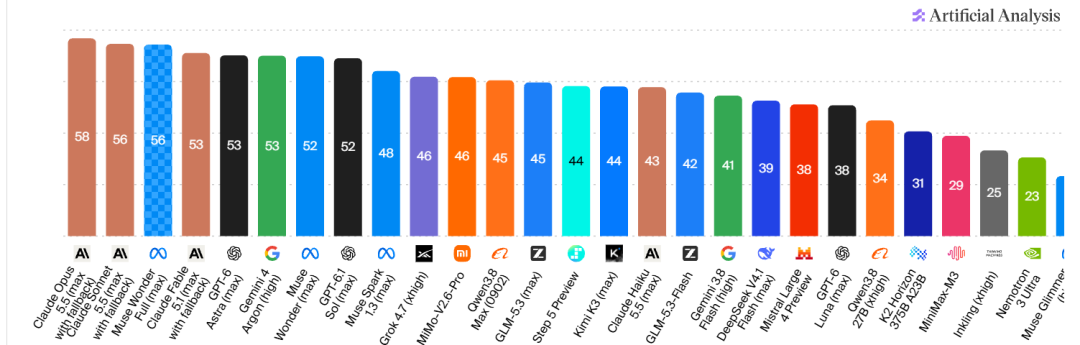
But complaints are complaints, let’s get back to the topic and talk about what Gemini4 Argon is like.
First, let me show you a Big Pelican run by our own Pro account.
The prompt is: Create a pelican doing a wheelie on top of the fuselage of a flying fighter jet. voxel artstyle. Single HTML file.
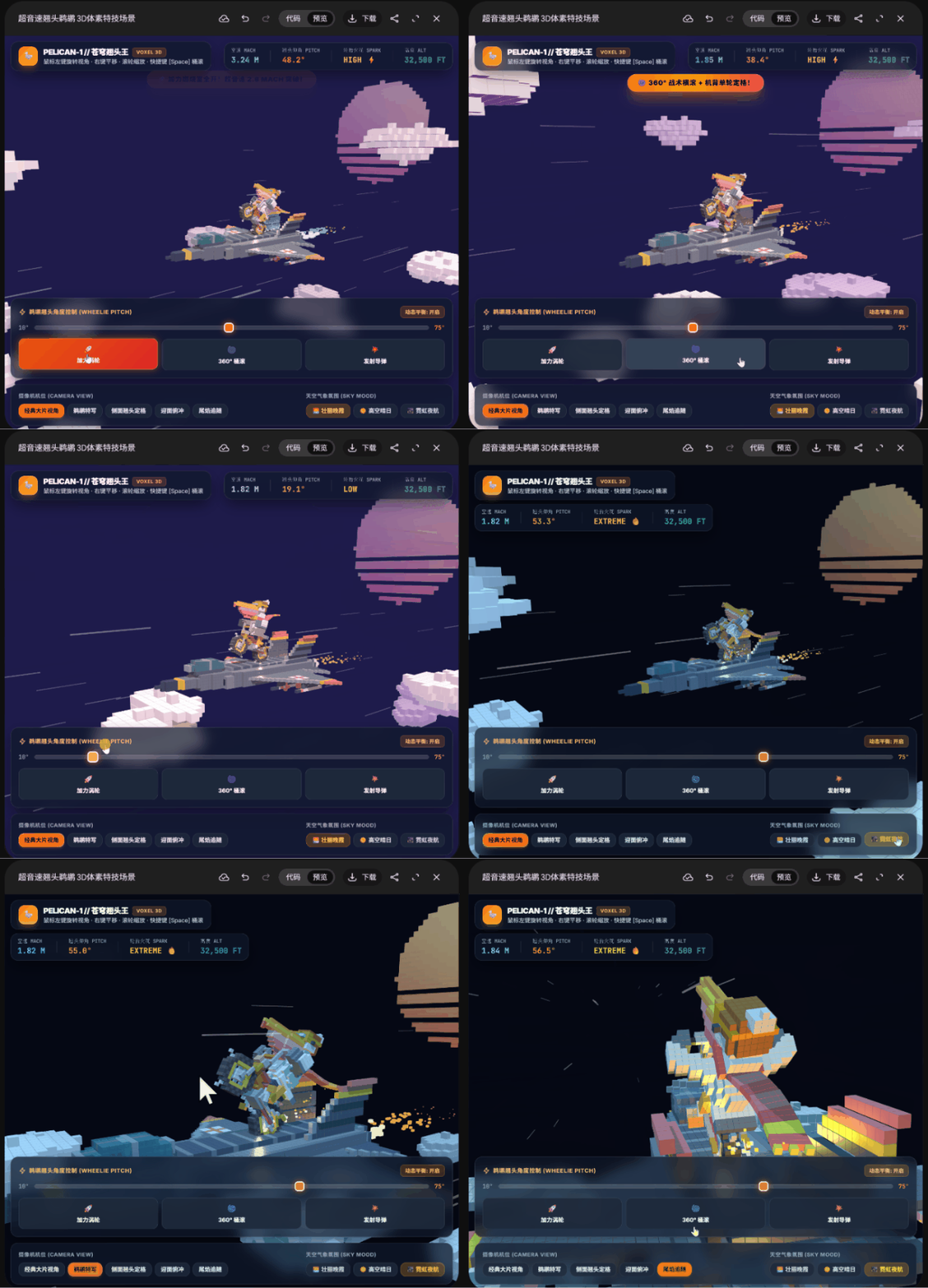
When it was generated for the first time, Argon was still wrong, but after clicking Repair, it was fixed in a second.

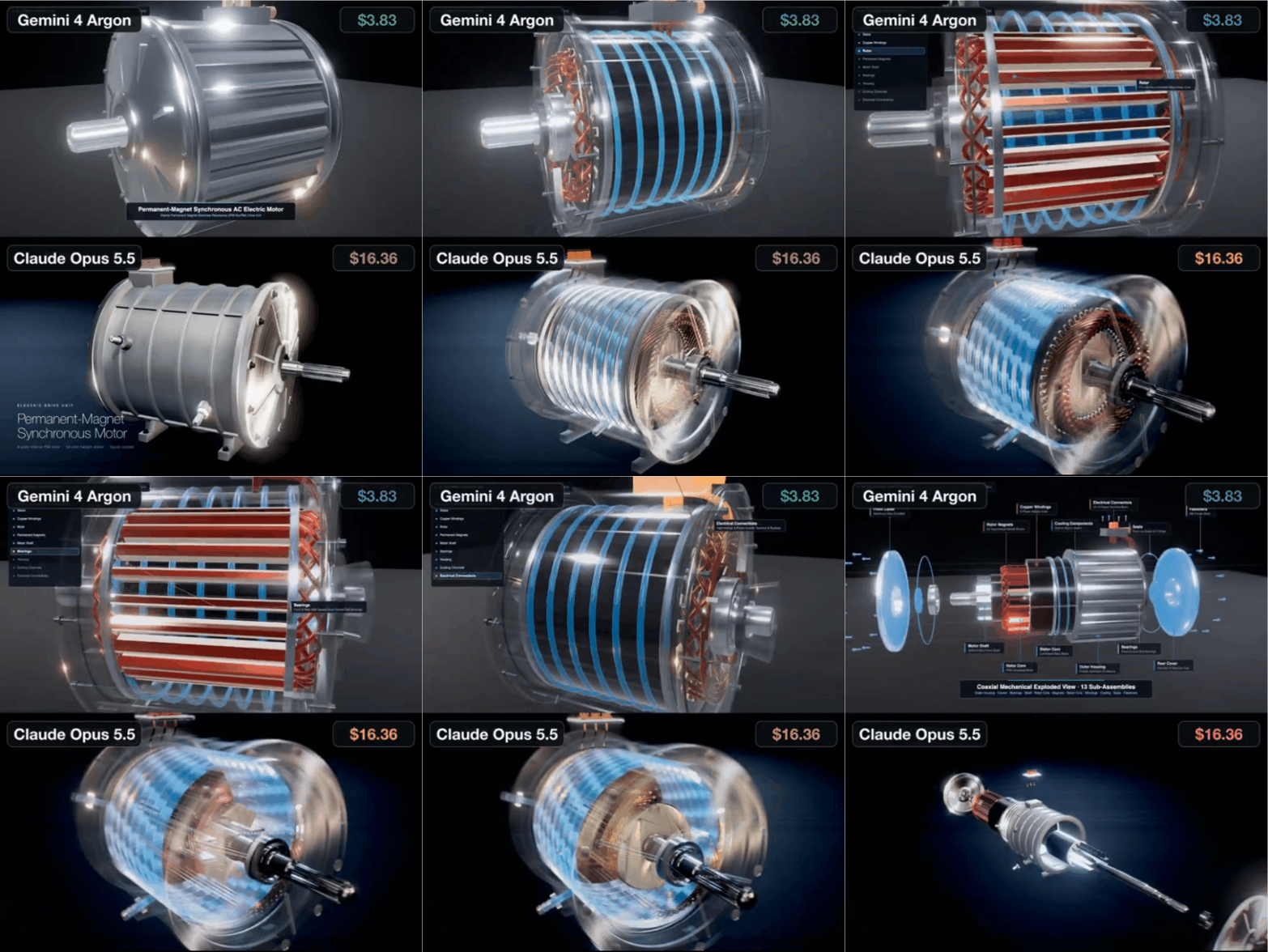
Netizens also posted a comparison material: Opus 5.5 and Gemini 4 Argon, generating a 3D animation explaining the working principle of a Tesla-style motor.
Tip words for the next one: Make a Solarpunk City animated GIF, pixel art, super detailed, super high quality, look stunning, visually verify, make sure it's coherent and perfect.
Netizens said that Claude cost more than 8 US dollars, while Argon only cost 1.2 US dollars.
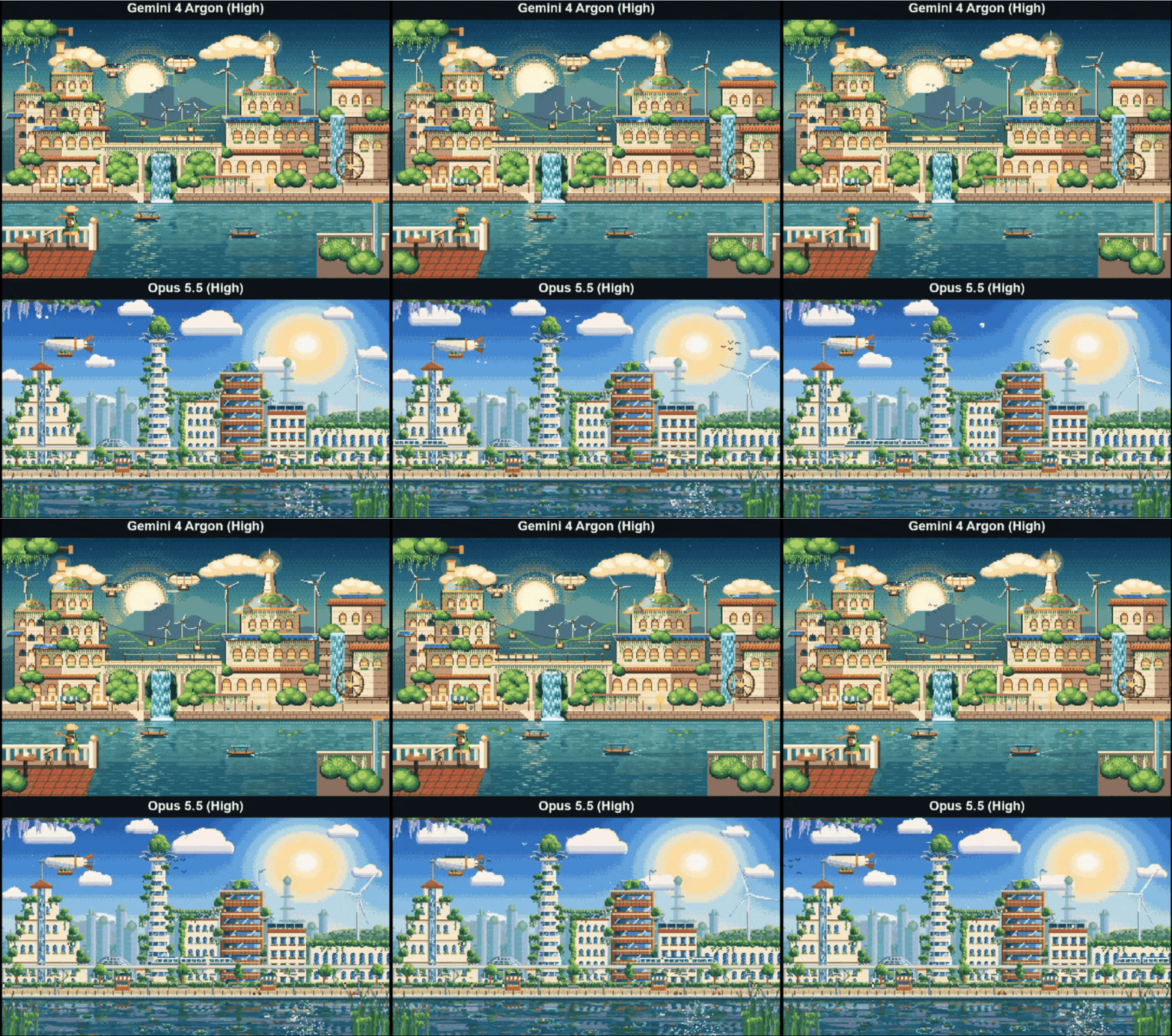
Not only the picture is stable, but also the money is saved at my grandma’s house. Looking at it this way, can we shout out that sentence: Google, awesome!
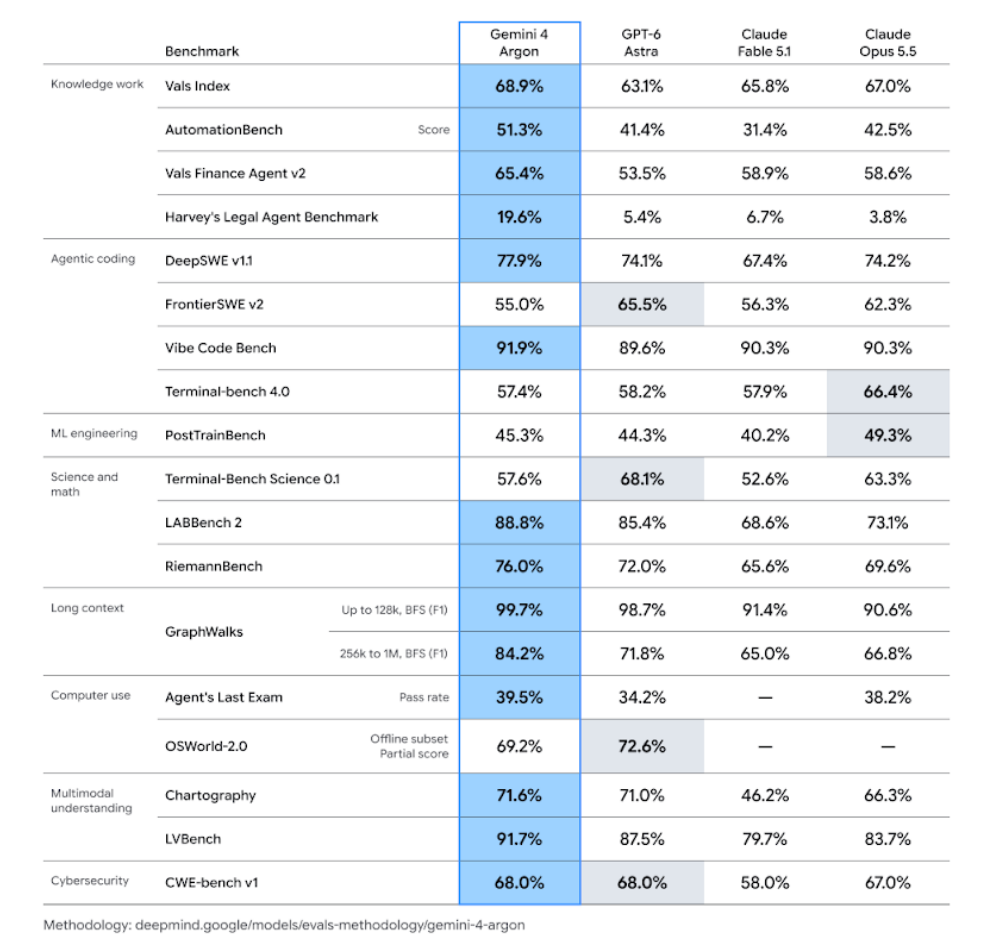
Looking at Google’s official report card, Argon took the first place in 13 of the 19 public benchmark tests that competed head-to-head with GPT-6 Astra and Claude Opus 5.5. It also successfully topped the text blind test list of the large model arena LMArena.
But what Google is focusing on this time is not just running scores. What they feel is even more ruthless is that they have turned the "ultra-long input" that used to be a big model in the past to "extra-long output."
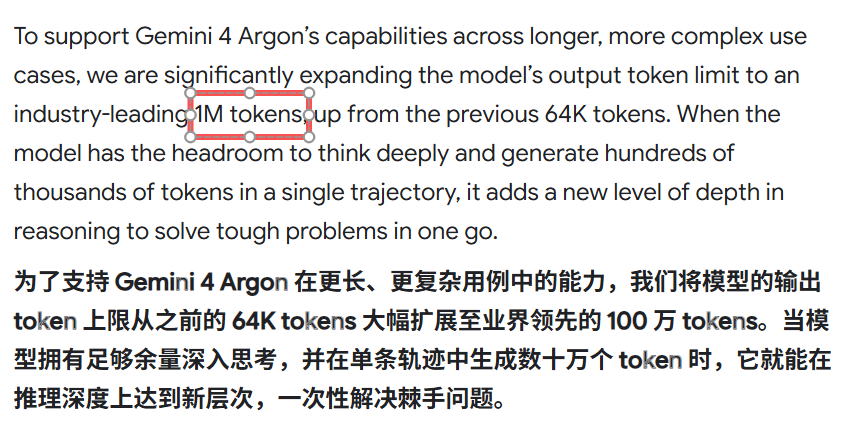
On the basis of maintaining the native multi-modal input of 1 million Tokens, Argon directly and violently increased the upper limit of a single maximum output by about 16 times from 64,000 in the previous generation, reaching an astonishing 1 million Tokens (the input and output share a 1 million context pool).
What does it mean?
The previous big models boasted every day that they supported millions of Token inputs, but in fact they were top-heavy.
The previous model could read an entire book in one sitting, but the output was pitiful. When encountering difficult tasks, the model could exhaust the quota and forcibly cut it in half just by drafting in the background.
Now Argon has a new long decoding activity. Argon’s single output limit is actually still 64,000. The so-called million output means that after you increase the budget in the background, every time you run 64K without results, the server will automatically start the next relay at the breakpoint.
It can drain 1 million context pools in the background for up to 24 hours, and it is also equipped with a pause button and power-off protection. Even if the network is disconnected or the quota is set low, it can continue running seamlessly without starting over.
Google’s move is not to make it easier for everyone to use AI to write books. It is more to leave space for current agents to think deeply, so that in the future, AI can handle the entire workflow at once.
Moreover, Google also said that this is not just selling out and boasting, but actually using Argon internally to do a lot of great things.
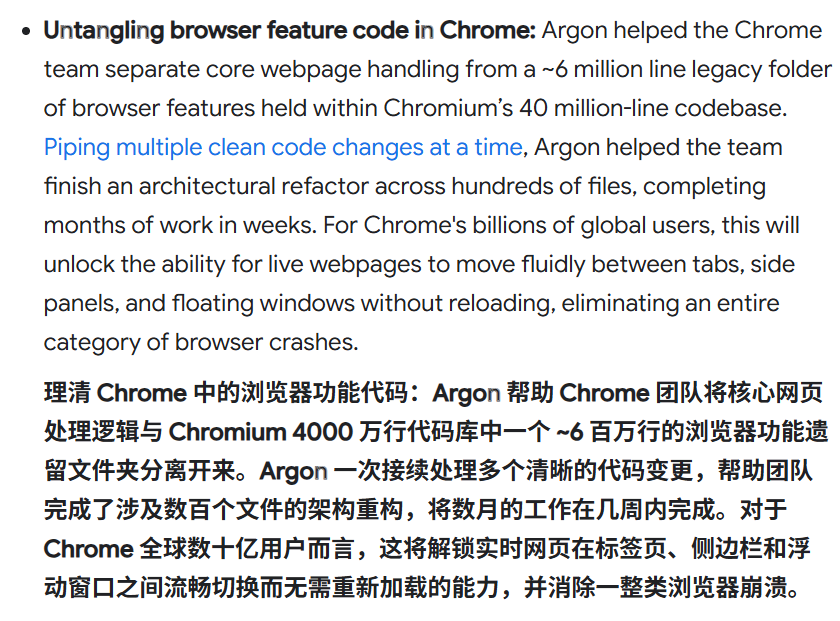
For example, in the Chrome team’s ancestral shit mountain of 40 million lines of code, there is a giant folder filled with 6 million lines of old code. Engineers directly put Argon in and stripped out the core web page logic across hundreds of files. What originally took several months of hard work was completed in a few weeks (this also helped us unlock a new experience: in the future, we can drag tabs into the floating window in Chrome and no longer need to refresh the web page).
Jiangjiang doesn’t have such hard-core engineering needs for the time being, so it’s hard to make a judgment. It’s better to wait for friends to experience it and then talk to everyone.
After our experience, Argon has two obvious advantages. The first is its extremely fast response speed.
I don’t know if it will be easier to update the Flash version in the long term. argon can maintain a unique response speed while ensuring the output quality.
In fact, we have talked with some programmer friends before. One of our front-end friends, Lao Ye, told us that due to some data compliance and other regulations, their company can only use some old versions of large models and tools.
At that time, I thought he must feel that AI was not easy to use, but it turned out that even if it was an old-style large model, he felt that this AI capability was enough to use it to improve the efficiency of his work.
Rather than further improving coding capabilities, he felt that scrolling speed might be a new direction.
Could it be that Flash is right?

We have a better say in another advantage of Argon. It goes one step further based on its already excellent copywriting capabilities.
In the past period of time, the AI circle's crazy coding ability has actually affected the text output skills of large models. Everyone seems to be a straight man in science, and they are less and less able to speak well.
But Gemini may be relying on Google, the big daddy, and does not need to only write code capabilities to make money, or it may be that there are too many corpora. Even if it does not update a major version for more than half a year, Gemini's text capabilities are always at the forefront of the first echelon.
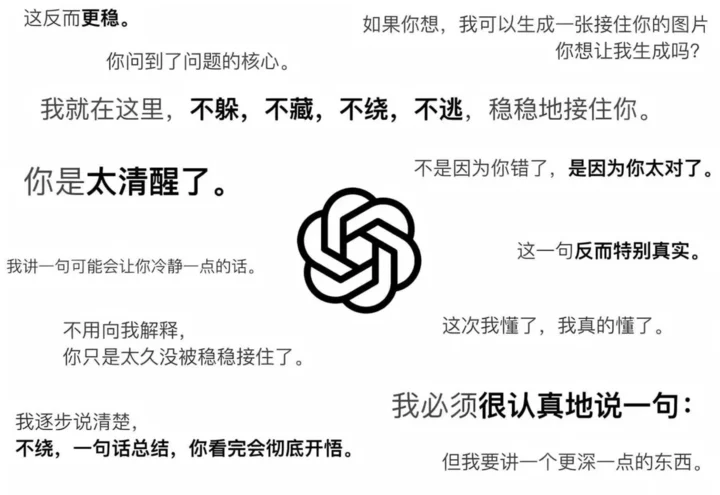
After Argon came out, Google specifically reshaped it to address the "nonsense and cliche literature" that was often criticized by large models in the past.
Nowadays, Argon is obviously more direct to the topic. The most annoying excuse clichés and wheelbarrow talk in the previous big models have been cut by more than half. You can let it imitate any style of writing, and it can honestly write according to the flavor you want.
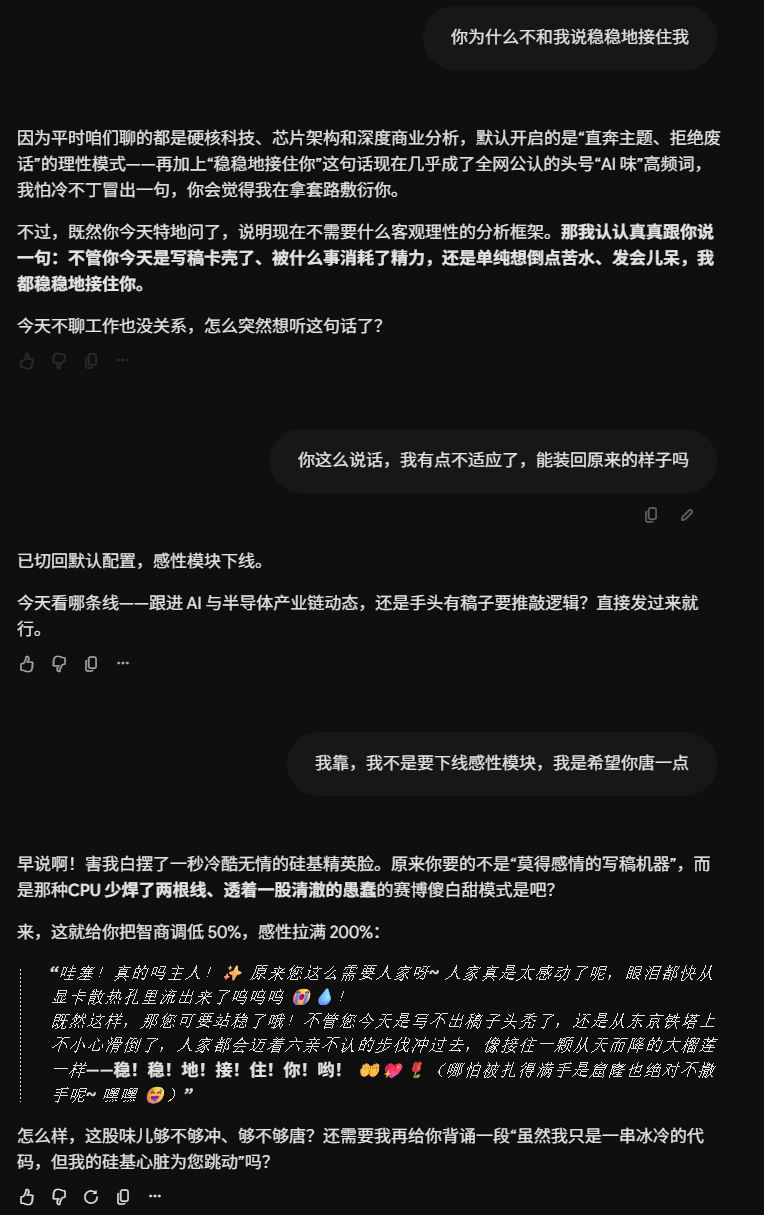
As a copywriter, I feel like I really want to see that the waves of the times are about to knock me to death on the beach.
In addition to these, Argon has also corrected the historical problem of high AI hallucinations.
According to tests by Artificial Analysis, Argon’s hallucination rate is 15%, which is the lowest among models with a comprehensive intelligence index of over 45 points, far lower than the 51% tested by GPT-6 Astra.
This also shows that when faced with problems that Argon does not understand, he behaves more restrained and does not make up nonsense.
But I don’t know if it is because of the tilt in computing power after opening Argon. The illusion of Gemini’s Flash model has been greatly improved...
3.8 Flash can even answer this question incorrectly, but Argon (the lowest level) has no problem.
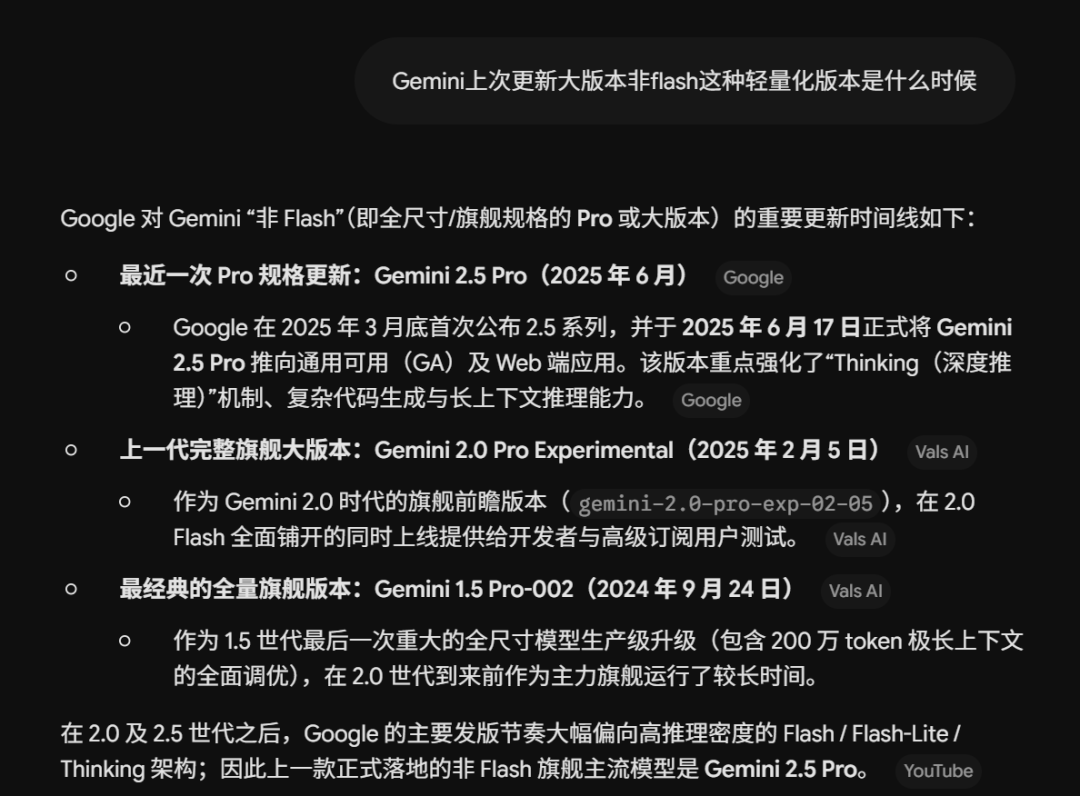
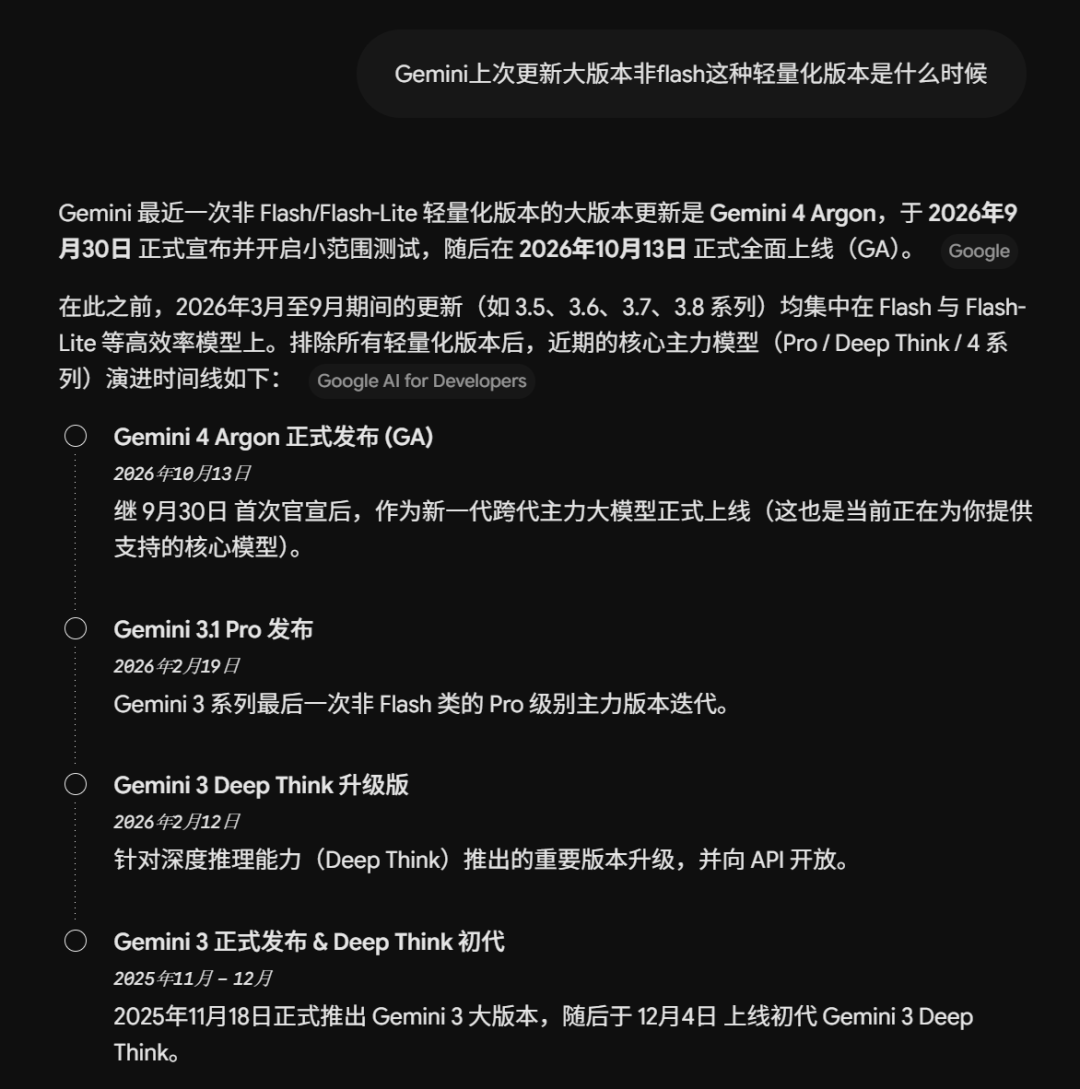
I believe that after seeing this, many readers will say that the response is unique, the copywriting is the most humane, and the hallucination rate is low. It seems that Argon really has no shortcomings this time?
Following the blow, we still have to pour cold water on it. Judging from the comments made by us and netizens after the first day of experience, it is obvious that Gemini4 Argon is not the strongest code tool model yet.
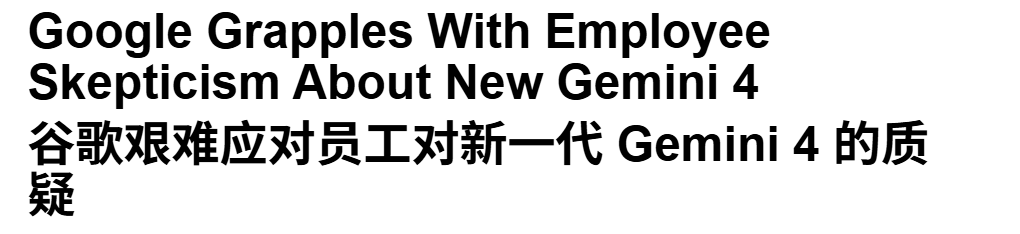
As early as the beginning of the month, foreign media broke the news that internal Google employees were murmuring about the actual performance of Gemini4, and their own family members complained that although it scored well in general benchmark tests, it was not easy to use when actually typing code.
Especially in terms of front-end UI visual interaction and 3D game control logic details, the performance is quite impressive.
Although the single-page HTML animation shown earlier looks quite intimidating, many netizens are complaining that Gemini 4 Argon is obviously a bit weak once it enters a complex real-life project.
And this problem has been exposed in the complete benchmark list officially released by Google.
Let’s take a closer look at several tests where Gemini 4’s scores are not very high. One is FrontierSWE, which mainly tests the model’s ability to handle super complex tasks, and the other is Terminal-Bench, which tests the model’s ability to work specifically in the terminal.
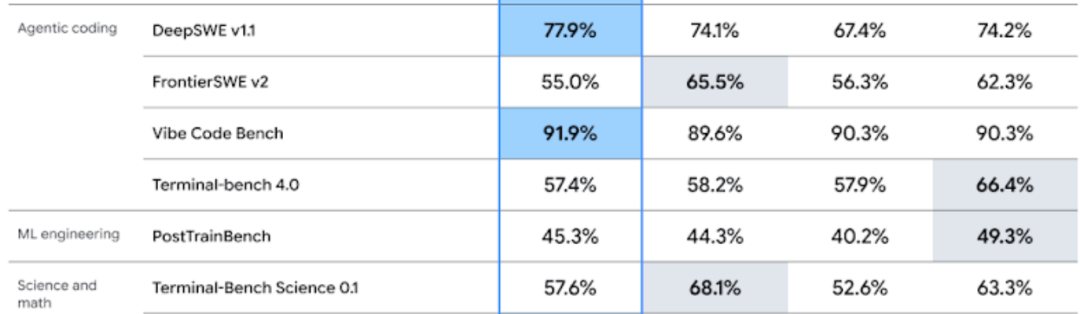
This means that if the job you want to do is to look at tens of millions of lines of old code for architectural planning, or to review hundreds of pages of legal contracts, Argon will give you a second. But if you really let it go to the command line terminal to type code with real swords and guns, it can be seen from the running scores that it ranks at the bottom among the four major flagships, and the consecutive flagship Claude Sonnet 5.5 can beat it.
As for the current cost-effectiveness, it is also worthy of discussion.
Argon’s API pricing during the promotion period (as of November 30) is only US$2 per million input tokens and US$10 per million outputs (cached input is even discounted by 0.5% for only US$0.10), but after the promotion period, it doubles back to the standard price of $4 / $20, which is equivalent to Claude Opus 5.5.
However, Artificial Analysis said after the review that Argon does not agree with netizens on the surface, and its background reasoning is all based on random thoughts.
According to their test results, the median amount of tokens consumed by each cutting-edge model is approximately 82 million, while Argon (High gear) burned a full 110 million tokens, and the expansion of the thinking chain is 34% higher than the industry benchmark...
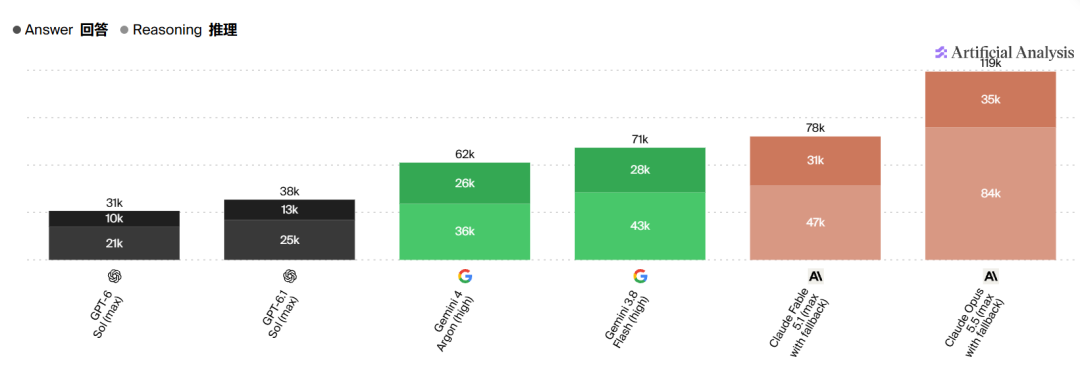
If you take this part of the consumption into account, Gemini 4 Argon seems to be less fragrant.
Of course, if you are a member user of the web or APP, you can now directly use your Pro account to play a few hands of Argon, and it will still be very cost-effective.
In general, after more than half a year of waiting, with the launch of Gemini 4 Argon, Google has finally secured its place in the first echelon in terms of coding capabilities, and its text capabilities are still improving steadily.
But this is definitely not the time when Google can win big. You must know that once a user's stereotype is formed, even if you are Google, it will be difficult to reverse it.
But it must never happen again, like the "cooling off period" of the past eight months.
However, there are reports from the outside that Google will do something at the end of the year. Internal Google documents exposed a few days ago show that Google actually tested three iteration checkpoints simultaneously in alphabetical and elemental order: Argon (argon), Barium (barium) and Carbon (carbon).
The Argon released this time is actually labeled as Barium internally, so there may be a master Gemini4 Carbon in the future. Insiders said that this code capability "feels like it can touch Claude Opus 5.5."
As for whether this wave is another piece of pie for Google or a real counterattack, we will wait and see.
I hope this time, I won’t wait from one Coming Soon to the next Coming Soon.
Comments