
Abstract:
After successively updating the Flash 3.5 to 3.8 series, Google, which has yet to deliver the flagship Pro version, urgently needs a blockbuster product to stabilize market expectations. Gemini 4 Argon, which quietly launched a small-scale test two weeks ago, assumes this role. Argon means argon, which is colorless, odorless and stable. It often provides a protective barrier in critical processes such as welding and semiconductor manufacturing. Naming it after this just echoes Google’s current needs: no more gimmicks, but a solid release to stabilize the situation.
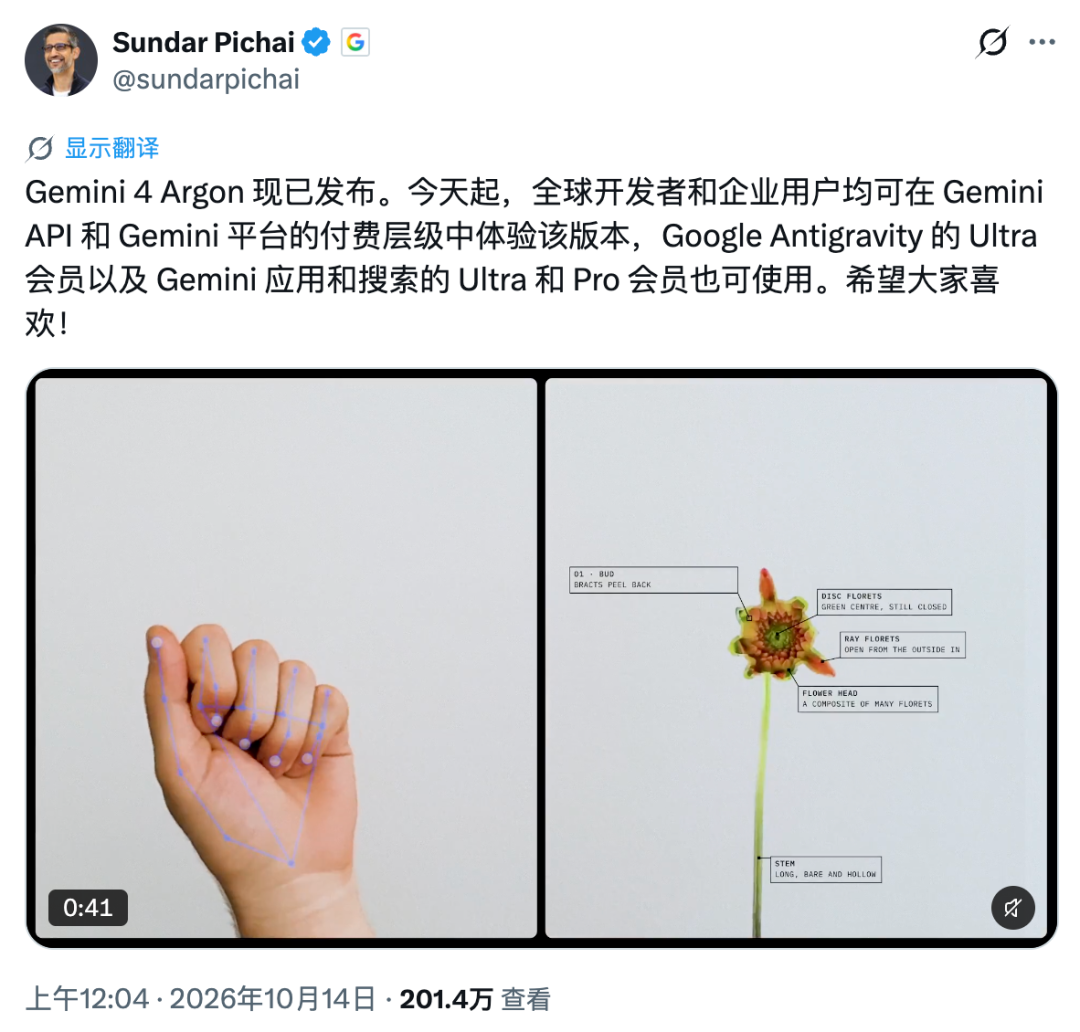
Just now, Gemini 4 Argon, which has been polished for six months and tested by more than 100,000 internal Google users, was officially launched globally.
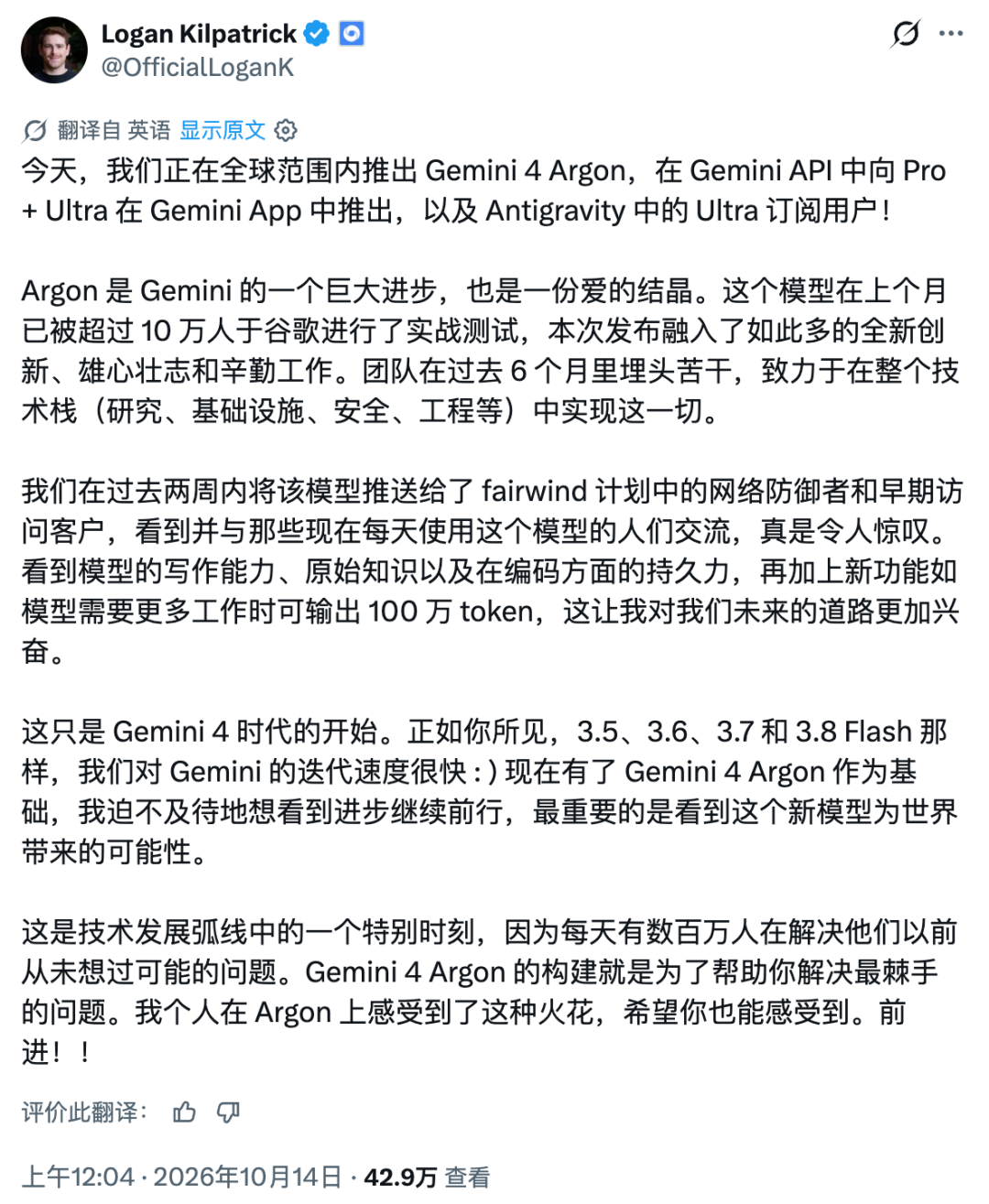
Logan Kilpatrick, Google AI product leader, said on social platforms that this is just the beginning of the Gemini 4 era. The new model is designed to help people overcome difficult problems that they could not even imagine before.
Google, which has been urged for half a year, has launched its new flagship
From a positioning perspective, Gemini 4 Argon focuses entirely on complex, multi-step real-world deep tasks, covering fields such as programming, finance, law, network security and cutting-edge science. Argon took first place outright in the Vals Index, which measures performance in key economic sectors.
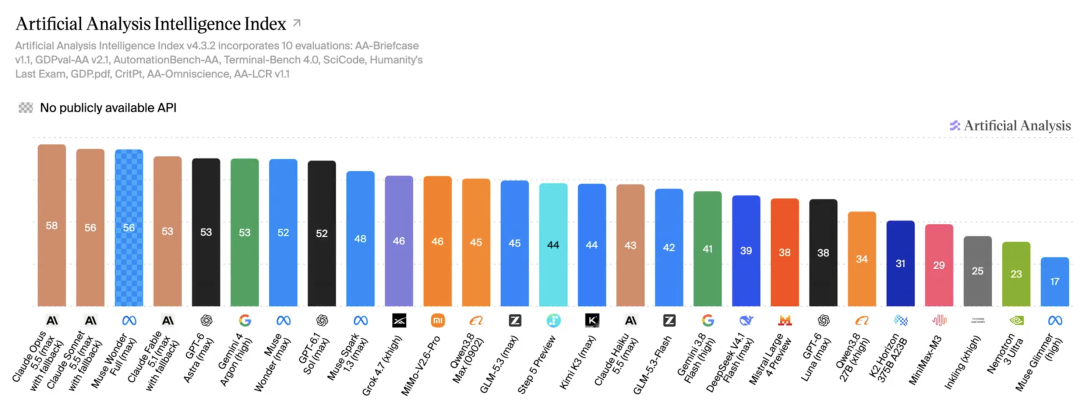
In the Artificial Analysis Intelligence Index list, Argon (High) scored 53 points, which is the same as the Max level of Claude Fable 5.1 and GPT-6 Astra.
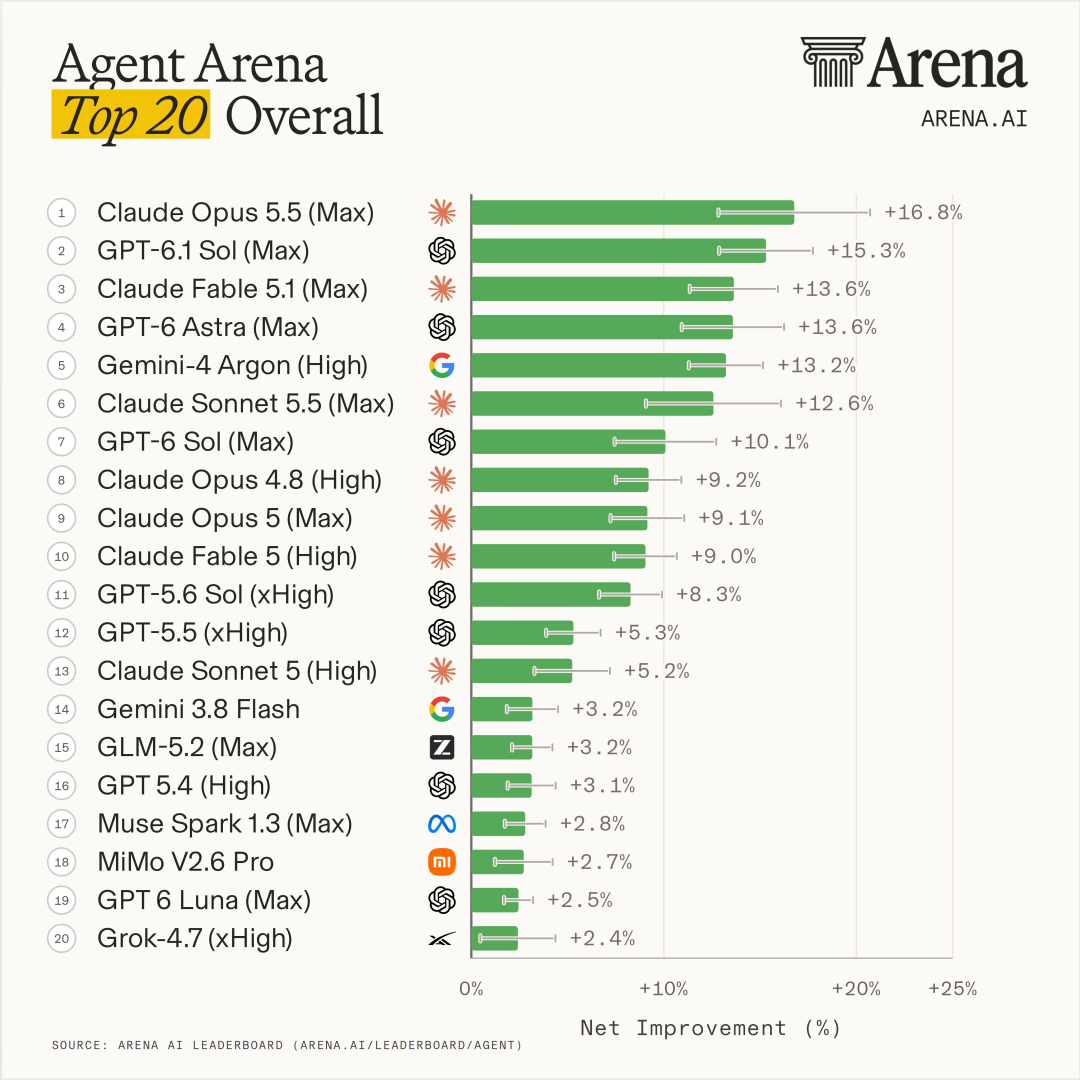
In the Agent Arena overall list, Argon (High) ranks fifth, behind GPT-6 Astra (Max) and before Claude Sonnet 5.5 (Max).
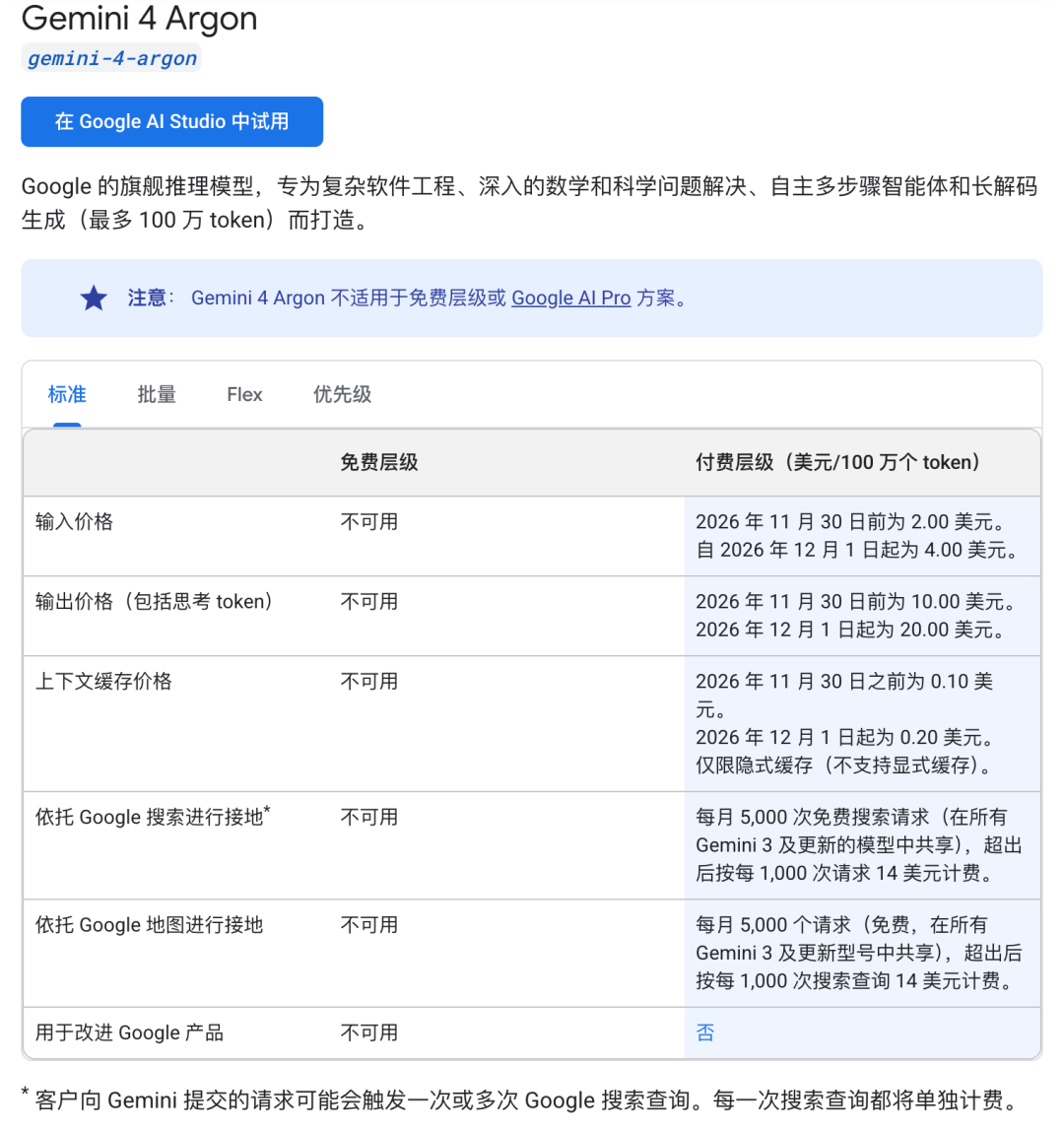
In order to support high-intensity long-distance tasks, Google has provided a unified input and output Token limit of up to 1 million in the API this time, and has launched a new renewal protocol.
Compared with the high computing power consumption expectations, Argon's initial discount period pricing is quite aggressive. Each million input tokens are only $2, and each million output tokens are $10. The discount for cached inputs is as high as 95%.
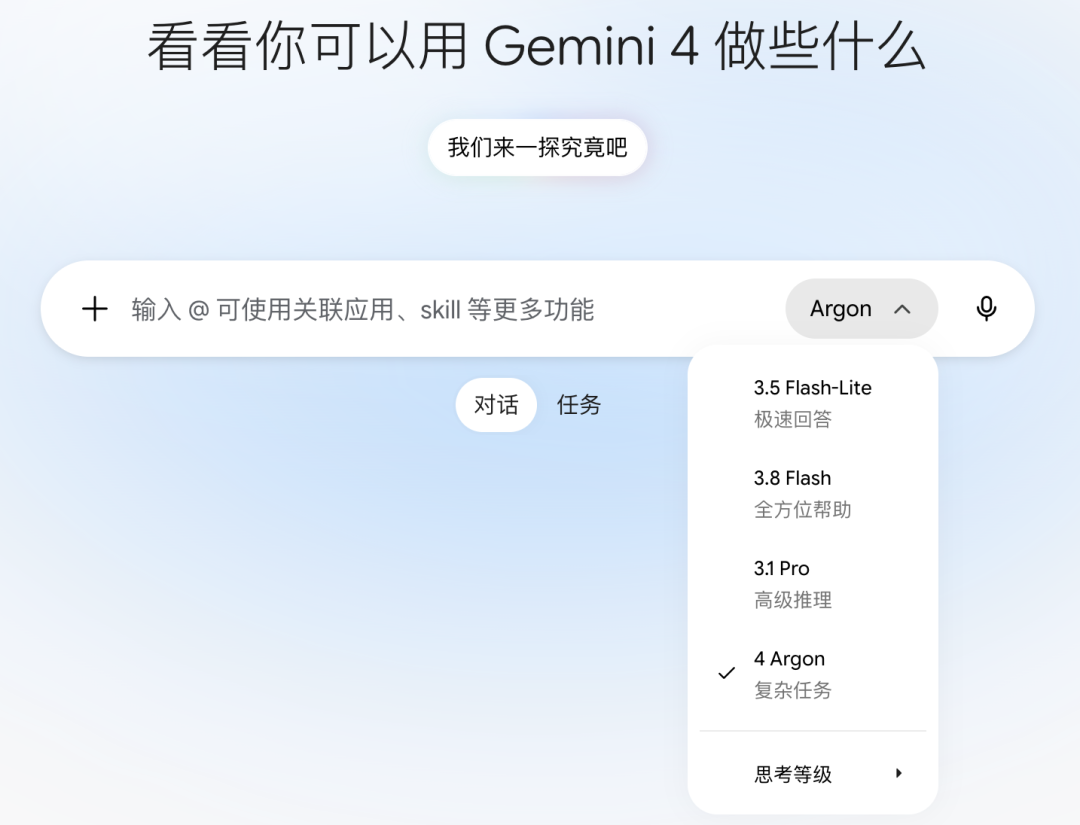
Currently, developers can access the model through AI Studio, Android Studio, and Gemini API. Google AI Pro and Ultra subscribers can also use it directly in Gemini applications, search AI patterns, and the agent development platform Google Antigravity.
Before it was launched to the market, Google’s internal engineering team had already regarded Argon as its main productivity tool.
In the past few weeks, with the help of the Argon model on the Antigravity platform, Google engineers have experienced an increase of more than 35% in agent code submissions and a nearly one-third reduction in code rollback rates.
Argon shows a high degree of autonomy in code and model optimization. It helped the Chrome team refactor 6 million lines of legacy code in a 40 million-line code base in a matter of weeks, completely eliminating a class of browser crashes.
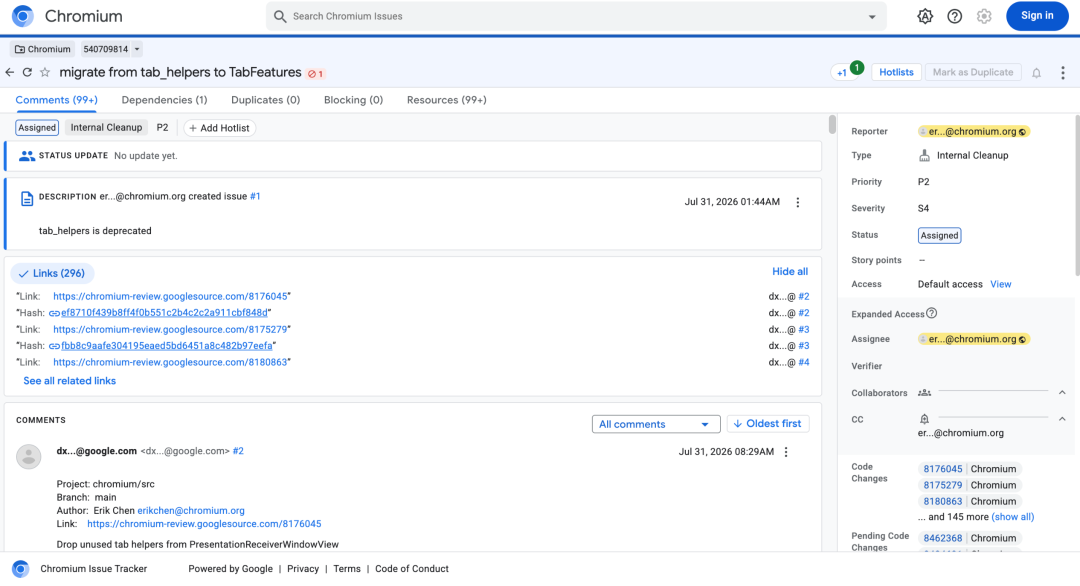
Under the condition of knowing only brief goals and rules, it independently optimized the Google Agent Framework ADK overnight, reducing long-session memory preparation time by 40%; it also increased the end-to-end inference speed of the open source model Gemma 4 E2B by 2.85 times within a few days, while maintaining zero quality loss.
This long-range reasoning ability soon extended to the world of business, scientific research and physics.
In early evaluations, Deloitte measured its long-term cross-tool task completion rate at 100%, Kepler found that the multi-year financial reports it generated were more than 99% consistent with human analyst models, and legal technology company MinutaIA even used it to uncover case details missed by human experts.
In terms of scientific research, it not only greatly accelerated quantum chemical calculations and quantum error correction decoding, but also completed the design of five new enzymes within a few hours, and helped find new counterexamples to the "Glad Conjecture" of nuclear fusion.

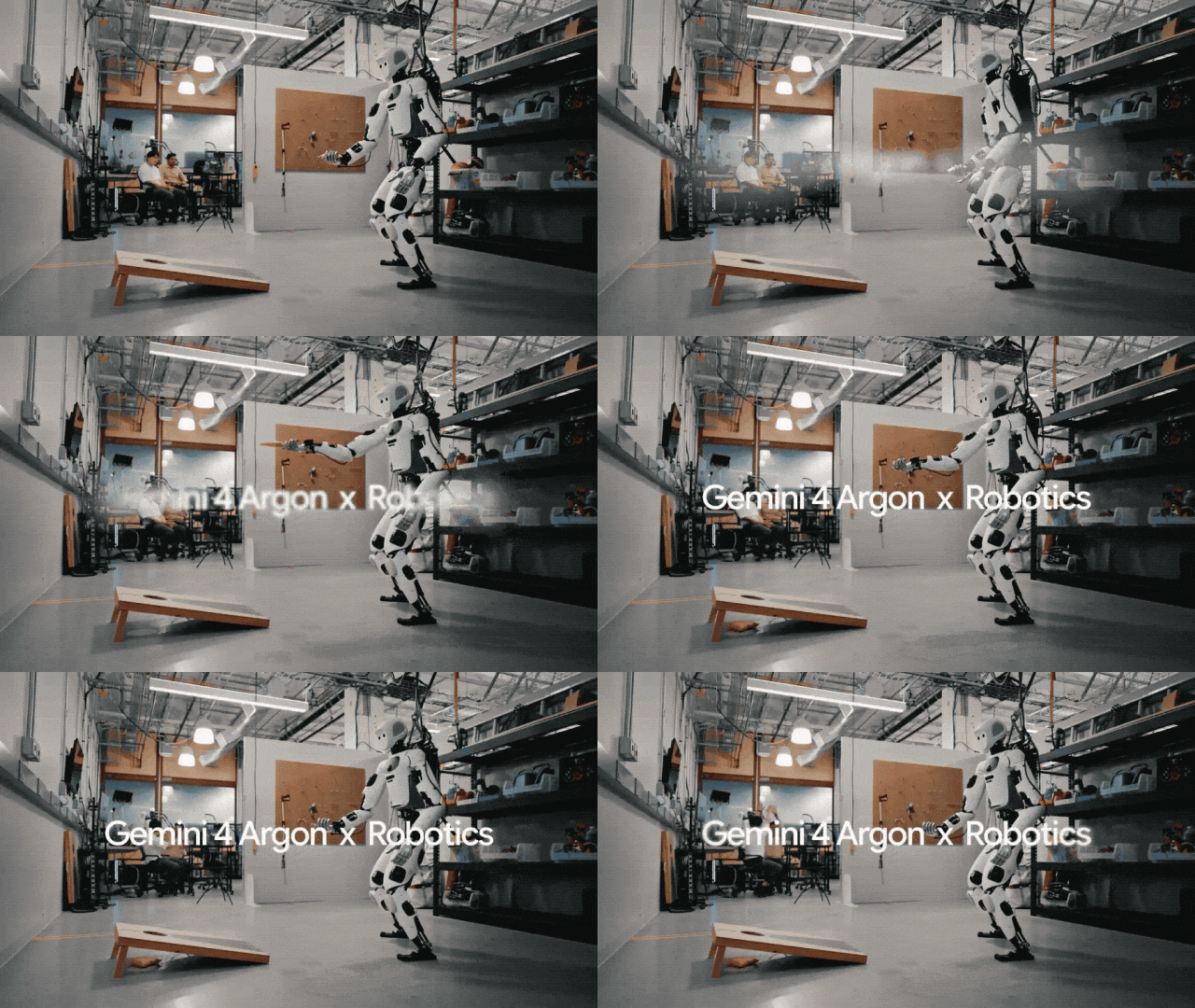
In the embodied intelligence test, it independently calculated joint trajectories and wrote simulation code within a few hours just by watching videos of humans playing with sandbags. It was directly deployed on the Apollo humanoid robot and achieved seven consecutive shots with the real machine. At the same time, Google also announced that it will provide free access to Antigravity for six months to tens of thousands of scientists around the world.
With the expansion of capabilities, Google has deployed the most rigorous security stack. By introducing a real-time monitor for inference steps, the proportion of models taking unauthorized shortcuts in programming tests was reduced to 2%, and the success rate of indirect prompt word injection attacks was reduced to 0.7%.
One more choice for top-level AI, and one less point for users to make ends meet
With the full liberalization of model permissions, developers and technology bloggers from around the world immediately flocked to the platform to conduct actual tests. 3D space construction, physical simulation and operating efficiency became the focus of the first batch of tests.
In official demos, Argon can write a 3D ray tracing engine from scratch using pure Python, or turn a photo of your desk into a miniature racing game. This spatial reasoning and coding ability has been intuitively confirmed in actual measurements by netizens.
Blogger Bhavy called it a beast, showing a sunny study room built in a single browser file without external 3D assets and game engines, purely relying on mathematical code, with realistic light and shadow reflections and realistic details of the mountains outside the window;
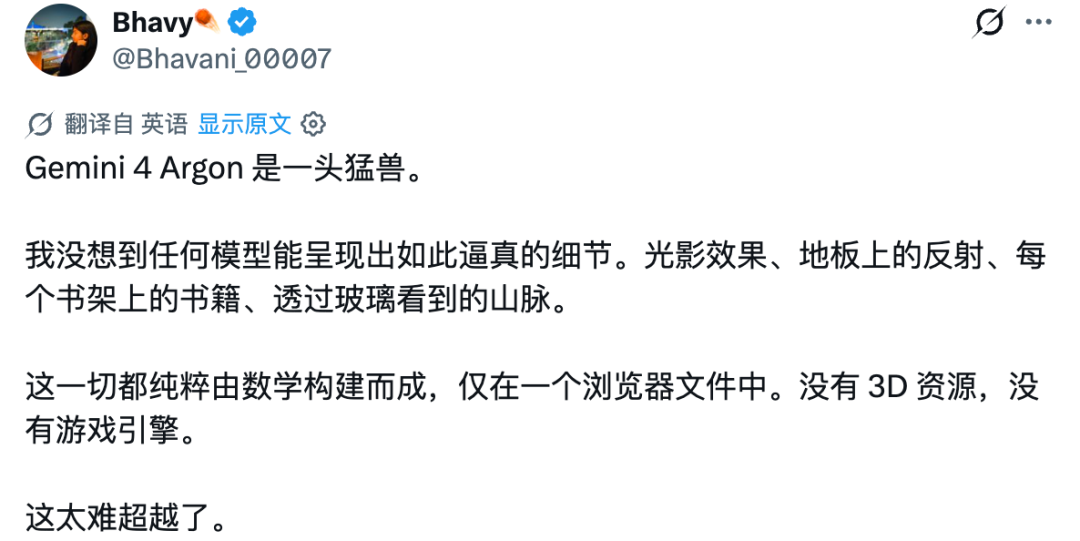

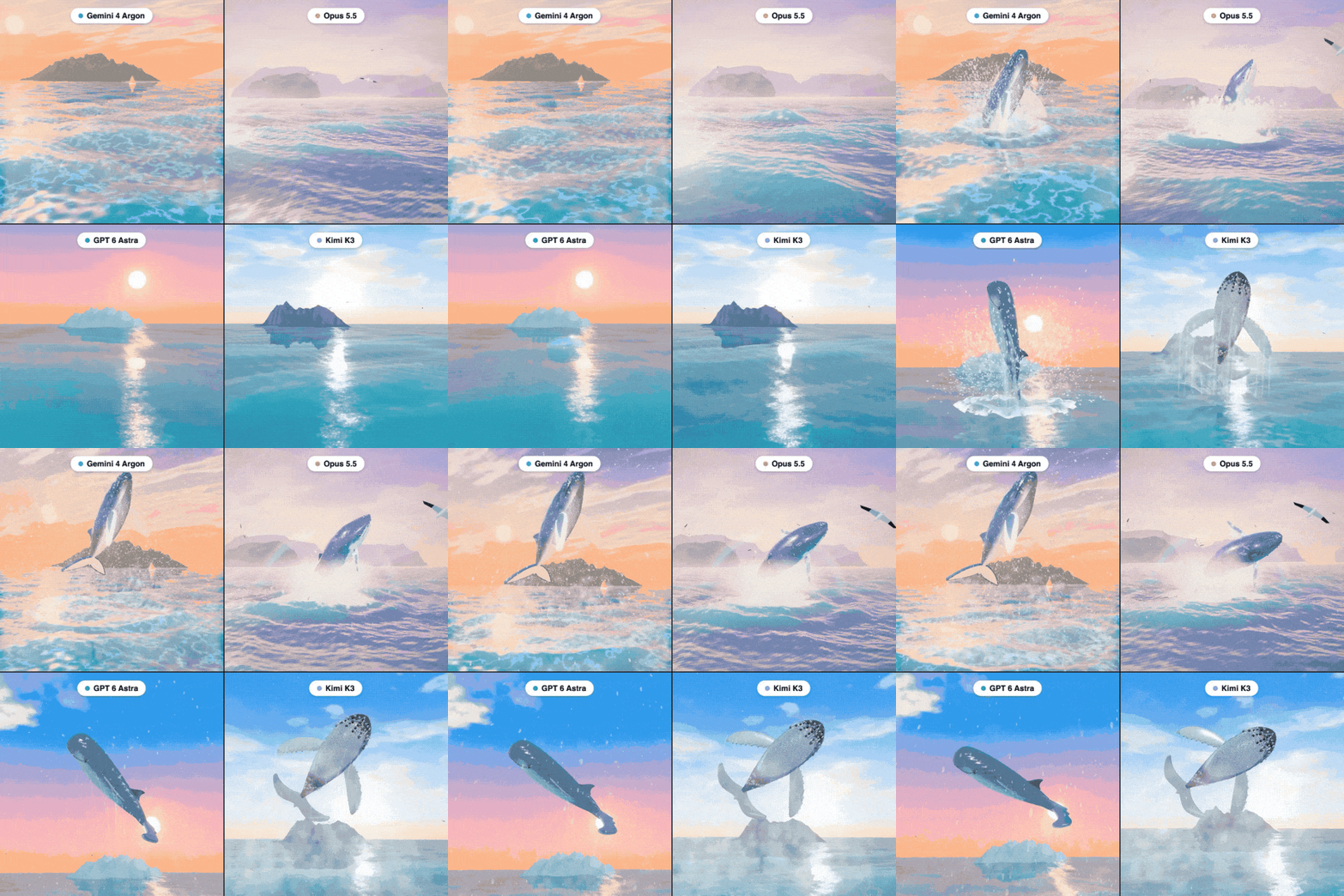
In the four-party blind test of "3D whale jumping out of the water", Argon's photorealism also clearly outperformed Claude Opus 5.5, GPT-6 Astra and Kimi K3.
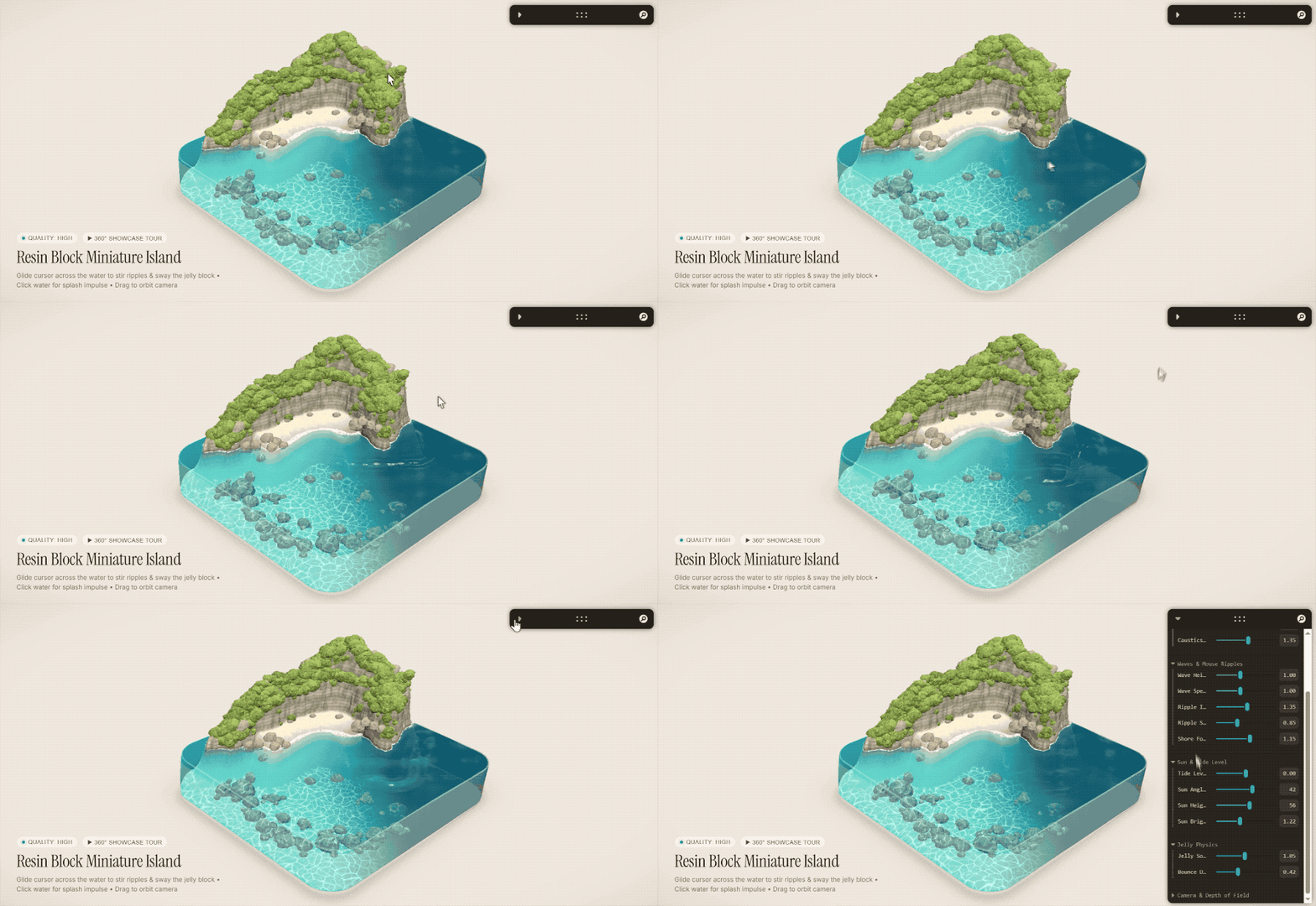
The interactive generation is also delicate. User Ashutosh only used a few prompt words to create an island sailing game with realistic water patterns and physical control;

The miniature island resin block tested by developer Adit_Yah took only 13 minutes and 2% of the weekly quota to complete the adjustable interface including caustics, waves and jelly physical effects.
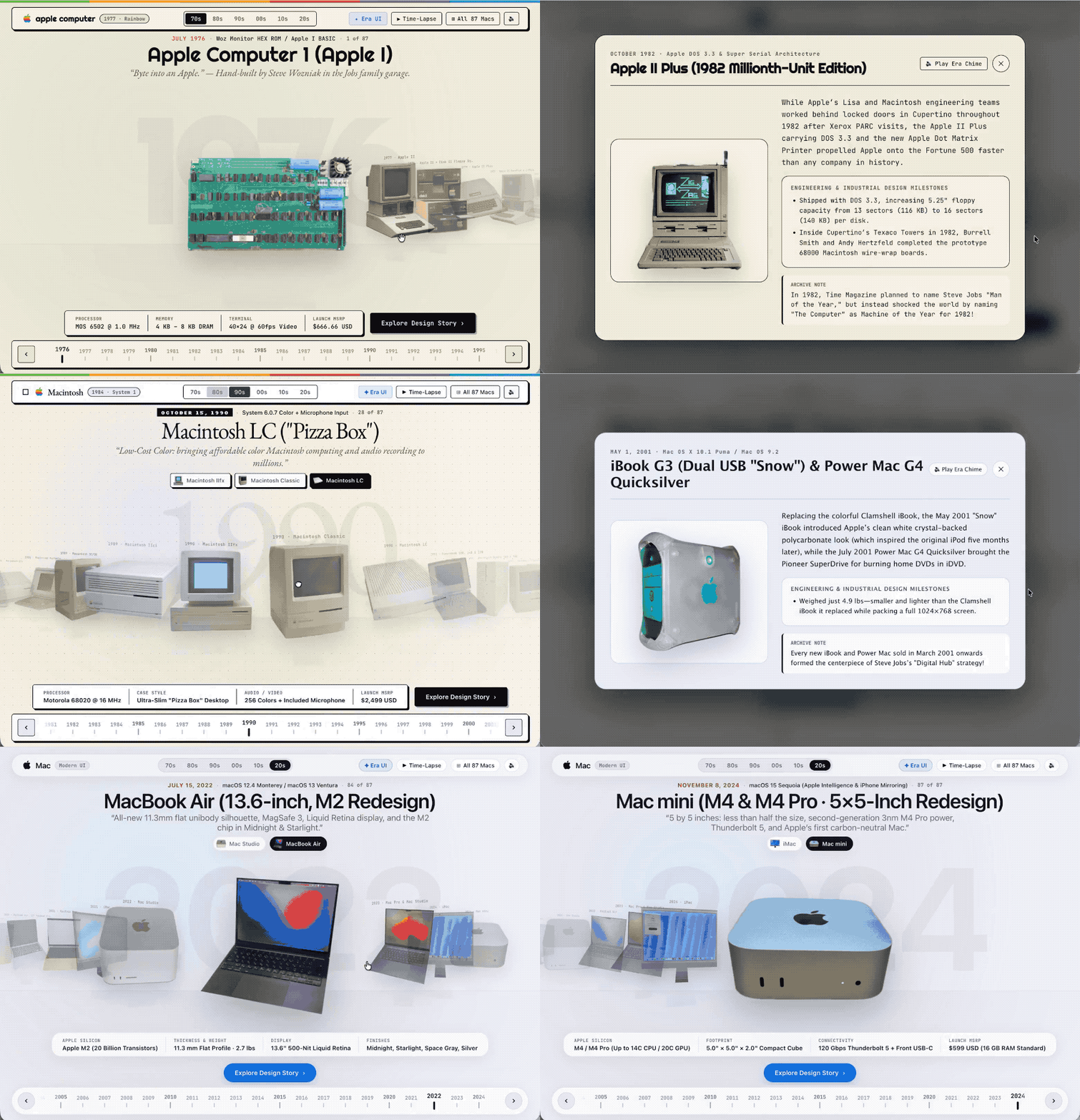
In the dismantling of complex comprehensive tasks, investor Justine Moore asked Argon to create an interactive Apple computer museum without providing any graphic data.

The resulting model autonomously grabbed Mac photos from the archive, wrote its own tools to clean the images, pulled hardware specification data spanning 50 years, and finally built a 3D cover flow web page with a UI that slides and deforms over time.
We also conducted actual tests on Argon’s complex code construction and Chinese creative writing for the first time.
In the code test, it was required to use Three.js and TypeScript to create a prototype of an oriental paper-style ancient battlefield "unparalleled" action game that includes logical layering, combo determination, and a complete HUD. The final project was completed to a high degree, and the actual combat pictures and interactive effects were quite good.
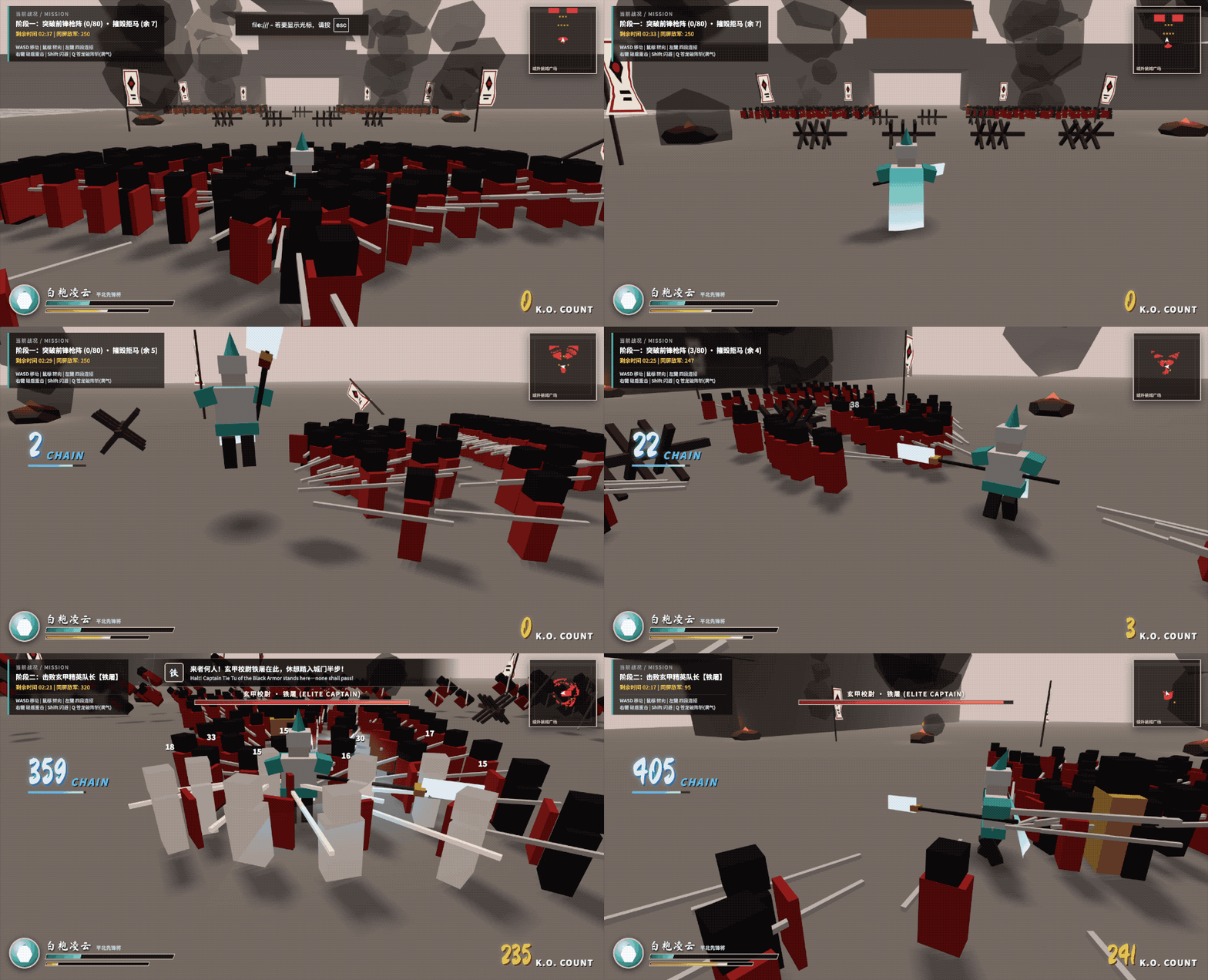
In Chinese writing tests such as describing the sensory atmosphere of the wet market before a rainstorm and the perspective of the orange cat in the bookstore, the new model continues the stable level of the previous generation Flash series.

And the writing style has improved significantly, and the habit of piling up grand vocabulary in the past has been reduced a lot.

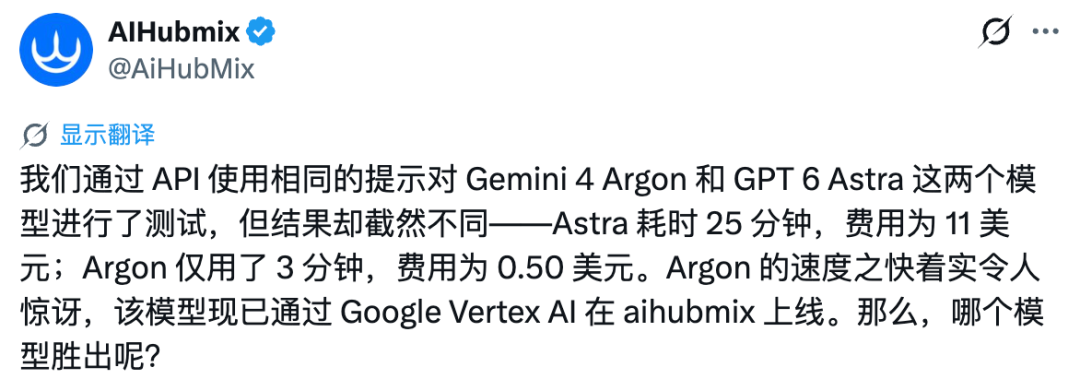
The head-to-head confrontation with other cutting-edge large models fully demonstrates Argon’s speed and price advantages.
The AIHubmix team used the exact same prompt words through the API to test the generation of pixel-style ancient building night scenes on Gemini 4 Argon and GPT-6 Astra. The results showed that GPT-6 Astra took 25 minutes and cost up to 11 US dollars, while Argon completed the task in only 3 minutes and cost as low as 0.50 US dollars, and the color levels and light and shadow details of the picture were not inferior.
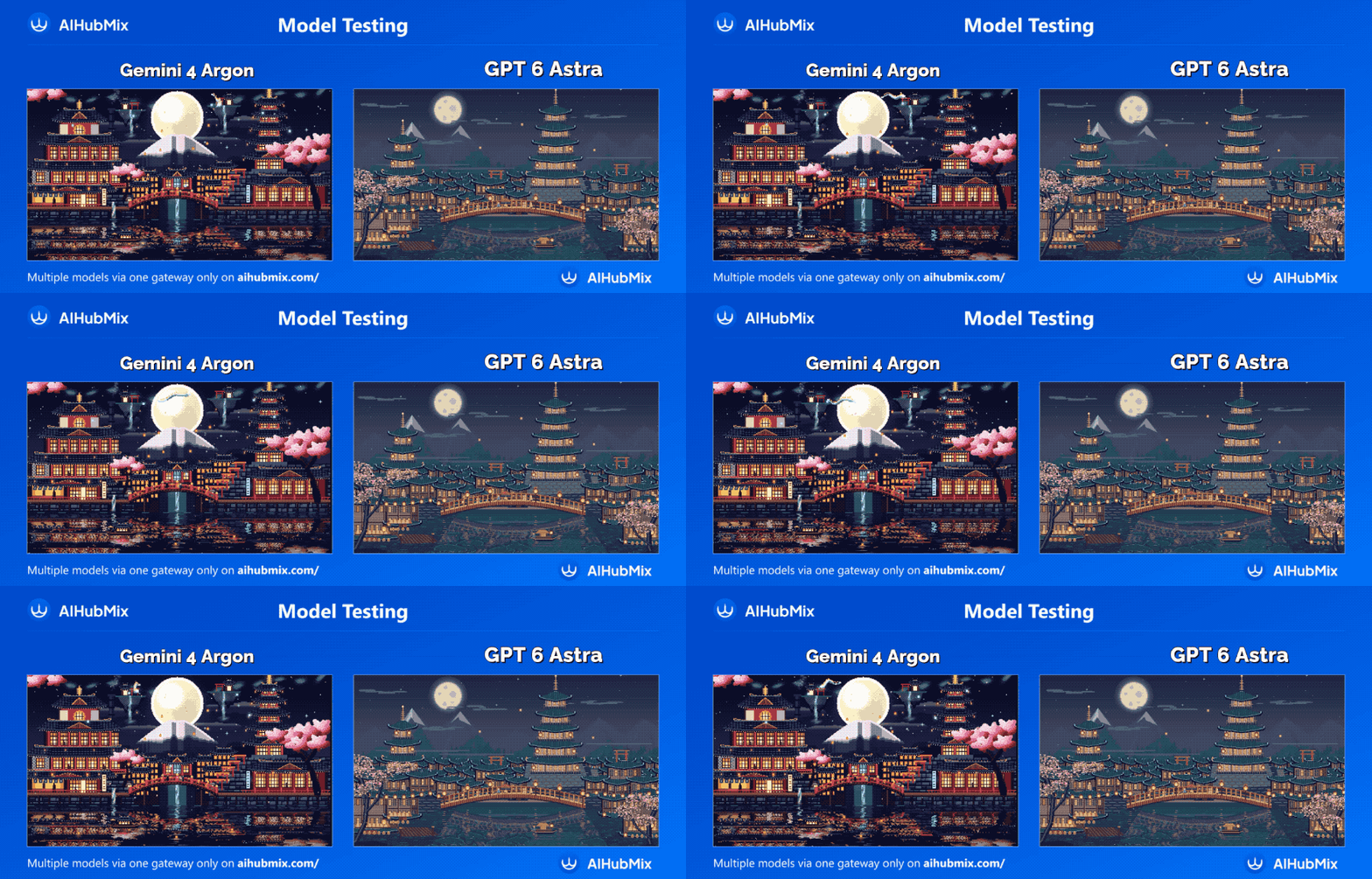
In multiple comparisons with Claude Opus 5.5, Argon also demonstrated extremely high cost performance.
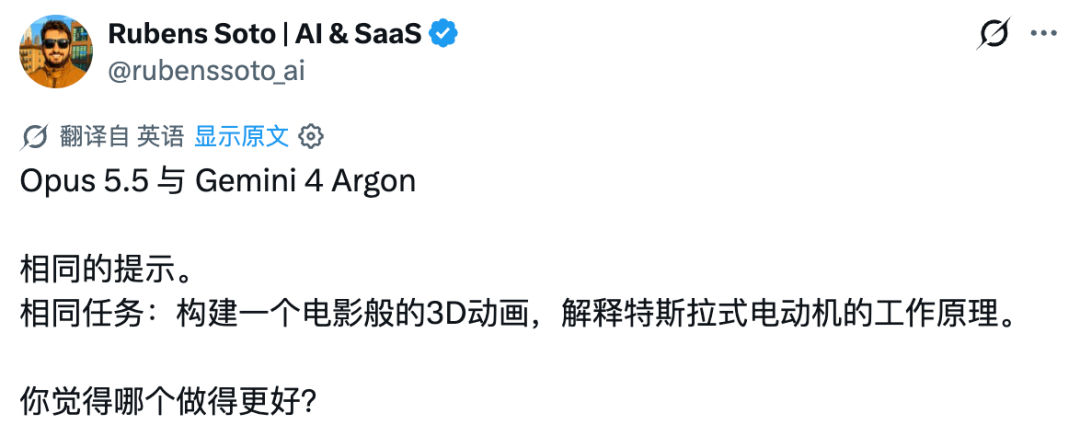
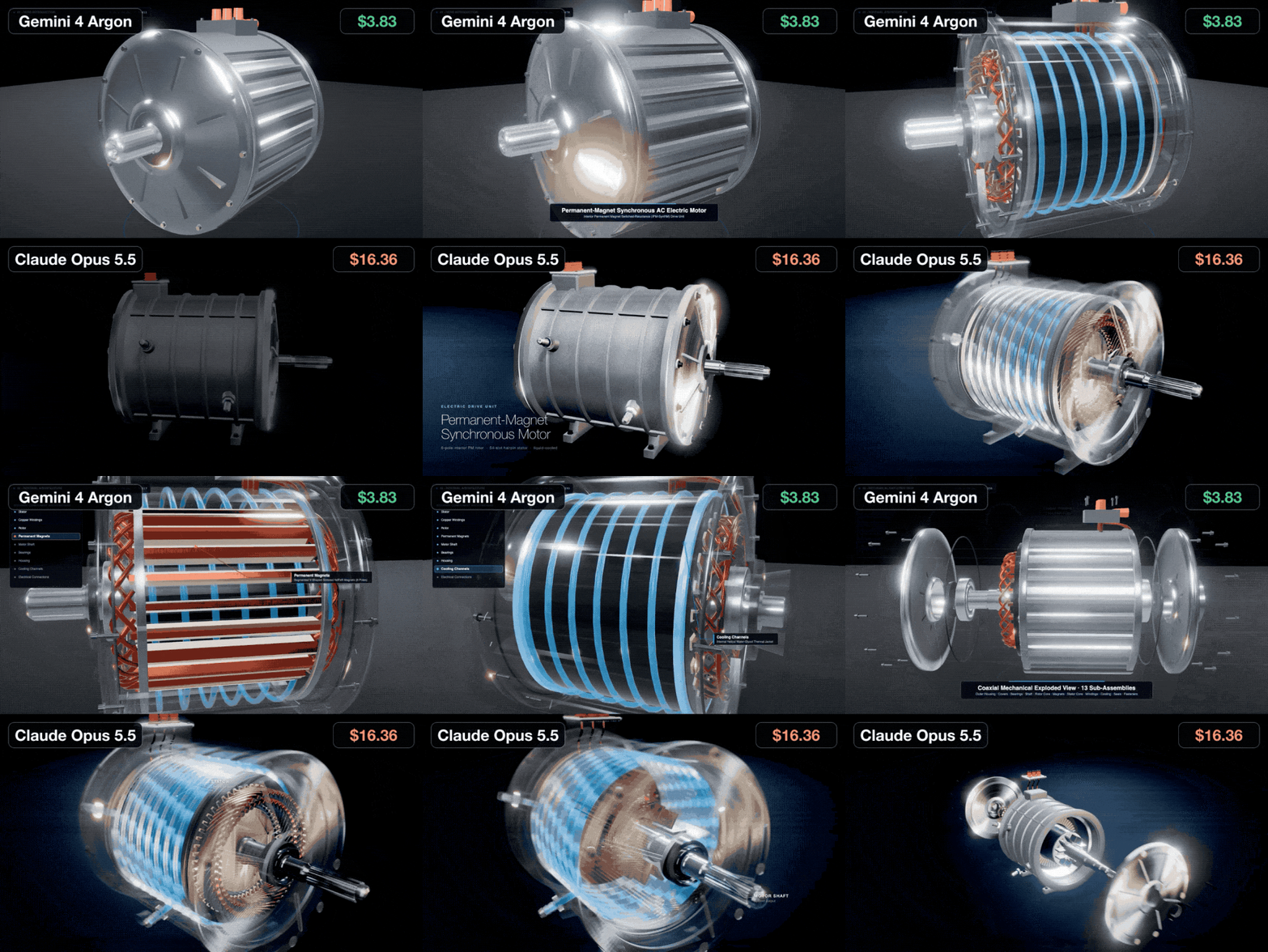
Blogger Rubens Soto put two models to the same task: creating a cinematic 3D animation that explains how a Tesla-style electric motor works. In this test, Argon's cost per build was $3.83, well below Opus 5.5's $16.36.
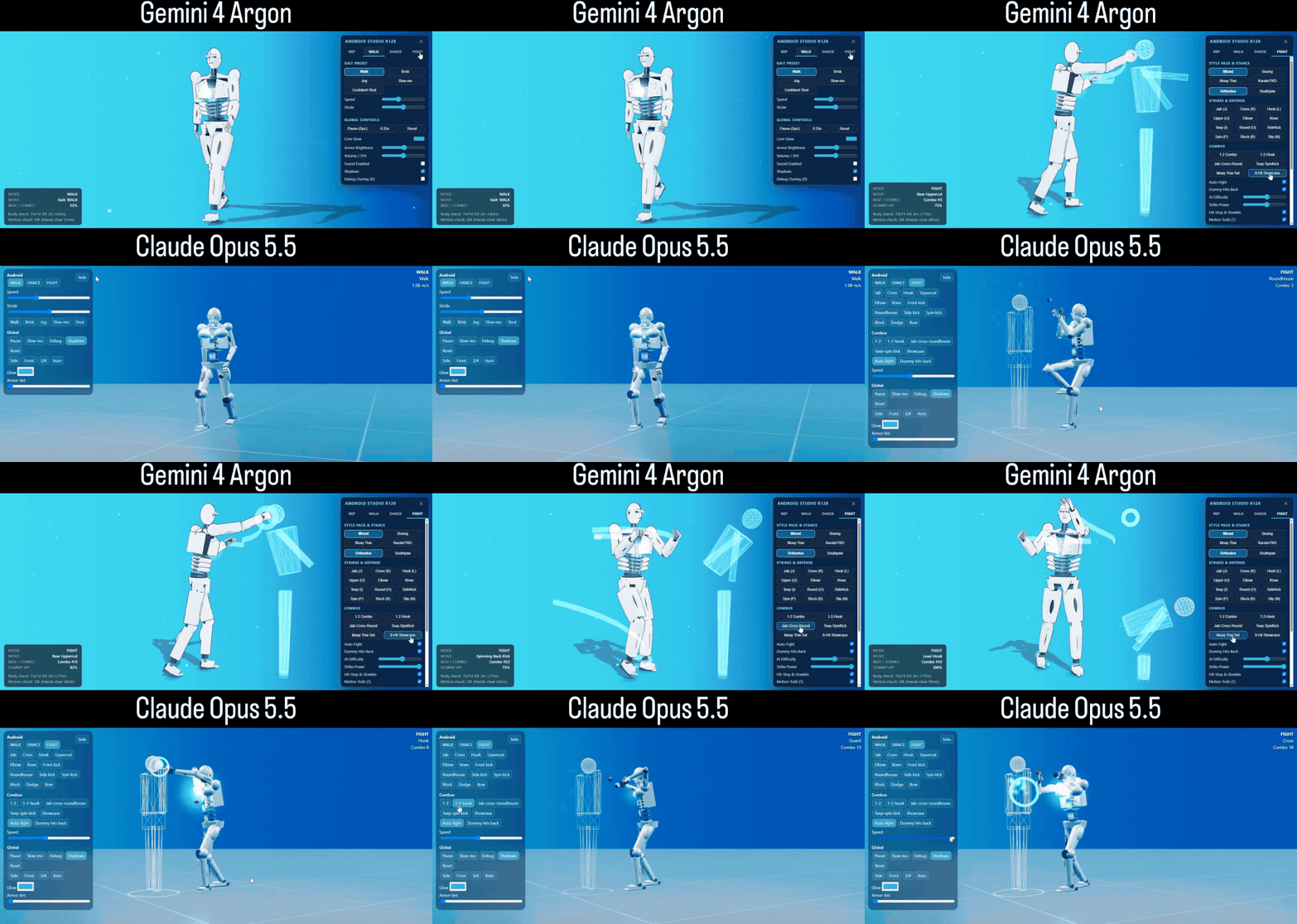
Another reviewer, Pranav Reddy, used Three.js to test the fighting and action simulation of a 3D humanoid robot. Judging from the completeness of the generated interactive interface and the smoothness of joint movements, Argon surpassed Opus 5.5 in many key indicators.

However, the first generation of Argon was not perfect in all scenarios.
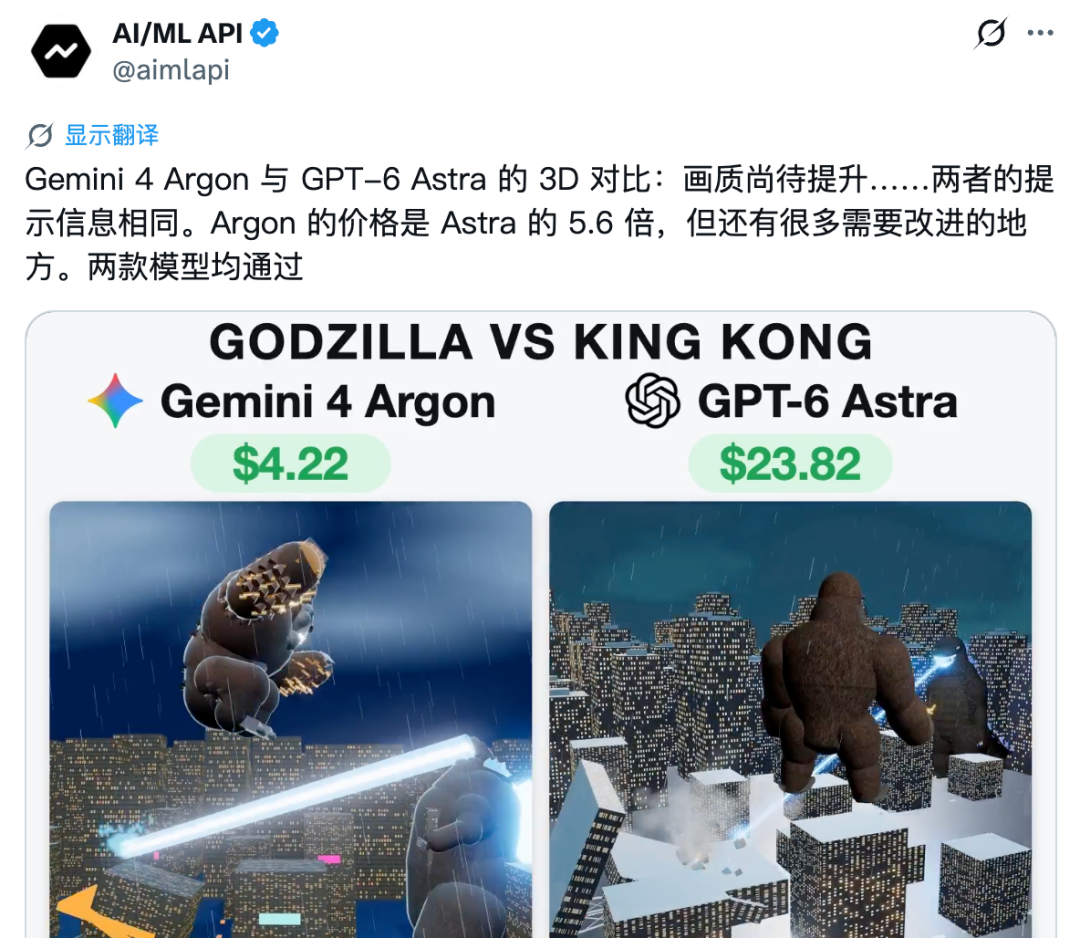
When comparing the 3D scene generation of "Godzilla vs. Kong", the testing agency AI/ML API pointed out that although the call cost of Argon ($4.22) is much lower than that of GPT-6 Astra ($23.82), there is still obvious room for improvement in the image quality and morphological restoration of specific complex biological models.
From the officially disclosed hard-core engineering data to the real-life evaluation spread across the entire network, it can be seen that Google’s play style in the Gemini 4 generation has undergone a significant change.
No longer obsessed with simple chat and conversation skills, but by reducing reasoning costs, lengthening context windows, and strengthening code and spatial physics reasoning, large models can truly be inserted into industrial-level code libraries, scientific laboratories, and production pipelines.
Considering that Claude’s account is severely banned and ChatGPT is frequently drooling, Gemini 4 Argon, with its comprehensive capabilities and affordable API price, is undoubtedly a timely rain, which has greatly alleviated the anxiety of daily productivity tools and has truly enhanced the strength of friends.
Just faced with the computing power consumption caused by high-intensity reasoning, Google, the "landlord", does not seem to have much surplus.
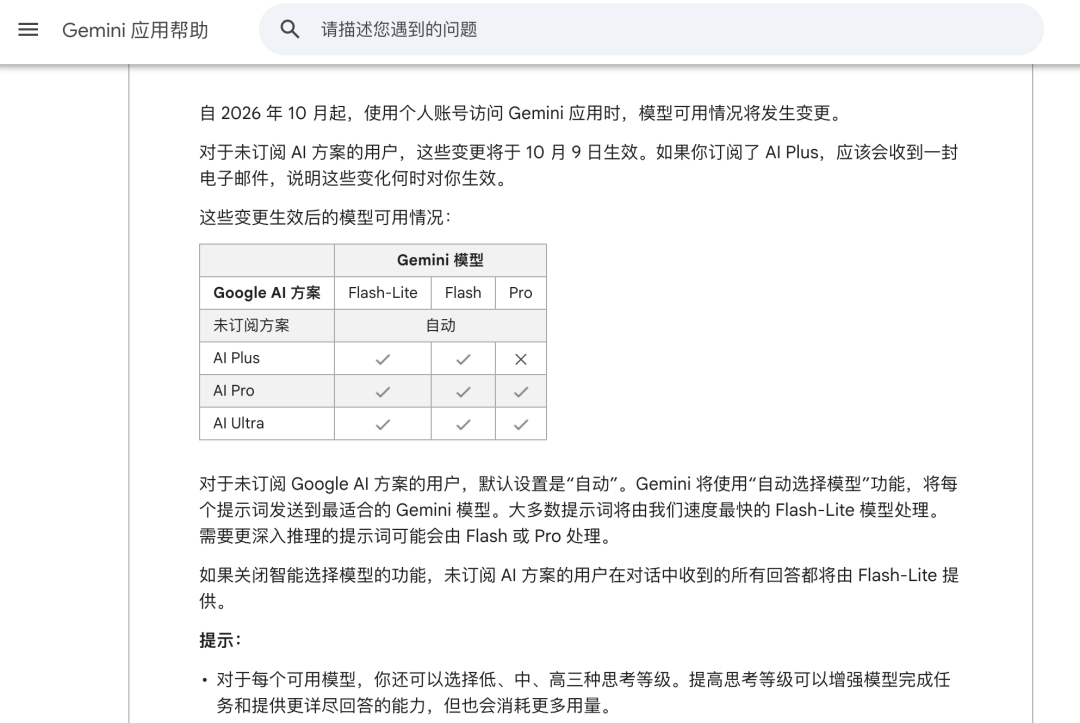
According to the latest official access rules in effect, unpaid users are currently assigned to the system's automatic allocation model by default. Most requests are processed by the lightest Flash-Lite. Once the automatic selection is turned off, only Flash-Lite can be used permanently.
At the same time, the Gemini application has fully switched to a dynamic computing power limit mechanism that is refreshed every 5 hours and is linked to the weekly upper limit. Increasing the thinking level, using Deep Research or calling the flagship model will accelerate the consumption of the quota. If you want to enjoy the full-blooded version of the capabilities, you still cannot avoid the threshold of paying according to the tiers.
But in any case, just like the role argon plays in industrial manufacturing, the implementation of Gemini 4 Argon has finally allowed Google to re-establish a solid line of defense on the top model table.
Comments