
Abstract:
Developer Skylar Taylor-Barrick has open sourced a project called gbos-vm, which can start Google's Googlebook OS through a virtual machine on a Mac equipped with an Apple Silicon chip, and achieve GPU acceleration and run Chrome. This solution uses the QEMU virtual machine to load the Dell Googlebook recovery image provided by Google. It is not a universal Android image, nor does it install the system natively on the Mac; the project has no official connection with Google or Dell.
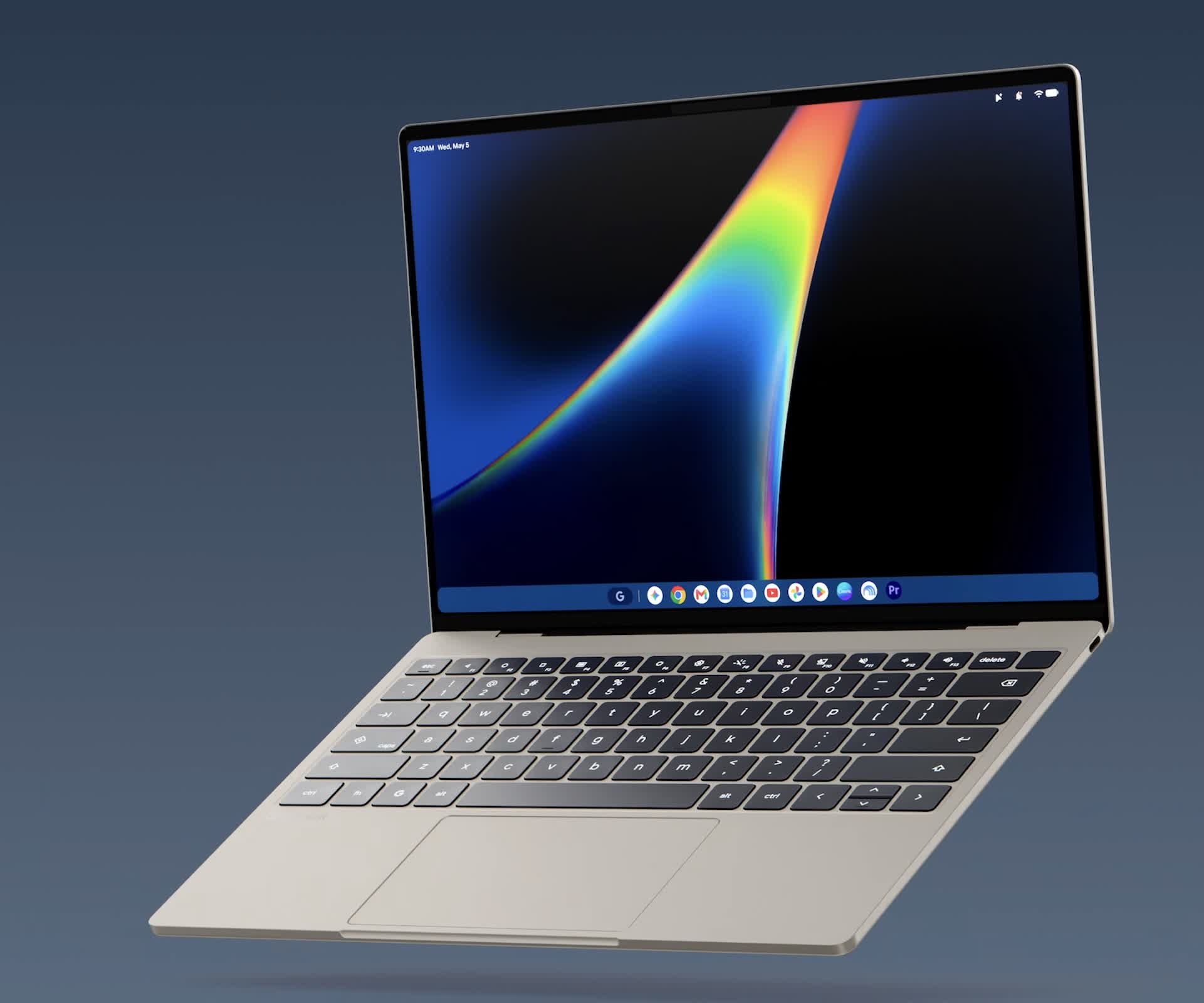
The Googlebook announced by Google this year is a new type of notebook platform for Gemini functions, integrating the Android application ecosystem and ChromeOS browser experience, and is based on the Android technology stack. The gbos-vm project transforms the recovery image produced for Googlebook hardware into a version adapted to virtual devices and then runs on Apple Silicon. Since the Android graphics interface uses Vulkan and Apple devices use Metal, developers have also built a conversion layer to allow the virtual machine to call the Mac's GPU instead of relying entirely on the CPU to draw the interface; Chrome can therefore run.
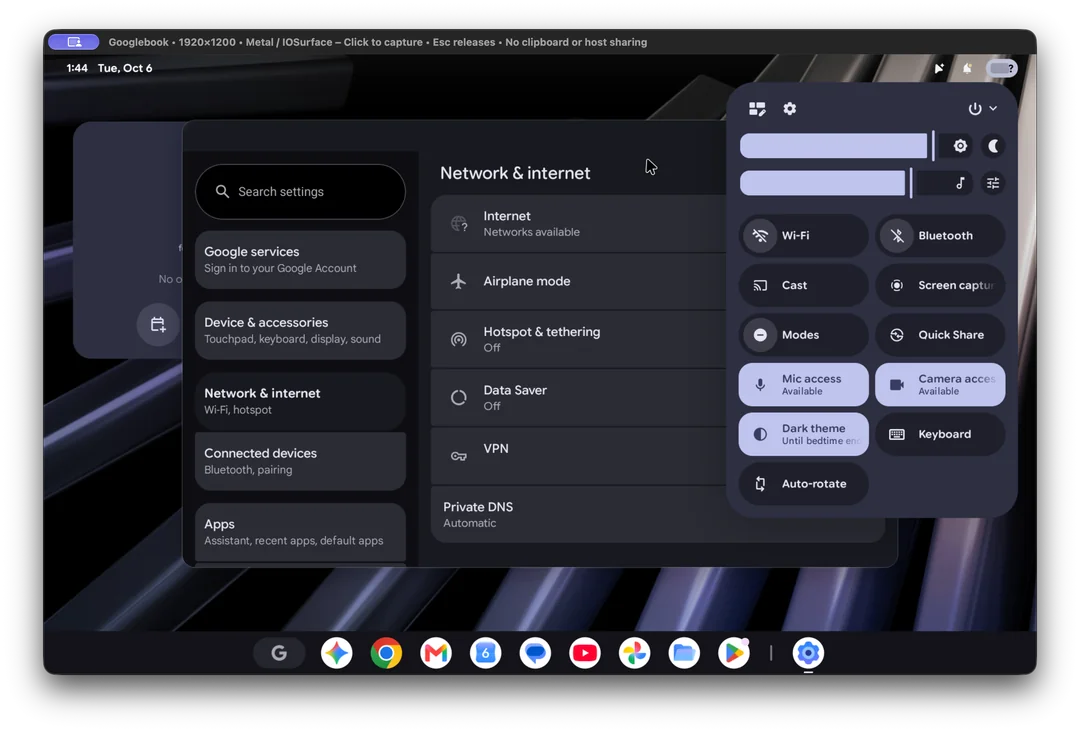
Installation still requires a certain development environment and storage space. The project requires an Apple Silicon Mac, which is recommended to be equipped with at least 16GB of memory and reserve about 60GB of space. It also needs to install dependencies such as Xcode command line tools, Homebrew, Java Development Kit, and Android SDK. The developer said that the first installation script will download about 9GB recovery image from Google server and complete the modification and construction on this machine; the project does not support Intel Mac.
There are still many limitations: the display refresh rate is up to 60 frames, some WebGL content may render abnormally; the audio performance is unstable, and reverse copying of the clipboard, right-click operations, and long-term running have not been fully tested. Bluetooth uses a virtual radio and cannot be paired with a real Bluetooth device. The virtual machine lacks the security hardware on the physical Googlebook machine, the system key is handled by software instead, and the modified vendor partition does not have complete verified boot protection.
Therefore, the project author recommends that it be used for development and experience, not as the main daily system, and that sensitive accounts should not be logged into it. It currently demonstrates the experimental running capabilities of Googlebook OS on Apple's self-developed chips, rather than the officially supported Mac compatibility solution; the fact that virtual machines can be started, graphics acceleration and browsers are available does not mean that the hardware functions and security have reached the level of physical Googlebooks.
Learn more:
https://github.com/skylartaylor/gbos-vm
Comments