
Abstract:
Google announced that it plans to invest at least 13 billion euros in Finland from 2027 to 2028, covering data centers and supporting infrastructure in Hamina, Kajaani, Muhos and Vara. This is the largest single investment announced by Google in Europe so far. The company has also launched nuclear power, wind power, battery energy storage and grid collaboration projects to meet the power demand of new computing facilities.
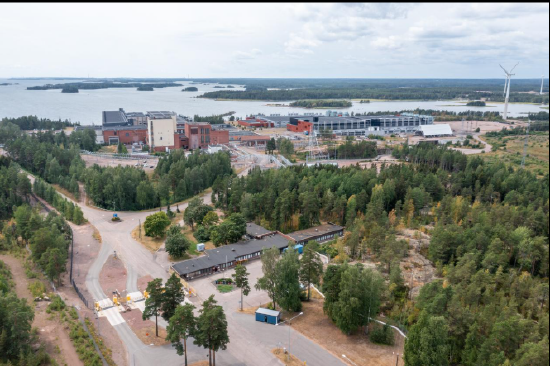
Investment covers four regions in Finland
The 13 billion euro investment will be implemented over two years, including the expansion of Google's existing Hamina data center and the construction of data centers and other supporting facilities in Kayani, Mujos and Huara. The latter three places are all located in northern or north-central Finland, and Google has previously purchased relevant land from the Finnish government.
Google did not disclose the distribution ratio of 13 billion euros among the four locations, nor did it announce the installed capacity, number of servers and specific start-up date of each data center. The company said the facilities will provide computing power for services such as Gemini, search, maps and YouTube.
Google purchased an old paper mill in Hamina in 2009 and converted it into a data center. It has been operating in Finland for more than 15 years. The facility uses a seawater cooling system and has built a project to deliver data center waste heat to the local heating network. The designed heat supply can cover approximately 80% of the annual demand of the Hamina district heating system.
The company expects to support 37,000 jobs during the construction phase
An economic impact assessment commissioned by Google shows that the project is expected to contribute an average of 3.6 billion euros to Finland's GDP per year during the initial construction phase from 2027 to 2028, and support more than 37,000 jobs nationwide. About 16,000 of these jobs are in the construction industry, which is expected to generate about 911 million euros in labor income every year.
Once the facility is put into operation, Google expects related activities to support approximately 7,000 jobs per year. This caliber also includes data center on-site personnel, equipment and service suppliers, as well as local employment supported by related consumer activities, and cannot all be regarded as direct recruitment positions by Google.
Google will also provide a total of 31 million euros in community funding to the four project locations, investing in education, economic development and local projects over four years, of which 10 million euros will be earmarked for research and innovation. The company plans to provide AI skills training to more than 4,400 workers through vocational schools and labor organizations, and to train up to 100 students in Hamina for data center positions.
The above GDP and employment data are forecast results released by Google. The actual impact depends on the construction progress, local procurement ratio and facility operation scale.
The nuclear power agreement provides income guarantee for extending the life of the Lovisa power station
Energy supply arrangements are an important part of this round of investment. Google signed a 22-year power purchase agreement with Finnish energy company Fortum to provide long-term income guarantee for the Loviisa nuclear power plant life extension project.
The Loviisa Nuclear Power Plant is located near the Hamina Data Center. It has two pressurized water reactors of 507 MW each and generates about 8 TWh of electricity every year, accounting for about 10% of Finland's electricity supply. Fortum said the power purchase agreement covers 50% of the power generation capacity of the power station and supports the extension of the operating life of the two units.
Fortum expects that the relevant agreement will increase the group's return on comparable net assets by approximately 1.4 percentage points after it gradually takes effect. The forecast depends on power plant life extension investments, operating levels and contract execution.
The two sides also signed a memorandum of understanding to study potential business models for new carbon-free electricity, flexible regulation capabilities and the construction of new nuclear reactors in Loviisa. The memorandum of understanding is an early stage cooperation arrangement and does not yet constitute a final investment decision for a new nuclear power project.
The 94-megawatt battery system is scheduled to be put into operation in 2027
Google has signed a contract for a 94-megawatt battery energy storage system. The project is located near the new data center in Kajaani and is expected to be put into operation by the end of 2027. Fortum will be responsible for the operational optimization of the system to participate in electricity market regulation and provide flexibility to the Finnish power grid during periods of low temperature and low wind.
The company also cooperates with Finnish national grid operator Fingrid and Business Finland to select data center access locations. Locating the new facilities in northern Finland can take advantage of existing local transmission capacity close to carbon-free power sources and reduce some of the need to build additional transmission facilities in southern areas where electricity loads are concentrated.
In terms of wind power, Google signed new onshore wind power purchase agreements with Valorem and Suomen Hyötytuuli. The total new onshore wind power capacity it supports to be connected to the Finnish power grid reaches 629 MW. The associated wind assets also plan to participate in Fingrid’s ancillary services market.
The investment plan simultaneously plans data centers, power generation resources, energy storage and grid access. Whether the project can generate computing power on schedule depends on multiple aspects such as data center construction, energy project execution, permit approval, and power transmission access.
Comments