
Abstract:
The "first year" for humanoid robots to work in factories has been announced several times, but few people have listed all the real difficulties: the success rate must be above 99%, the pace must not hinder the production line, the continuous working life of a dexterous hand is only a few weeks, and the data gap is as high as a hundred times. From laboratory verification to real-life training, normal deployment, large-scale replication, and commercial closed loop, there are five steps - where have the fastest batch in the industry gone?
With this question in mind,
A reporter from "Kechuangban Daily" recently walked into the Foton Cummins engine factory in Changping, Beijing - one of the earliest humanoid robots to enter the factory in China is running here
; Before and after, reporters also conducted a large number of intensive interviews at the just-concluded 2026 World Robot Conference (WRC) and the Second World Humanoid Robot Games. The factory floor and the two meetings come together to give a much more honest answer than the "Year One" narrative. Nowadays, "being able to work" has been solved, "working every day" has just begun, and "being able to settle accounts" has not yet been achieved. In the five steps from laboratory to commercial closed loop, China's fastest batch of robots spent a whole year. They have completed the second step and are knocking on the door of the third step.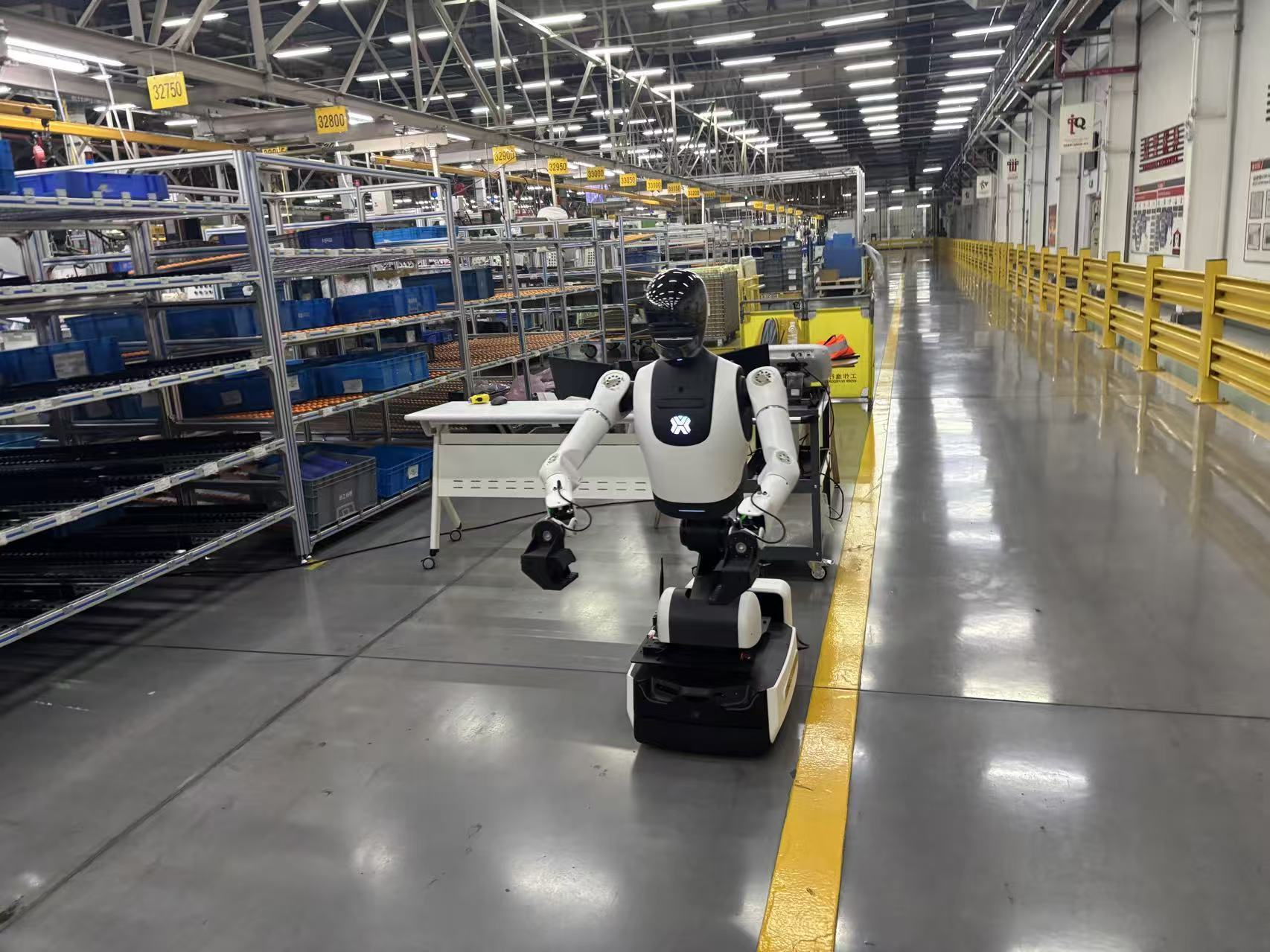
"New workers" in an engine factory
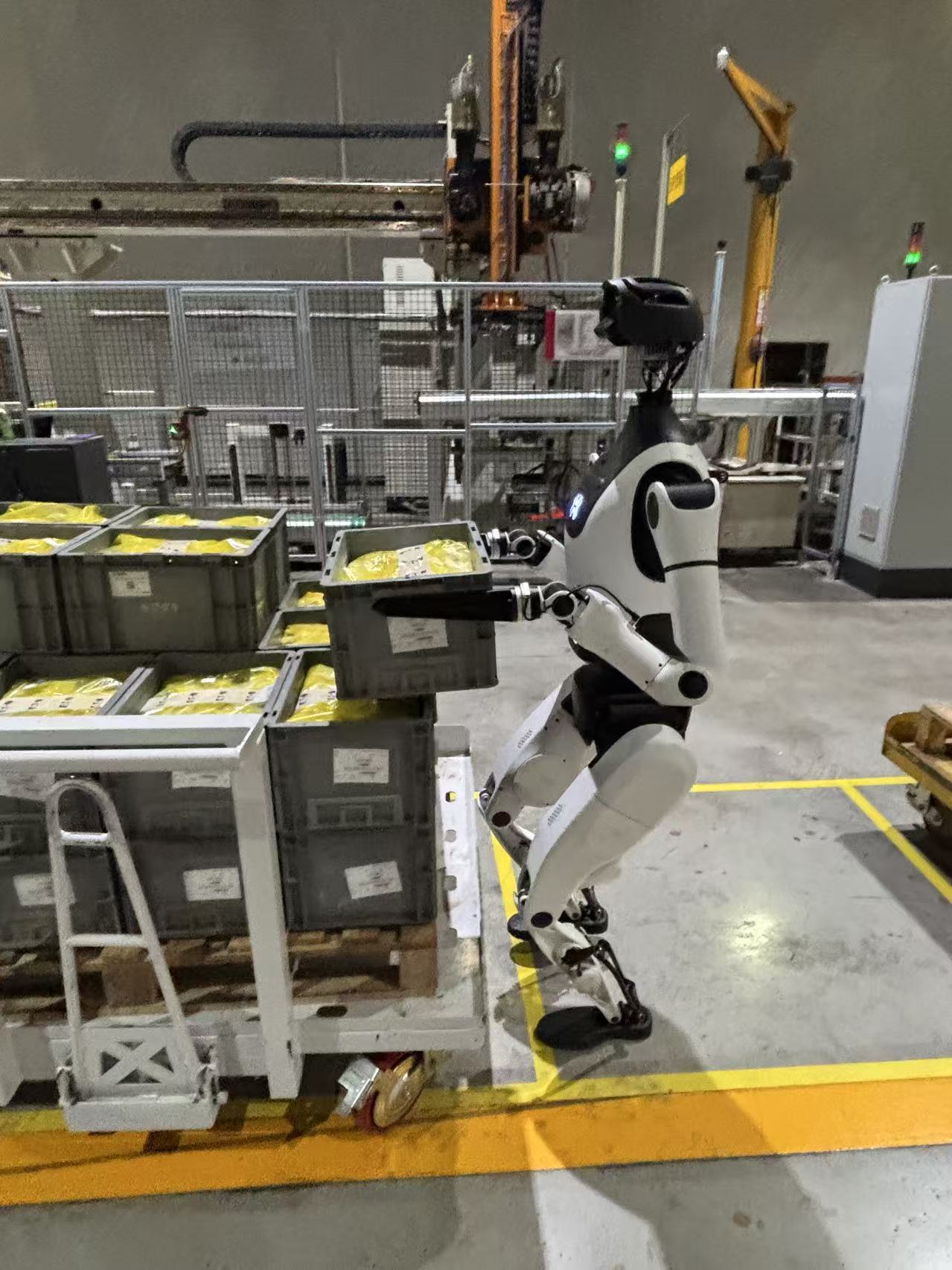
In the Foton Cummins factory, AGV trolleys have already been used on a large scale, and the cylinder blocks and heads are transported by laser SLAM navigation. But the real pain point lies in the "last meter": there has never been a mature flexible solution for lifting and transporting materials from the trailer to the material rack. Traditional special machines have to change the gripper when changing a material box. Depalletizing, transferring, and shelving require several pieces of equipment to divide the work. What is most lacking in multi-variety and small-batch production lines is flexibility. It is reported that this is the fundamental reason why the factory chooses humanoid and wheel-arm robots.
The "Kechuangban Daily" reporter learned from the scene,
Now, the Tiangong 2.0 bipedal robot and Tianyi 2.0 wheel-arm robot of the Beijing Humanoid Robot Innovation Center have been tested in the factory for nearly a year.
They are also the first humanoid robots in China to enter the factory directly from the sports meeting venue: Foton Cummins proposed two major industrial test scenarios of material handling and intake and exhaust valve material sorting at the first sports meeting. After the game, the two sides quickly docked and implemented.When choosing Beijing figures, the factory has done its homework. According to Huang Yunbao, the relevant person in charge of Foton Cummins, he told the reporter of Science and Technology Innovation Board Daily that during the preliminary research, the factory went through Figure’s public parameters, stability and reliability data, and also had preliminary communication with domestic first-line embodied intelligence companies. Finally, it selected the Beijing Humanoid Robot Innovation Center based on the scene fit, cooperation and implementation promotion capabilities.
The above-mentioned person in charge introduced that the two robots operate autonomously without any customization. The main body is still used in the laboratory version, and only two sets of end clamps are developed according to the working conditions - the narrow clamp is suitable for the narrow cargo space with only two or three centimeters between the material box and the frame, and the hook type clamp has a stronger load and can cover material boxes of more than 15 kilograms.
The current goal is to handle materials of 2 to 5 kilograms, and will gradually iterate to more than ten kilograms in the future.
The real test questions came from the old factory itself: the material racks that had been in service for three to five years were deformed and tilted, and the raised structures on the trailer triggered the laser radar to avoid obstacles; the deformed material racks had to temporarily add a "box pushing" action to ensure that the material boxes were completely returned to their places. These engineering details that cannot be simulated in the laboratory are polished off one by one by the R&D personnel on site. Nowadays, it takes less than four minutes for Tianyi 2.0 to put six turnover boxes on the shelf, and it takes less than one and a half minutes for Tiangong 2.0 to move one box. The rhythm has initially matched the rhythm of the production line. The person in charge of Beijing's humanoid industry application explained to a reporter from the Science and Technology Innovation Board Daily that the boxes contained fragile engine parts, and the priority of the robot was "stable", not "fast".
Supporting all of this is the collaboration between the big and small brains of the "Huisi Kaiwu" embodied intelligence platform: the embodied brain completes task understanding, disassembly and arrangement based on large models, and generates complete task links; the embodied cerebellum is responsible for executing every step of the action.
It is understood that the most intuitive change when it comes to the scene is that "no teaching is required" - there is no need to program the bins and cargo locations one by one. There is only one observation point for the pile. The robot relies on the head camera to perceive the overall situation, and the algorithm independently selects the appropriate bins to grab and transfer. Before a new scenario is implemented, you can also use the world model for simulation testing first, and then enter the scene after the success rate reaches the standard, thus shortening the debugging cycle. Various material box working conditions collected on the Foton Cummins production line are returned to the platform for generalization training, and subsequent new factories can be quickly adapted using low-code methods - this is a key part of "replicable experience".
In Huang Yunbao's view, "The primary value of robots entering the factory is not to replace manpower, but to solve ergonomic pain points - liberating workers from the heavy labor of bending down and lifting materials at high positions; secondly, it is to connect to the factory business system to form a closed loop of information flow, reduce assembly error rates, and improve engine quality. The factory evaluates intelligent equipment in two ways: quality improvement and improvement of the working environment of personnel."
Regarding industry bottlenecks, his judgment is relatively calm:
Battery life, load, and positioning accuracy are three difficult hurdles. At this stage, robots are only suitable for positions with low rhythm pressure and loose load accuracy requirements, and cannot completely replace a worker.
He only has nine words of advice for his colleagues: run quickly in small steps, imagine boldly, and seek verification carefully.The cooperation between the two parties is still going deeper. It is reported that in addition to the existing handling stations, there are many scenes to be opened inside the factory; Foton Cummins is building the industry's "future stations", of which humanoid robots are an important part.
If "entering the factory" is broken down into five steps - laboratory verification, real-life training, normal deployment, large-scale replication, and commercial closed loop - the two Foton Cummins robots have been on the road for nearly a year and are standing on the threshold of the second step to the third step. This is already one of the fastest progress in the country.
Talking about his thoughts on humanoid robots "entering factories to work", Huang Yunbao told reporters: The future is already here.
The carnival of output, the big test of implementation
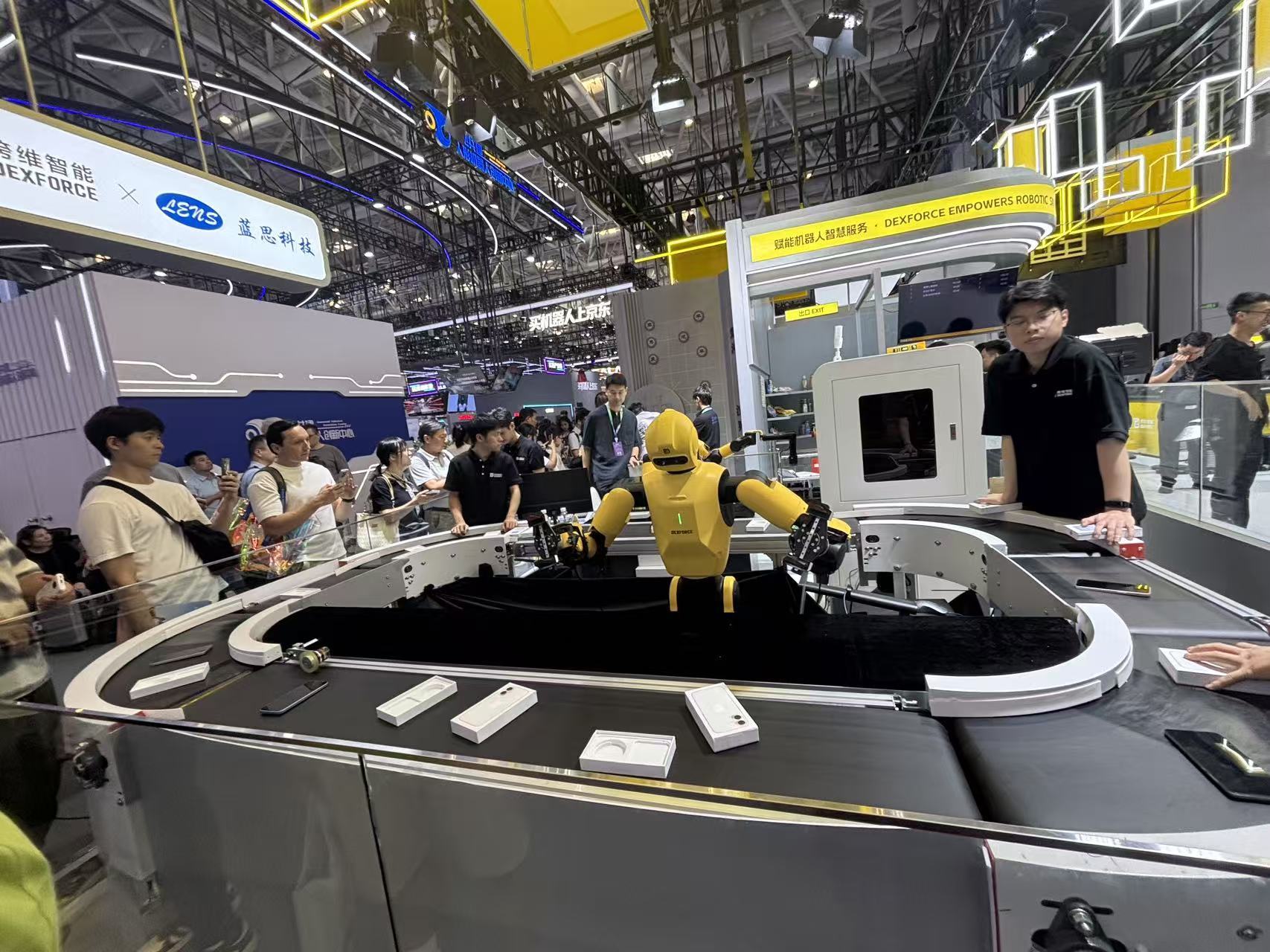
Recently, two industry conferences have been held one after another: the Second World Humanoid Robot Games came to an end, with 2,056 robots completing all competitions, and the industrial assembly and loading station became the core attraction; at the 2026 World Robot Conference, 373 companies launched 311 new products, and the industrial humanoid scenario solution became the absolute protagonist. The technological iterations at the competition venue and booths are rapidly approaching the zero-fault tolerance requirements of real production lines.
But as of the first three quarters of 2025, more than 70% of Yushu Technology's humanoid robot revenue comes from scientific research and education, with industrial applications accounting for only 9%.
“There are still a small number of humanoid robots that actually work in factories, and a large number of robots are still in the stages of practical training, process verification, and small batch trial operation.”
Xi Yue, co-founder of Xingdong Era, also admitted in an interview with a reporter from the Science and Technology Innovation Board Daily during the WRC: Batch and large-scale deployment in industrial scenarios are still relatively rare, and the entire industry is still in this process.Ji Chao, founder of Lingdong GM, was very specific about the criteria for "entering the factory": The requirements for robots in industrial scenarios are not whether they can reach 100% of human levels at one time, but whether they can increase from 30% to 60% or 80% of human levels over a period of time, and finally surpass humans at certain standard workstations - and this ability can be reused on 100 robots.
A person in charge of the head-embodied enterprise algorithm told a reporter from the Science and Technology Innovation Board Daily that the above five steps can actually be simplified into three more straightforward sentences: from the first to the second step, answer "can you work"; in the third step, answer "can you work every day"; in the fourth and fifth steps, answer "can the work be counted as a credit". Look at the industry in August 2026 based on this yardstick: the vast majority of embodied companies are still in the first step; leading companies are collectively stuck between the second and third steps - "can work" has been proven, and "works every day" is being proven; sporadic signals have just appeared in the fourth step, and no one has yet passed the fifth step.
In addition to Foton Cummins, there are two samples worth recording.
In June this year, Galaxy General's heavy-duty robot Galbot S1 also entered Ningde: its arms carry 50 kilograms and last for 8 hours, responsible for material handling and picking. Since the acceptance was completed in March, Galbot S1 has been running 24/7 on the Ningde mass production line for about three months.
Zhiyuan's 8 Genie G2s were online for 6 consecutive days at the Nanchang factory and broadcast live for 10 hours a day. According to reports, during the six days of continuous live broadcast at the Longqi factory, eight robots completed more than 64,000 operations, with a mission success rate of 99.99%.
When the three cases are put together, the position on the progress bar becomes clear: Foton Cummins has "completed the second step for a year and is knocking on the door of the third step" - the robot has no problem working, but it is still on the test track and has not entered the formal establishment of the production line; Galaxy General's 7×24 operation in Ningde for three months and Zhiyuan's 105 days in Longqi are the only two "third step demonstrations" in the industry, but they are still only a single production line and a single section.
A reporter from the "Science and Technology Innovation Board Daily" observed that the signals of the fourth step have only appeared sporadically this year: Zhiyuan expanded significantly in the third quarter, Figure expanded from 40 units to 200 units during the year, and Suzhou Boyin Hechuang obtained a strategic purchase agreement for nearly 2,000 units from Dijie Industrial - orders and expansion are preludes to scale replication, not scale replication itself. As for the fifth step, no one has really mastered the closed business loop.
A reporter from the Science and Technology Innovation Board Daily learned from multiple embodied intelligence practitioners that the bulk of the cost lies in the actuator system. A disassembly based on Tesla Optimus showed that joint modules and dexterous hands together account for nearly half of the cost of the entire machine. The lead screw accounts for 67% of the cost of the linear actuator, the six-dimensional torque sensor accounts for 66.7% of the sensor cost, and the dexterous hand accounts for about 14% of the total machine cost.
Zhongke Huiling Chairman Zhang Zhengtao bluntly said that dexterous hands are "expensive and unstable": a single high-degree-of-freedom tactile dexterous hand sells for more than 100,000 yuan, and its industrial continuous operating life is only a few weeks to two or three months. On the path of cost reduction, Yushu founder Wang Xingxing’s answer is to self-research and produce core components, vertical integration and scale dilution; domestic substitution is also working - the localization rate of harmonic reducers has reached 60%-70%, and the price is 30%-50% lower than overseas.
The industrial brain behind robots
Which step you go into the factory depends half on the reliability of the body and the other half on the "brain". This year, the industry’s divisions in the brain route have been put on the table.
The representative of the universal faction is the Beijing humanoid. At this WRC, it released the unified embodied intelligence model Pelican-Unify, which integrates visual language understanding, motion control and world model into the same set of representations, claiming to have opened up the "understanding-reasoning-rehearsal-execution" closed loop, which has been successfully run on the Tianyi real machine. It also announced the official commercial use of the embodied brain model Pelican-VL 2.0, calling it the first large-scale embodied model in China to be registered with the Cyberspace Administration. The generalization ability of Foton Cummins production line "without teaching" is the direct realization of this full-stack technology in industrial scenarios.
The pragmatic world model is also taking shape. UBTECH has integrated the base model Thinker, the world model Thinker-WM, and the mobile model Thinker-VLA into a single chip control board. Tan Min, chief brand officer of UBTECH, told a reporter from the Science and Technology Innovation Board Daily that the company does not directly make a generalized universal world model, but first deeply cultivates the industrial field, which is a bit like a puzzle - after landing in a hundred different workstations, the robot's ability to understand physical space, operating instructions, and processes will change from weak to strong. The independent variable robot is betting on the end-to-end world unified model WALL-B. Its path is very straightforward: use a more universally intelligent brain instead of stacking more expensive hardware bodies to complete more complex industrial tasks.
On this path of "universal base + post-scenario training", more focused vertical players have also appeared.
Boyin Hechuang in Suzhou was jointly incubated by Galaxy General and Bosch's Boyuan Capital in 2025. Its self-developed Bolt model does not pursue universality, but only does vertical training in the two major scenarios of industrial manufacturing and logistics. It has set up a real machine data collection center in Suzhou to replicate the most challenging workstations on the production line and collect complete operation sequence data with force feedback - a "professional course" with industrial scenarios to complement the "general course" of general models.
It is reported that Galaxy General’s “Galaxy Star Brain” AstraBrain and “Galaxy Star Data” data infrastructure provide underlying support for Boyin Hechuang’s ability to build vertical models for industrial scenarios. For Boyin Hechuang, Galaxy General provides the common support of the underlying embodied large model and data infrastructure. Boyin Hechuang further translates these underlying capabilities into implementation capabilities for the manufacturing industry, allowing embodied intelligent robots to truly enter the workstation and adapt to the rhythm and production process.
Aside from the excitement, there is a calm reminder. Zhao Xing, an assistant professor at Tsinghua University’s Interdisciplinary Information Institute, said it directly during the WRC: What factories want is not demonstration-level product logic, but the certainty that it can run stably on a real production line. The word certainty is the death sentence for half of the universal narrative - the factory's fault tolerance rate is calculated based on the loss of line shutdown.
Three thresholds with no shortcuts
Putting the opinions of all parties together, the threshold for "entering the factory" is actually very clear, and each one is more difficult than the next. Let’s first look at the question that falls before the threshold – the scenario.
Zhang Tao, founder and CEO of Light Image Technology, gave a sharp analysis to a reporter from the Science and Technology Innovation Board Daily: "Why do everyone move boxes? Essentially, it's because they can't do anything more difficult." The founder, who was born in the School of Vehicle Engineering at Tsinghua University, made his company's first stop in automobile manufacturing, which has the most stringent requirements on rhythm, precision, and reliability. The reason is to let robots do "real productivity" rather than perform demonstrations. Transportation, loading and unloading, sorting, plugging and quality inspection - the current implementation scene is indeed highly concentrated on these types of "cumbersome tasks".
The first is the success rate. Jiao Jichao, Vice President of UBTECH, judged that industrial scenarios generally require a success rate of more than 99%, and some more stringent scenarios require 100% accuracy. Sudu Technology CEO Han Zheng has a higher standard: the success rate after a single execution or limited error correction should reach 99% or even 99.9%, otherwise it will be difficult to enter the production line.
The second path is rhythm and lifespan. "There are production rhythms before and after the industrial site. The previous process gave you a part in 15 seconds. You can't complete the operation in 30 seconds. If the position, posture, and lighting of the part change, you can't shut down immediately." Ji Chao believes.
The reporter of "Science and Technology Innovation Board Daily" noticed that the lifespan problem is hidden in more details: the lifespan of continuous operation of dexterous hands is measured in weeks; in the WRC conference exhibition hall, many robots performing work demonstrations obviously became hot after continuous operation. Some booths had to limit the duration of the demonstrations and arrange the demonstrations at fixed times. The care taken in these exhibition halls will be calculated into the cost one by one at the factory.
Project deployment is also forming industry experience value. The rhythm given by Tan Min to reporters is: for a mature standard scenario, "mapping, navigation, positioning and process configuration are completed on the first day, debugging and observation are carried out on the second day, and the staff can leave the site in two to three days." The new customization task only takes two to three weeks - provided that the simulation verification is sufficient, "the simulation will not go to the site until the simulation degree reaches more than 90%. The workload of defining the SOP in the early stage of simulation is greater than the on-site debugging."
The third channel is data. Previously, some people in the industry believed that operational capabilities were the biggest "stuck" link in the industry: how to transfer the skills learned by robots in the simulation environment to the real production line with zero deviation is a recognized problem in the industry - not the distance of "one kilometer", but the accuracy of "within one millimeter". The focus of this problem lies in data, pinpoint There is a serious shortage of effective data for actual work scenarios and the cost of collection is too high. JD.com’s solution is to build data as infrastructure. Zheng Xiaodan, head of JD.com’s retail embodied intelligence business, previously disclosed that JD.com plans to build the world’s largest real-scenario data set within two years and collect more than 10 million hours of real-scene data.
The three thresholds have one thing in common: there are no shortcuts. The success rate is determined by real machine operations again and again, the rhythm and lifespan are achieved by hardware iteration, and the data is collected hour by hour - this is the full weight of the phrase "shift from demonstration verification to normal operation".
As for the account that the industry is most concerned about, an obvious change is that customers are beginning to settle accounts. "In the past, when doing POC and data collection for customers, there was no more consideration of price; now, especially for scenarios where there is an opportunity for small-scale deployment, more and more customers are willing to have real discussions - they will calculate their ROI." Xi Yue said. He set three hard signals for "running through PMF (product market match)": whether it solves real needs, whether there are batch repurchases, and whether the economic model runs through. "Only when all three are met, it is called running through."
But there are also different voices. Tan Min said that humanoid robots are a long-term technology, and leading companies are more hoping to lay out the next generation of intelligent manufacturing paradigms. Nowadays, a large number of Fortune 500 companies are actively looking for them, and they are not here for cheap. Looking at it this way, the account has begun to be settled, but it has not yet been fully settled.
Comments