
Abstract:
Hyundai Motor is envisioning extending its network of car dealers across the country into robot sales. The company's CEO, Jose Munoz, recently said that in the future, consumers or business customers may be able to go to Hyundai dealers to buy humanoid robots or robot dogs just like buying cars, and even obtain installment financing through Hyundai's financial services.
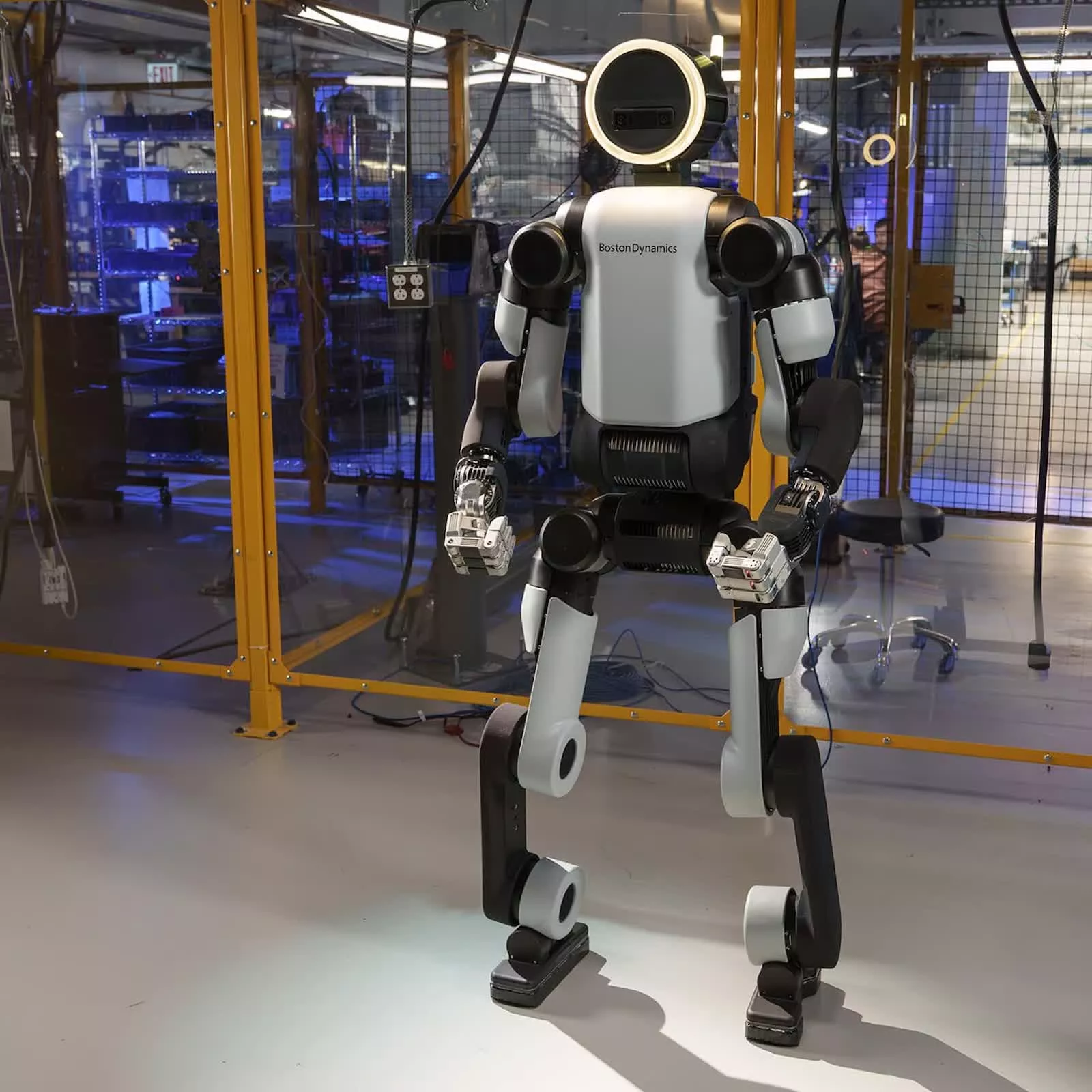
Muñoz said at Hyundai’s Investor Day event that the company already has potential distribution channels for selling robots through dealer partners. This statement means that Hyundai Motor may try to rely on the existing automobile sales, after-sales and financial systems to establish a commercialization path for robot products to a wider market.
As early as 2021, Hyundai Motor Group acquired 80% of Boston Dynamics' controlling stake at a valuation of US$1.1 billion. This investment, which attracted much attention at the time, is now gradually entering the stage of seeking returns. Hyundai previously announced that it plans to build a factory with an annual production capacity of 30,000 Atlas humanoid robots, and is expected to start production in 2028. In the same year, the company also plans to first deploy Atlas in its factory in Georgia, USA, and then gradually expand it to global production bases.
Atlas is a humanoid robot product owned by Boston Dynamics. The demonstration content shows that this robot can use artificial intelligence-driven behavioral control to coordinate its whole body movements when handling heavy objects, and maintain balance and stability between complex contact points to complete more difficult handling tasks.
In addition to humanoid robots, the quadruped robot Spot is also an important product of Hyundai and Boston Dynamics. Spot has been used in a variety of scenarios such as explosive ordnance disposal observation, cleaning and gardening, security patrols, military assistance, pizza delivery, seagull driving, and factory inspections. In July this year, it also participated in the parcel delivery assistance test again. Hyundai already uses Spot to perform inspection and maintenance work at its own facilities.
Boston Dynamics’ product line also includes Stretch, a robot mainly targeted at warehousing scenarios and can be understood as a robotic arm mounted on a mobile base. Compared with more imaginative humanoid robots, the commercial uses of this type of robots are currently more clear, and they mainly serve the needs of logistics, handling and warehousing automation.
However, the price of robot products is still high. Spot’s previous starting price was US$74,500. The actual selling price may be higher now, and customers need to inquire with the company for pricing. The price of advanced humanoid robots for commercial tasks is expected to rise further. Munoz therefore mentioned that Hyundai Capital, which is responsible for the auto financing business, is studying robot financing solutions, but it is not clear whether the service is mainly for corporate customers or whether it may enter the consumer market in the future.
Hyundai is not the only automaker accelerating its deployment of humanoid robots. Tesla is renovating part of its Fremont factory to produce the Optimus humanoid robot; Musk hopes to deploy the product internally at Tesla before selling it to the external market. BMW has trialled the Figure 02 humanoid robot at its factory in South Carolina, USA. During the 10-month pilot, the robot participated in supporting the production of more than 30,000 X3 vehicles. Mercedes-Benz is testing the Apollo humanoid robot developed by Apptronik in its factory.
At this stage, factories and warehouses are still the most realistic and mature commercial implementation scenarios for robots. Stretch has performed truck unloading tasks for logistics companies such as DHL and Maersk; Amazon and GXO have tested Agility Robotics’ Digit for repetitive container handling work.
Companies generally emphasize that robots will take on positions that are tiring, dangerous, or short of personnel, rather than directly replacing human employees. But for workers, machines that can run continuously for long periods of time without wages, holidays or sick days may still put pressure on traditional jobs. As for whether consumers will consider purchasing Atlas when purchasing Hyundai Ioniq electric vehicles in the future, it is still difficult to draw a conclusion; however, in industrial and logistics scenarios, commercial robots have begun to truly "take up the job".
Comments