
Abstract:
As Intel continues to promote the transformation of its foundry business, the progress of its next-generation advanced process has once again become the focus of the industry. The latest supply chain and analyst news shows that Intel is steadily advancing preparations for mass production of the 14A process and plans to establish a production capacity of approximately 6,000 wafers per month by the end of 2027. At the same time, the yield rate of the 18A process, which is regarded as a key node for Intel's revival, is said to have reached about 80%, laying an important foundation for subsequent mass production.
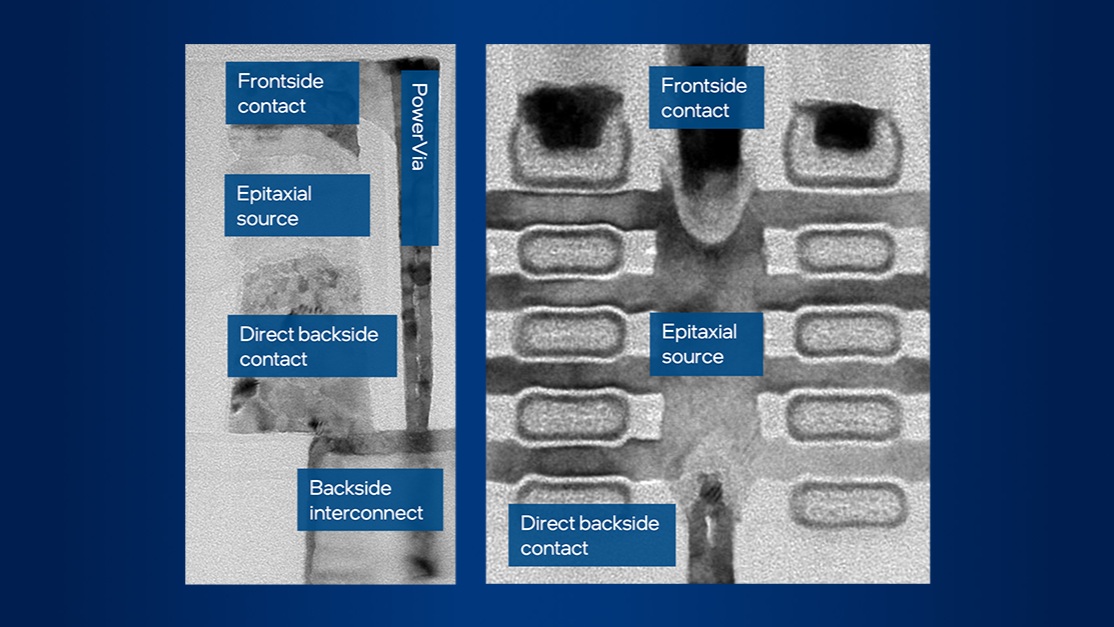
According to information disclosed by industry analysts, 14A will become Intel’s next-generation core process node after 18A and is also an important part of the company’s advanced foundry roadmap. Intel is currently carrying out capacity planning and equipment deployment around 14A, and is actively promoting related customer verification processes.
Data shows that by the end of 2027, Intel's 14A process is expected to reach a production scale of approximately 6,000 wafers per month. Although this number is still limited compared with mature nodes or large-scale mass production platforms, for a new advanced process, it is enough to support early customer introduction, technology verification and the production of some high-value products.
While 14A is advancing, the latest yield performance of the 18A process has also attracted market attention. According to analysts, the current 18A yield rate is close to or reaching 80%. If this number is accurate, it will mean that Intel has successfully crossed one of the most critical technology thresholds in the mass production of advanced processes.
18A is regarded as Intel's most important process node in recent years. This node introduces a number of key technological innovations such as RibbonFET surrounding gate transistors and PowerVia back power supply network. It is not only related to the development direction of future Core processors, but also an important basis for Intel to win external foundry customers.
Industry insiders point out that a yield rate of about 80% usually means that the process has strong mass production feasibility. For advanced processes, yield rate directly affects manufacturing costs, production efficiency, and customer confidence, so this indicator is often more commercially meaningful than a simple technology demonstration.
It is worth noting that Intel is currently actively promoting its foundry business, hoping to compete with TSMC and Samsung. The company not only plans to use the 18A process to attract external customers, but also hopes to continue its technological leadership through 14A in the future. Previously, Intel has stated many times that 14A will be one of the first important nodes to apply High-NA EUV high numerical aperture extreme ultraviolet lithography technology.
Analysis believes that if 18A can successfully achieve large-scale mass production and accumulate enough experience for 14A, Intel's "four-year, five-node" process catch-up plan proposed in recent years is expected to achieve phased results. At the same time, the future success of 14A will also largely determine whether Intel's foundry business can truly gain support from more large customers.
However, despite the encouraging data, the market remains cautious. Since 14A is still some time away from full mass production, the future may still be affected by factors such as equipment delivery, customer introduction progress, and changes in market demand. At the same time, TSMC and Samsung are also continuing to promote the development of their respective next-generation advanced processes, and industry competition remains fierce.
For Intel, the most important task at the moment is still to ensure that 18A successfully enters the stable mass production stage and use this node to build market confidence. If the follow-up 14A can proceed as planned, the company is not only expected to further enhance its advanced manufacturing capabilities, but also gain a more favorable position in the global wafer foundry competition.
Comments