
Abstract:
As the number of diagnoses of attention deficit hyperactivity disorder (ADHD) and autism spectrum disorder (ASD) continues to rise, scientists have discovered that an important change is taking place: the growth background, birth experience and family characteristics of children and adolescents diagnosed today are becoming more and more similar to the general population, rather than showing obvious differences as they were a decade ago.
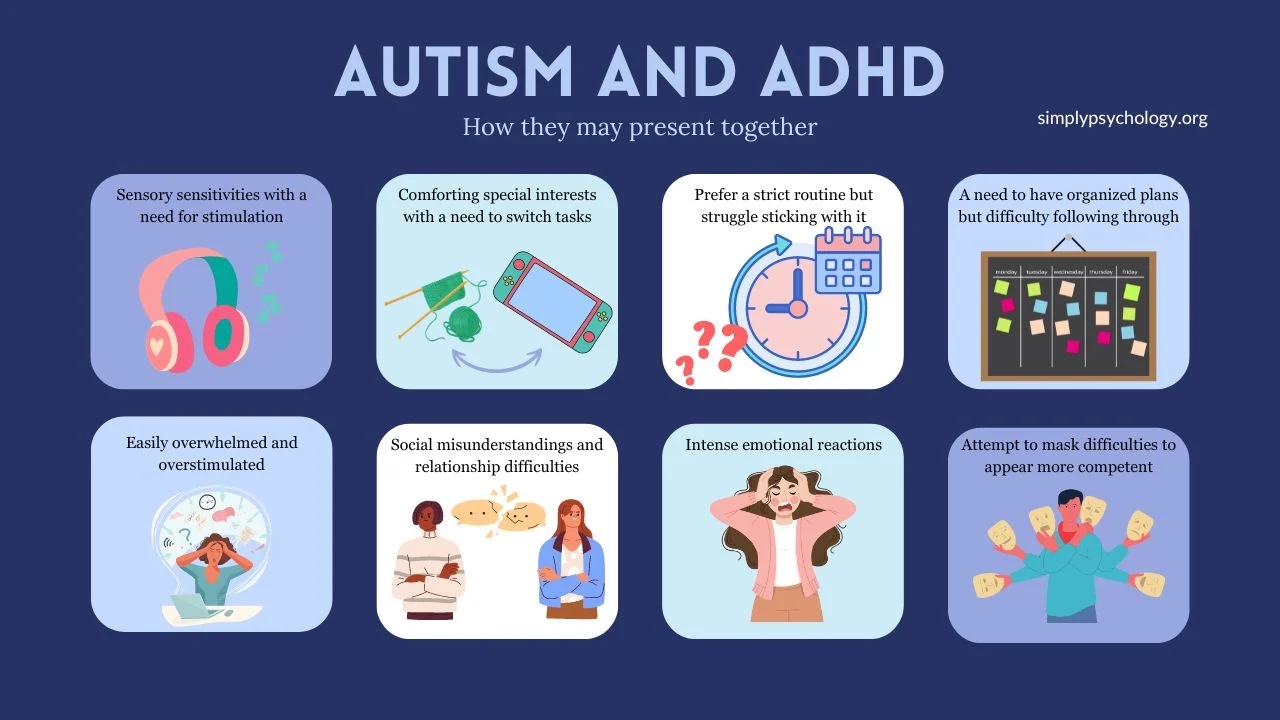
The study, published in JAMA Psychiatry, was conducted jointly by Aarhus University in Denmark and the Barcelona Institute for Global Health. The researchers point out that to understand why the number of ADHD and autism diagnoses has increased significantly in recent years, it is no longer enough to focus solely on whether the incidence of the disease itself has changed. It is also necessary to pay attention to how the composition of the people receiving diagnoses is changing.
ADHD mainly affects attention control and impulse management abilities, while autism spectrum disorder involves social interaction, communication methods and behavioral patterns. The study found that between 2012 and 2022, many characteristics that were significantly more likely to appear in ADHD and autism groups in the past are gradually losing their distinguishing effect.
The research team analyzed data on more than 2.1 million children and adolescents living in Denmark and compared approximately 71,000 of them with a diagnosis of ADHD or autism to more than 710,000 of their peers who did not receive a diagnosis.
The results show that while diagnosed children and adolescents are still more likely than the general population to have certain traditional risk factors, the gap has narrowed significantly over the past decade.
For example, past research has generally believed that there is a strong correlation between low birth weight and ADHD and autism. Research data shows that about a decade ago, children with low birth weight were 54% more likely to be diagnosed with ADHD or autism in the future than children with normal birth weight. By the end of the study, this difference had dropped to 17%.
Similar trends also appear in factors such as premature birth, low family education, and low family income. These characteristics, once thought to be highly relevant to relevant diagnoses, are still influential today, but their discriminatory power has been significantly reduced.
Researchers believe there may be multiple reasons for this change.
One possible factor is the continued increase in society's awareness of ADHD and autism. The ability of parents, teachers and medical institutions to identify related symptoms has increased, allowing more children who were easily ignored in the past to have the opportunity to be evaluated and diagnosed.
Improving screening capabilities in the health and education systems may also play an important role. As assessment resources continue to expand, more and more children have access to professional diagnostic services and thus enter statistical coverage.
The research team also raised the possibility that the diagnostic threshold itself changes. In other words, standards and practices may not be exactly the same from generation to generation as to the extent to which certain behavioral characteristics or dysfunctions warrant a formal diagnosis.
However, the researchers emphasized that this study could not determine how much each of the above factors contributed, nor could it confirm which mechanism played a dominant role.
The study does not mean ADHD and autism are overdiagnosed, nor does it mean the conditions are becoming less severe, said study leader Oleg Plana-Ripoll. The core finding of the study is that the populations receiving diagnoses have changed over time, so one must take this context into account when interpreting the growth in diagnoses.
Researchers note that people diagnosed today are in many ways closer to the overall social average than in the past. This means that the growth in diagnoses in recent years does not necessarily fully reflect a simultaneous increase in the true incidence of the disease, but may also reflect factors such as expanded identification, improved service coverage, and evolution in diagnostic practices.
The research team also stated that similar studies still need to be conducted in other countries in the future to verify whether this phenomenon is universal. If similar trends are observed across countries, it could lead to important adjustments in our understanding of the global increase in ADHD and autism diagnoses.
The findings suggest that discussions about the rising number of ADHD and autism diagnoses need to go beyond simply whether there are more of them. Perhaps a more concerning issue is that modern society is identifying and understanding a broader and more diverse group of people than in the past, and this may be one of the important reasons why the number of diagnoses has continued to rise in recent years.
Comments