
Abstract:
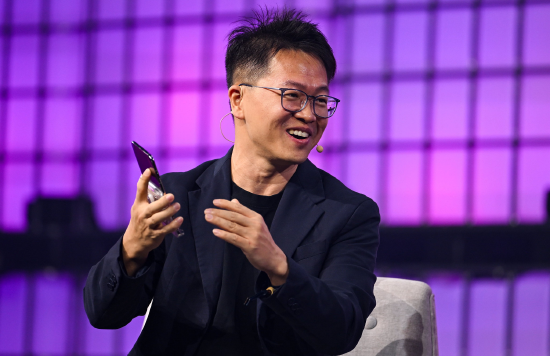
"This is the first time you have spoken publicly after the Meta incident. How do you feel now?" On the evening of November 9, local time, the 2026 Web Summit opened in Lisbon, Portugal. In the first dialogue at the main venue, host Casey Lau posed this question to Manus co-founder and chief product officer (CPO) Zhang Tao.
Faced with this problem, Zhang Tao did not talk too much about the previous acquisition turmoil, but turned the topic to the future of the company.
"This is how entrepreneurship is, you will always encounter a lot of problems that need to be solved. We can't predict what we will encounter next, but this is the process of entrepreneurship. Now, we are more focused on the future."
This is also the time when Manus has re-entered the international technology stage as an independent company after experiencing an acquisition and spin-off that attracted much attention in the global technology industry, showing its next stage of development direction to the outside world.
In March 2025, Manus quickly became popular with a general AI Agent that can independently plan tasks, call tools, and complete complex tasks. Unlike traditional chatbots that mainly provide information and suggestions, Manus attempts to move AI from "answering questions" to "directly completing tasks", and has therefore become one of the most watched startups in the global AI Agent wave.
On October 8, Butterfly Effect, the parent company of Manus, announced the completion of a new round of financing of more than US$500 million, jointly led by Boyu Capital and IDG Capital, with participation from old shareholders such as Tencent, HSG and Zhen Fund. After experiencing a series of turmoil, Manus has obviously still received great attention from the capital market.
In this conversation at Web Summit, the core message Zhang Tao tried to convey was: Manus is entering a new stage. The competition for AI Agents is no longer just about letting AI own a computer, but about giving it the ability to truly participate in work and life in the real world.
From a computer to an AI with a digital identity
“When we first launched Manus in March last year, we sort of defined a new category—general-purpose AI agents. We introduced a computer to AI so that it could handle a large number of different types of long-tail tasks with a single agent.”
Zhang Tao reviewed the development of Manus AI in the past 20 months.
Initially, an important innovation of Manus was to allow AI to no longer be limited to conversational interfaces, but to have its own virtual computing environment. It can autonomously browse the web, search for information, run code, analyze data, and connect multi-step tasks to ultimately deliver a complete research report, website, or presentation.
But in Zhang Tao's view, today, it has gradually become an industry consensus to allow AI agents to own a computer.
"Now everyone is building agents that work on computers. Maybe it's time to take a step forward."
On September 28 this year, Manus officially launched Manus 2.0 and simultaneously launched Cue, a new product for personal AI assistant scenarios. An important change in the new version is the configuration of more complete digital identity and execution tools for AI agents.
Zhang Tao introduced at the scene that Manus now not only provides computers for AI agents, but also configures them with phone numbers, email addresses and digital wallets.
This means that after obtaining the user's authorization, AI can actively make calls, send and read text messages, register for network services, process emails, and even complete payments within the budget set by the user.
If previous AI agents mainly completed search, analysis and content production in the digital environment, then Manus now hopes to further open up the interface between the digital world and real life.
This is also the new direction that Agentic AI (intelligent artificial intelligence) is exploring: AI is no longer just a chat window waiting for user instructions, but an executor that can understand goals, disassemble tasks, call tools, and autonomously advance the workflow within a certain scope of authority.
Of particular note is Cue. Unlike traditional personal AI assistants, it attempts to allow multiple AI agents to have their own digital identities and be able to collaborate around a common goal. For example, one agent can find event venues, another can screen options, and a third can create presentations based on the information gathered.
This means that AI agents begin to evolve from a single tool to a multi-agent collaboration system.
With more than 20 to-do items every day, AI has become his "chief staff"
At the scene, Zhang Tao also showed how he uses Manus to handle daily work.
He revealed that he usually faces 20 to 30 to-do tasks every morning. For a startup manager, these tasks may involve multiple aspects such as product, marketing, team communication, research, and project advancement.
“For me, the most difficult thing is not solving a problem, but starting to do something.”
Zhang Tao admitted that he has ADHD (Attention Deficit Hyperactivity Disorder) and it is difficult to get into work quickly when faced with a large number of to-do items every morning. In the past, he sometimes even chose to ignore these tasks for a while.
But now, he will hand all the to-do items to Manus and let the AI break them down into different tasks and actively ask him for the required information during the execution process.
For example, if a task requires further clarification of the background, Manus will ask him; if the task is suitable for handing over to other team members, the task can be assigned and a message sent through Slack.
More importantly, Manus does not simply forward a to-do item to team members.
It will first collect relevant background information from different work platforms such as Notion, Slack, and Gmail, and then send the task and its contextual information to the executor. This way, team members receive not just a work instruction, but also the background information they need to complete the task.
Zhang Tao described this way of working as having a "Chief of Staff" who is also a PMO (Project Management Office).
He can even ask Manus directly: "How are the tasks I give you every day going?"
AI can summarize the execution of various tasks.
This demonstration also shifted the on-site discussion from product functions to a larger question: When AI begins to take on more and more tasks, how will the value of human employees change?
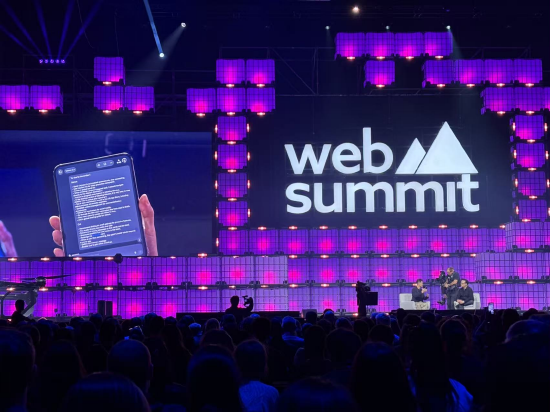
Zhang Tao used his new iPhone on site Duo shows how to complete the work tasks through disassembly of AI agents
In the AI era, corporate recruitment standards are changing
The host then raised a very practical question: In 2027, as a large number of daily tasks can be completed by AI, how will Manus recruit employees? Do companies still need so many traditional positions?
Zhang Tao said that in the past few months, the company has undergone significant changes in its recruitment philosophy.
“What we are looking for is no longer just people who are good at doing things. Because AI is already very good at doing things. What we really need are people who can work together with AI.”
He revealed that Manus has even changed the way it tests engineers for recruitment.
In the past, when technology companies recruited engineers, they usually examined candidates’ technical abilities through traditional programming exams, algorithm tests, and other methods. But now, Manus will give candidates a real-life problem that requires them to use Manus to complete a task within four hours.
The company then reviews the candidate's entire process of using AI, including how they ask questions to the AI, how they provide background information, how they adjust instructions, and how they use AI to solve problems.
In other words, Manus examines not only the final delivered results, but also the candidate's ability to collaborate with AI.
What’s even more interesting is that this change has penetrated deeply into the company’s internal organizational structure.
Zhang Tao introduced that he is responsible for product and marketing, and within Manus, product managers not only need to write code, but also need to participate in design; designers also need to have programming skills.
“Actually, our internal philosophy is that everyone can do anything. We place less emphasis on job titles and more emphasis on who can get things done.”
This does not mean that Manus is no longer recruiting professionals. Zhang Tao said that the company is still recruiting for different positions such as front-end and back-end, but the internal work boundaries are becoming more blurred.
This statement reflects an organizational change that is occurring in AI startups: when AI can take on more and more standardized execution tasks, companies' requirements for employees may also shift from single professional skills to cross-domain capabilities, problem definition capabilities, and collaboration efficiency between humans and AI.
For enterprises, future competitiveness may no longer just depend on how many employees they have, but on how to combine human judgment and creativity with the execution capabilities of AI.
Generating videos from a few sentences, AI begins to enter the field of content production
In addition to task management and automated execution, another feature of the live demonstration is AI video generation.
The host mentioned that Manus 2.0 has added video functions and invited Zhang Tao to demonstrate how to generate a video using simple text commands.
Zhang Tao said that about a month ago, people’s impression of AI-generated videos was still a large amount of content of varying quality, and it was often necessary to repeatedly modify the prompt words to obtain relatively satisfactory results. But now, users only need to describe their needs in very simple language to complete the entire process from information collection to video production.
The instructions he gave at the scene were less than 30 English words, and the general idea was: study the 2026 Web Summit and make a 30-second video to show at the scene.
Manus then automatically completes the collection of relevant network information and automatically generates a video content. In Zhang Tao's view, this short video, which was completely developed from concept to production, is already a mature product.
Comments