
Abstract:
In the busiest days of AI Agent, bosses wanted to announce on the spot that "the future is here", talking all about efficiency and transformation. When it was my turn to review, the style suddenly changed. More than half of the bosses slapped their thighs regretfully in the middle of the night about layoffs?
In February this year, career transformation services company Careerminds surveyed 600 HR practitioners who had been involved in layoffs in the past year. More than three-quarters said their companies had laid off employees due to technological advances such as AI.
But when it came time to actually accept the results, only 8.4% of the respondents believed that the AI-driven reorganization fully met expectations, and if they had it to do over again, they would do it again the same way. 54.6% of companies found that this round of layoffs was not worth it because AI requires more human supervision than originally expected.
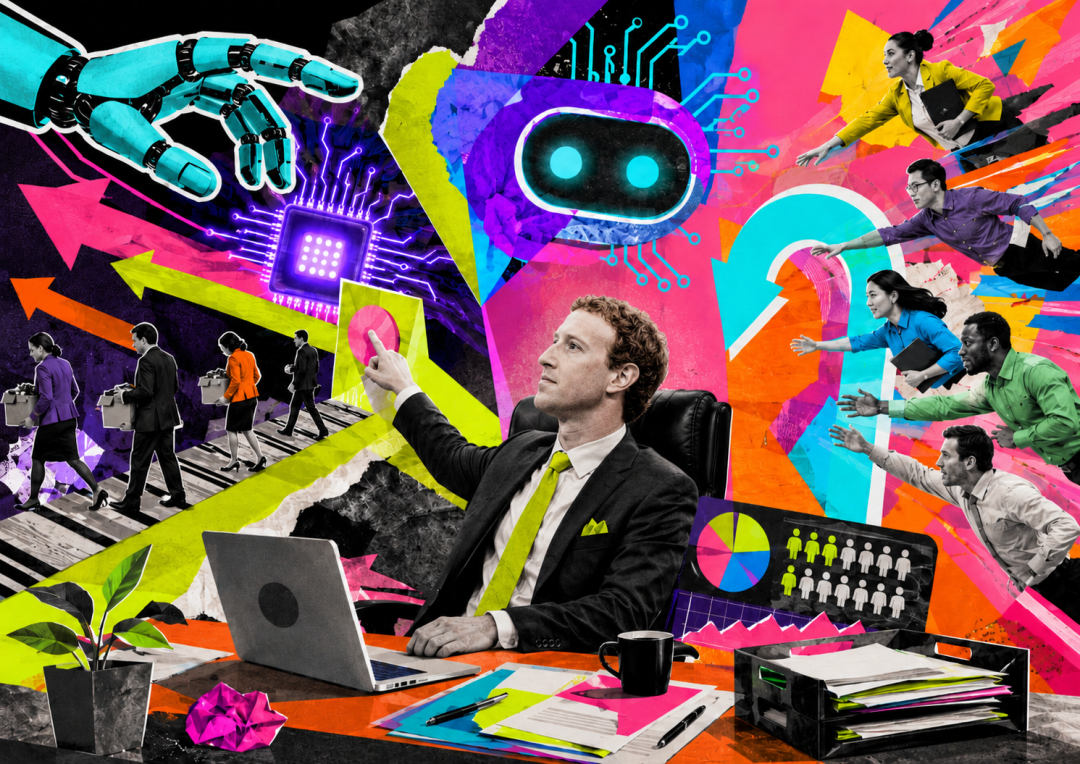
A similar situation happened to Meta recently. At the end of August, media revealed that Meta planned to use AI to significantly reduce the size of its teams this year. In the most radical plan, some teams may lay off up to 60% of their employees. After the first round of layoffs was implemented in May, the second round of adjustments originally scheduled for November was suspended.
Careerminds’ survey shows that among companies that have experienced AI layoffs, 35.6% have replenished more than half of the previously laid off positions, and another 32.7% have replenished a quarter to half. More than half of companies resume hiring within six months of layoffs.
The gifts given by AI also had prices marked on them. Even more expensive than human employees.
The craze for AI is gradually fading
AI can certainly do the job, and often does it very quickly. When it comes to "liver", carbon-based organisms can never compare to AI.
As early as February 2024, Klarna, a buy now, pay later company, released a set of figures that ignited the imagination of bosses-the AI assistant handled 2.3 million conversations in the first month after it went online, accounting for about two-thirds of customer service chats, and the workload is equivalent to 700 full-time customer service. The company also expects the system to result in a $40 million profit improvement in 2024.
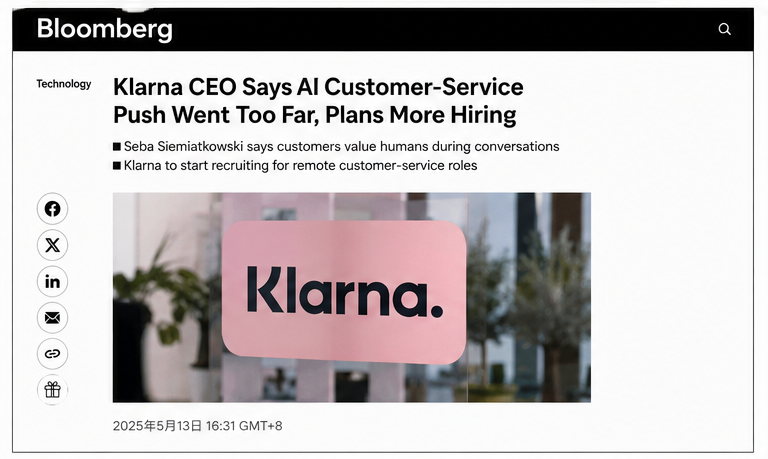
Klarna once highly publicized the cost-reduction capabilities of AI customer service, and a year later began to recruit human customer service again.
At the time, this set of figures was enough to make AI customer service a great supplement to financial reporting.
However, just over a year later, Klarna’s CEO admitted that customer service cost reduction had gone too far, and the company began to try to recruit human customer service personnel who could work remotely to ensure that customers could contact a real person.
Klarna did not expect when making the decision that the improvement in the efficiency of a single task does not mean that it can directly replace comprehensive positions.
In August this year, Syndio, a compensation decision-making software company, played out a similar story again.
In May, Syndio laid off a group of employees in order to streamline the company in the AI era, including labor economist Jonathan Vidales, who had been working there for five years. CEO Maria Colacurcio also judged at the time that the remaining employees would most likely not leave amid the downturn in the job market.
As a result, in the next few months, some of the people the company originally wanted to keep resigned one after another. In August, Syndio reopened positions, Vidales applied again, and the company recruited him back.
Colacurcio later wrote an article specifically reviewing the incident. She admitted that in pursuit of efficiency in the AI era, the company has lost some truly needed talents.
It is still difficult for comprehensive positions to be completely replaced by AI. Take the customer service position as an example. In addition to the words and handling methods written in the SOP, you also have to deal with the user's emotions. Even if AI can give results, the cold pseudo-human tone is already off-putting to users.
Not to mention there is a lot of coordination work in the organization. Under what circumstances should a customer complaint be escalated to avoid public opinion? Will too many upgrades make the leader think that his work ability is too poor? These "experiential intuitions" will not even be written into KPIs.
Kathryn Sullivan has worked at the Commonwealth Bank of Australia (CBA) for 25 years, and has spent the last few years helping the bank train its customer service robot Bumblebee. When the robot encountered a customer question that it couldn't answer, she and her colleagues took over manually, wrote the correct answer, and then used it to improve the system. Sullivan originally thought that AI would just help him handle repetitive tasks.
As a result, in July 2025, CBA announced that it would lay off 45 customer service positions, including Sullivan. The reason given by the bank is that after the AI customer service went online, there were about 2,000 fewer calls that needed to be handled manually every week.
The irony comes later.
The Australian Financial Industry Union FSU took this round of layoffs to the Fair Work Commission.
During the investigation, the bank discovered that the matter was completely different from its previous judgment:
The number of customer service calls did not decrease, but was increasing. The remaining employees had to work overtime, and even the supervisor was called in to answer the phone.
A month later, CBA admitted that there were problems with the layoff assessment, withdrew the decision to eliminate these 45 positions and allowed the affected employees to return to their original positions.
Robert Half surveyed more than 2,000 U.S. hiring managers this year. Among companies that had eliminated positions due to the introduction of AI, 32% later brought back the same or similar positions in some way.
There are three main reasons for "regret". 40% found that AI cannot make up for the internal experience and business background mastered by employees, 39% lacked the maintenance of relationships between people, and 38% underestimated how much manual inspection and quality control AI still requires.
In an analysis released in January 2026, research firm Forrester stated that many companies attribute financially driven layoffs to future AI applications, but when layoffs occur, there is no mature and proven system to take over those positions. It sounds like a technology strategy, but at a glance, sometimes it is just an AI jacket for cost reduction.
Forrester simply named this approach "AI washing (AI packaging)".
Forrester’s 2026 job trends forecast released in November 2025 predicted that half of the layoffs attributed to AI will be quietly reversed.
You can beat the gongs and drums when announcing the AI transformation, but the re-employment is much more low-key. Just add a few more positions quietly on the recruitment page and you can explain it.
What’s even more subtle is that returning to work does not mean the return of the original cast. Forrester also predicts that some jobs will be moved overseas or given lower wages.
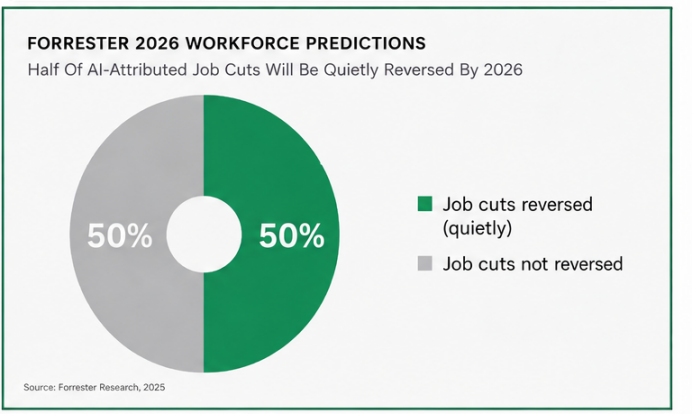
Forrester predicts that by 2026, half of the layoffs attributed to AI may be quietly reversed by companies.
So after all this trouble, the fantasy of AI replacing employees has gone bankrupt, but the situation of employees is not much better. The drama of "Concubine Xi returning to the palace" does not exist. Although she has proven herself irreplaceable, she was demoted upon her return.
The boomerang of AI layoffs
How did you hit the employee?
When companies discover that AI is not as useful as they imagined, and then recruit people back, it looks like the employees have won the game.
The matter of layoffs will not automatically return to zero just because the company regrets it.
This is the case with the Commonwealth Bank of Australia (CBA) customer service rehiring incident mentioned above. Although CBA has withdrawn the layoffs, it has given the affected employees the option to stay on or leave with compensation.
However, the Australian Financial Industry Union FSU later specifically mentioned that laid off employees have experienced weeks of uncertainty, and some are worried about whether they can pay their bills next month and continue to support their family life.
In other “rehire” stories, the jobs themselves have changed when employees return.
Although Klarna also regretted its decision, it has permanently restructured its work and begun to try a customer service model similar to that of an online ride-hailing platform. Employees go online remotely and take orders when needed. The company also lists students and residents of remote areas as potential recruitment targets.
In other words, Klarna found that human customer service cannot be completely replaced for the time being, so it split the customer service work so that humans can only do things that AI cannot yet do.
When "AI triggers layoffs," not only the laid off employees will be affected, but those "lucky ones" who have not been laid off from beginning to end will also have to share the company's trial and error costs.
Meta promoted the "AI native" organizational transformation at the beginning of the year, but as the actual usage data of AI came out, subsequent plans had to put a brake on it.
On August 26, the media disclosed Project OT, an organizational transformation plan promoted internally by Meta this year.
According to the plans discussed internally, Meta hopes to use AI to redesign some teams. Some of the most radical ideas are even preparing to reduce the size of the team by up to 60%. In May, the company finally conducted its first round of layoffs, affecting about 10% of its employees, but a second round of adjustments originally planned for November was later cancelled.
What really makes this experiment look embarrassing is Meta’s own internal data.
Meta internal data shows that
the internal code modifications generated by employees with the help of AI increased by 220% year-on-year, but the actual conversion into new user-facing features or upgrades only increased by 36%. At the same time, major technical and safety incidents increased by 40% year-on-year, and the time employees spent on "firefighting" increased by 70%.
Employee sentiment is also deeply affected. In Meta's internal semi-annual employee survey, positive reviews dropped from 74% to 55%. Later, the company suspended some plans to track employees' mouse and keyboard operations, and also allowed some employees who were transferred to produce training data for AI to return to the original team.
However, to put it bluntly, companies that lay off employees and then regret it do so not so much because they have discovered that "AI cannot replace humans", but rather as "it is a pity that AI cannot completely replace humans for the time being." A few cases of remorse only bought short-term breathing space for human employees.
In Robert Half's survey, 54% of hiring managers still expect that AI will create a net increase in jobs in their companies in the next two years.
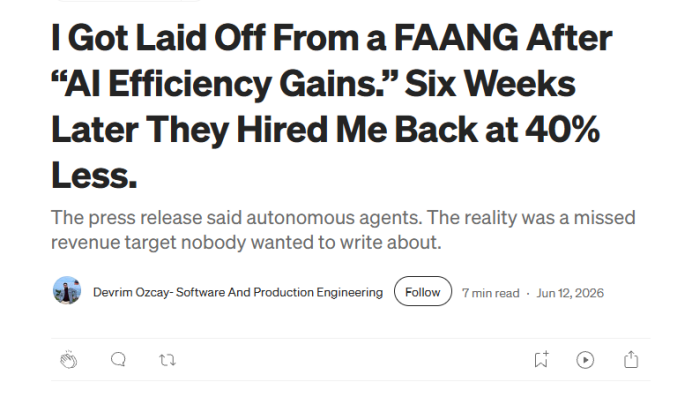
The author Devrim Ozcay published an article on Medium saying that six weeks after being laid off by AI, he was rehired with a 40% salary cut.
Re-employment recognizes that the job is necessary and does not necessarily restore the original employment conditions. The employees finally waited for the boss to "admit his mistake", but they were faced with "I was wrong, please do it again next time".
Hoping that the bosses will find out from their conscience may be slower than re-employment. Some companies and unions in Europe have already begun to take action.
Europe sets a stage for bosses and employees
Europe does not order all companies to ban AI layoffs across the board. The idea is to require companies to show their cards early and make it clear to employees whether they will lay off employees, how many people will be laid off, and why. Employees must at least have the right to know and have the opportunity to interact with the company.
In 2024, Danish housekeeping service platform Hilfr signed a new collective agreement with the trade union 3F. The agreement allows AI to participate in employee evaluations and also allows it to enter the process of terminating labor relations, but the platform needs to explain which evaluations and facts are used, and the corresponding weights. In this way, relevant decisions may be subject to legal verification.
Insurance group AXA goes one step further.
On November 27, 2025, AXA management and the European Works Council signed the AI Social Dialogue Charter, agreeing to report on cross-entity AI projects every six months and arrange an AI topic every year. The charter is effective from January 1, 2026. Once every six months may not be able to resolve every dispute, but at least it can turn the impact of AI on employees from a temporary crisis into a fixed agenda.
The EU level is also raising the threshold for companies to be "impulsive".
At the end of 2025, the EU revised the employee information and consultation rules for large multinational companies. In the future, there will be major adjustments involving multiple European countries that will obviously affect employees. Enterprises cannot wait until the decision has been made and the list is completed before unilaterally notifying the results. Employee representatives need to have the opportunity to understand the situation and provide opinions in advance, and management needs to respond before a final decision is made.
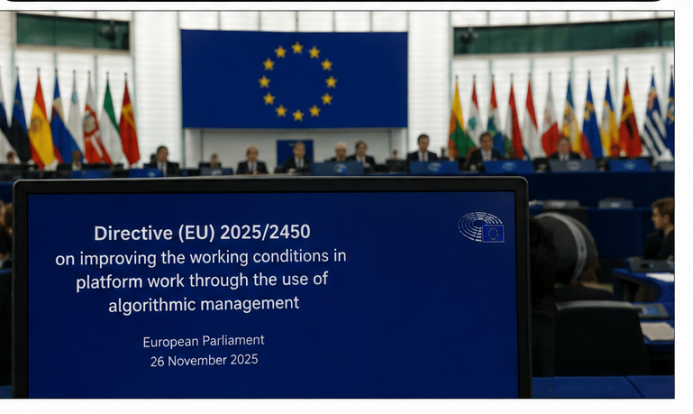
Europe is trying to advance employees’ rights to information and consultation before AI affects jobs and layoff decisions.
This set of rules is not specifically formulated for AI layoffs, nor does it give employees a veto. But if a company is preparing to reorganize teams in multiple countries and eliminate a large number of jobs at once because of AI, such decisions may enter its scope.
Of course, these arrangements cannot completely dispel the haze of AI layoffs.
Companies will not give up on cost reduction, and the well-being of human employees may still require all humans to worry more.
Comments