
Abstract:
Tesla’s new Roadster was officially unveiled, and its technical solutions far exceeded the market’s previous expectations. This car is equipped with an exclusive 4680 battery, a dual-motor rear-drive system, an active ground-suction fan, and a cold-air thruster from SpaceX. The most radical version claims that it can accelerate from 0 to 60 miles per hour in 0.55 seconds and has limited ground-lifting capabilities.
In an interview with Hagerty Channel on the 16th, Tesla Vice President of Vehicle Engineering Lars Moravy systematically disclosed the core technical details of this car for the first time. He revealed that
the new Roadster finally gave up the four-wheel drive solution and instead adopted a dual-motor rear-drive layout. The total power of the dual motors exceeds 1 megawatt (approximately 1,341 horsepower) and the torque exceeds 1,400 Nm.
"Putting all the torque behind you creates a very direct and emotional driving experience."He said,
The target weight of the vehicle will be slightly less than 1,700 kilograms,
It is significantly smaller than the 2,000 kg solution that was considered during the previous development process.The new Roadster will be launched in three versions initially, and the price has not yet been announced. The product series starts with the Performance version, which is equipped with a complete power system and a floor-suction fan, and can accelerate from 0 to 60 miles per hour in about 1.6 seconds; the Thrust version adds an air-conditioning thruster, and the same indicator is shortened to 0.85 seconds (deducting the starting taxi time); the top-of-the-line Rocket version replaces the passenger seat with a 400-liter high-pressure nitrogen container and becomes a single-seat model. It is claimed that the acceleration performance is further reduced to 0.55 seconds, and it can achieve short-term flight off the ground.
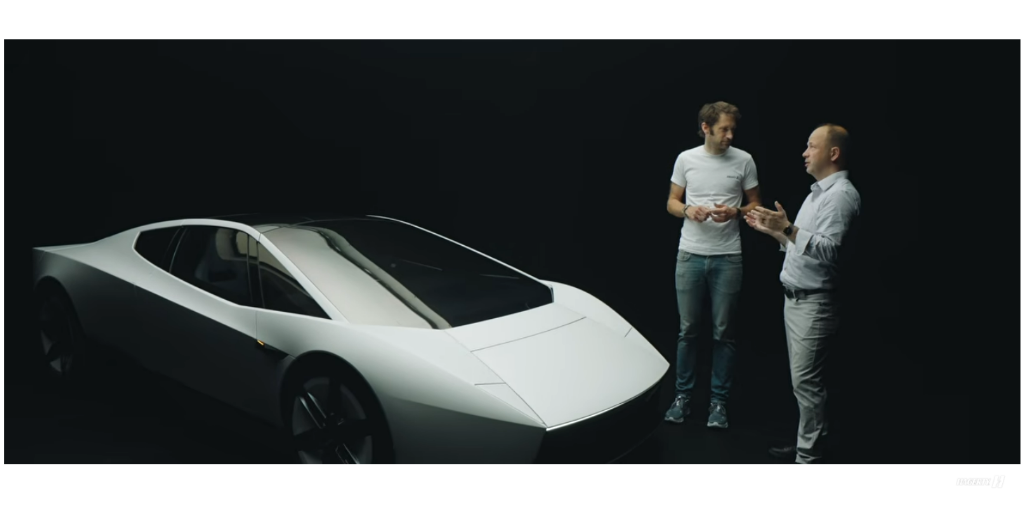
Dual motor rear drive and exclusive 4680 battery
Lars Moravy said that giving up four-wheel drive is an active choice, not a compromise
. "Although there are only two motors, their power and torque are actually more than the Plaid (three-motor version), but they are packed into a more compact assembly."
The two motors independently drive the rear wheels through an 8.4:1 planetary gear set. The differential-less design allows both sides to be independently controlled, and the rear tires are therefore made extra generous.The battery pack is also one of the core highlights of this car.
Tesla has specially developed a customized version of the 4680 battery cell for the Roadster. The shell material has been changed from conventional steel to aluminum to take into account both weight reduction and thermal conductivity. The upper cover is made of titanium, and the weight is further controlled by tailor-welding materials of different thicknesses.
In terms of thermal management, the battery pack adopts a double-sided cooling design, with the coolant flowing through in a single pass instead of back and forth to maintain a more uniform heat flow distribution. The goal is to keep the power output stable under most driving conditions, with almost no performance degradation.
The operating voltage of the battery system is about 800 to 1000 volts, which is similar to the technology paths of Cybertruck and Semi.
The official claims that the battery life is more than 300 miles (about 483 kilometers), and the fast charging goal is to charge the battery from 15% to 80% in about 10 minutes. The specific capacity of the battery has not yet been announced.
Lars Moravy said that its design goal is to support drivers to quickly replenish energy after driving continuously for 25 to 30 minutes on the track, and then immediately start the next round of driving.
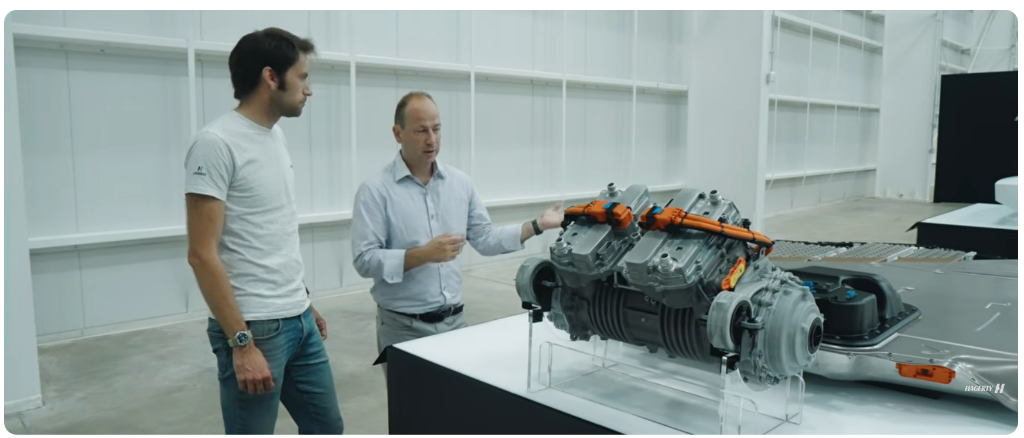
Active aerodynamics: the ground suction system makes up for low-speed blind spots
In addition to the traditional aerodynamic design, the new Roadster introduces an active ground suction system, which is also one of the most breakthrough parts of its technical solution.
Lars Moravy said that at speeds exceeding 200 miles per hour (about 322 kilometers per hour), the vehicle can generate aerodynamic downforce equivalent to twice the weight of the vehicle, but the effect of the airfoil is limited at speeds below about 50 miles per hour (about 80 kilometers per hour).
To fill this gap,
Tesla installed four fans under the car, each with a power of about 20 kilowatts, and four independent retractable skirts to actively suck the car body toward the ground.
"Even when the wing is not functioning, the vehicle can withstand more than 2g of lateral acceleration in corners," he said.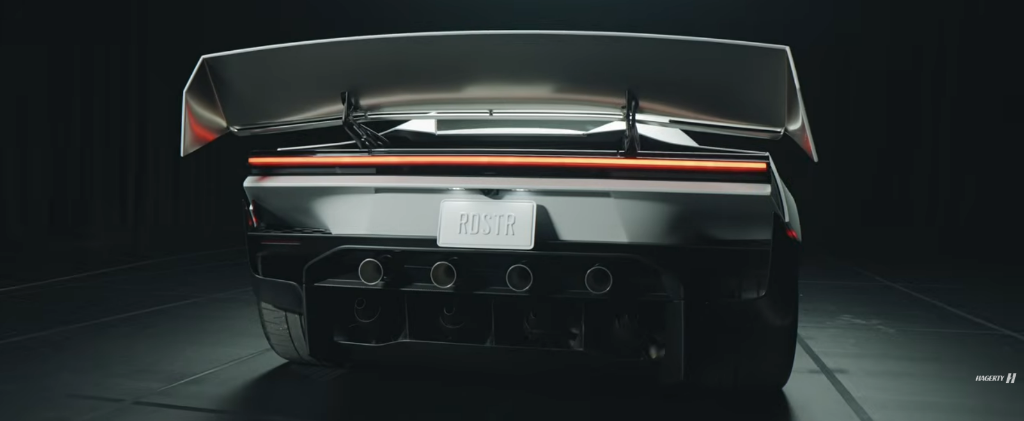
These fan motors are derived from the high-pressure compressor motor in the Tesla heat pump system. When driving in a straight line at high speed, the front and rear skirts open at the same time, and the fans forcefully extract the bottom airflow, further enhancing the active aerodynamic effect. The skirt body is a replaceable consumable part that combines rubber and nylon bristles, and is positioned for track use.
The exterior of the car body is covered with multiple movable aerodynamic panels, including fins inside the front lip spoiler that can rotate up to 80 degrees, outwardly deployable fender deflectors, and top active cooling air outlets.
Lars Moravy describes the entire front area as "a huge airfoil made up of about five different surfaces." The tail actuator is directly borrowed from the leg actuator of the Optimus humanoid robot, and a braking mechanism is added to maintain the specified attitude.
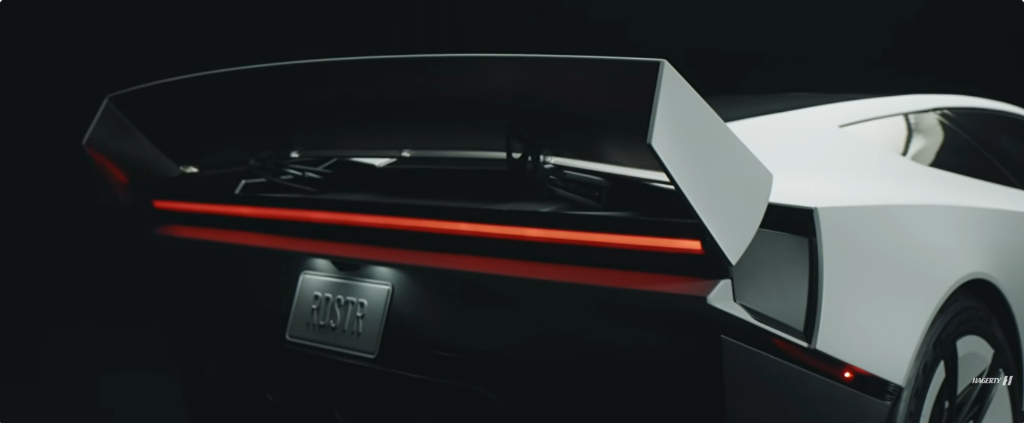
SpaceX cold air thruster: driven by nitrogen, with a maximum thrust of nearly 90 kilonewtons
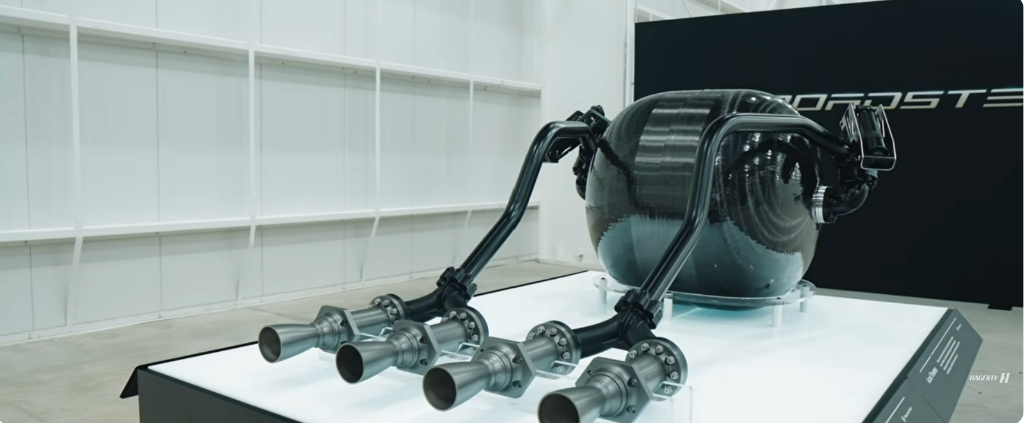
The most talked about feature of the new Roadster comes from the cold gas thruster (CGT) system jointly developed with SpaceX.
The system uses high-pressure nitrogen as the working fluid, which is stored in a carbon fiber-wound composite pressure vessel, with a working pressure of up to 10,000 pounds per square inch (approximately 689 bar).
When Lars Moravy explained the reason for choosing nitrogen, he said, "It always feels inappropriate to add fuel that needs to be burned in the car." Nitrogen is non-toxic and non-flammable, and is consistent with the technical path of the spacecraft attitude control system.
The Thrust version is equipped with a 200-liter container and four propellers arranged at the rear of the vehicle. The maximum thrust is more than 80 kilonewtons, which is equivalent to the thrust of a single engine of a typical fighter jet. It assists in achieving an acceleration of 0.85 seconds and generates a longitudinal acceleration of more than 5g in the process.
On this basis, the top-spec Rocket version replaces the co-pilot seat with a 400-liter container, with a total gas storage capacity of 600 liters. The number of propellers is increased to six - one at each corner of the body, and two more at the front for yaw correction - with a total thrust of nearly 90 kilonewtons, and supports short-term flight off the ground. Lars Moravy said that this version of the flight demonstration aims to prove that "flying cars do exist."
The limitation of the propulsion system is that as the tank gas is consumed, the thrust output will gradually decay, which is essentially different from the combustion system. Currently, it takes 6 to 7 hours to fully fill a 600-liter storage tank; Tesla is developing a rapid filling system with the goal of compressing the time to about half an hour.
The valve design mainly comes from SpaceX, but the actuator motor and actuator are provided by Tesla, which reflects the division of labor between the two companies on this system.
Cockpit design and mass production process
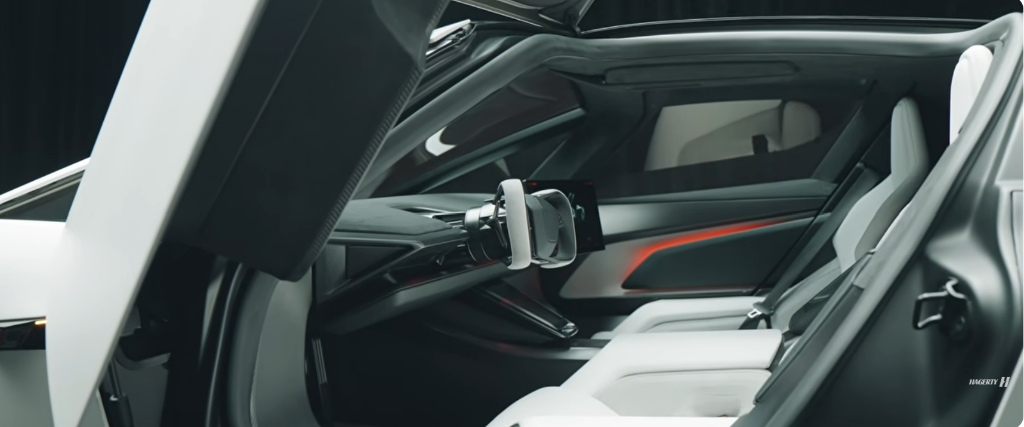
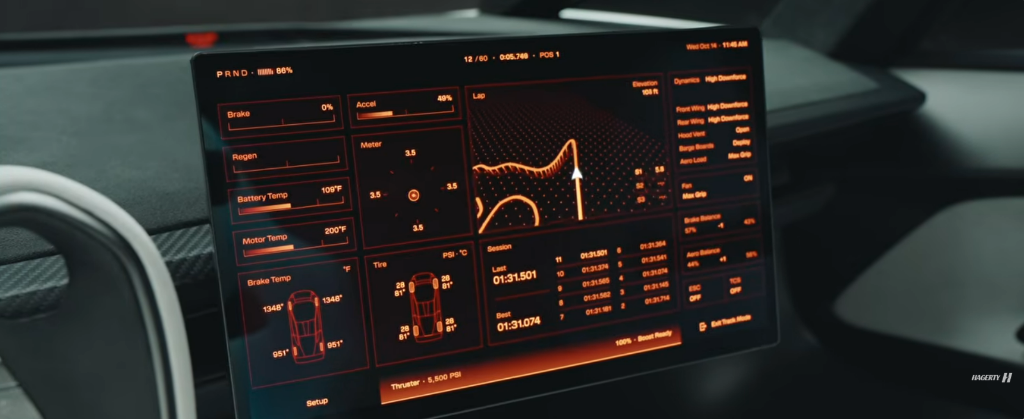
The cockpit layout is centered around the driver. The seat base is fixed, the driving position is adjusted via a movable pedal set, and the backrest inclination is adjustable. The central screen always faces the driver, and a set of slim screens is embedded at the base of the front windshield. The steering wheel adopts a special-shaped design, continuing the overall aircraft style of the cockpit. The vehicle is equipped with both brake-by-wire and steering-by-wire.
Lars Moravy revealed that four to five prototype vehicles have been put into development, and it is planned to build a larger test fleet early next year.
The target weight of the vehicle is slightly less than 1,700 kilograms, and the final data is still being confirmed. The basic model is still in the development stage, and the product series at this stage starts with the Performance version. In terms of selling price, Tesla has not announced any version of pricing information.
Comments