
Abstract:
On Wednesday local time, Nvidia CEO Jensen Huang urged G20 leaders to embrace artificial intelligence infrastructure and applications, and warned that excessive fear or regulation of artificial intelligence may cause countries to miss opportunities in the next major technological revolution. Speaking at the G20 Innovation Ministerial in North Carolina, Huang said countries should view artificial intelligence infrastructure as a fundamental foundation for their economies, just like electricity, roads and the Internet.
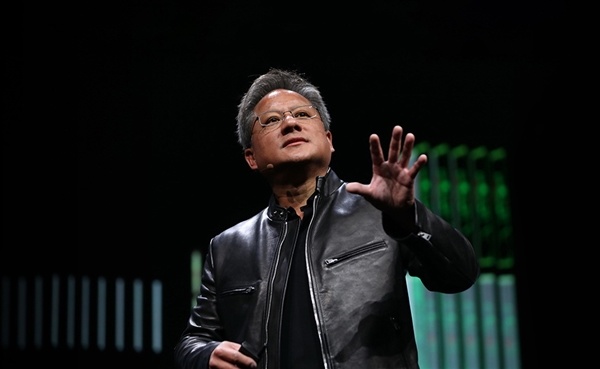
“Every country must build infrastructure to support its economic development.” Huang Renxun said.
He proposed that local artificial intelligence infrastructure can provide computing power for scientific researchers, students, start-ups and various industries to help develop new products and develop new businesses.
But Huang Renxun said that the biggest risk does not necessarily come from artificial intelligence technology itself.
"The worst result is that you fail to grasp this technology and end up being left behind by the times." He said, "This is the only worst result."
“If we are full of fear and uncertainty about this technology... full of worry and fear, the country cannot develop,” he said. “We must maintain a balance.”
Huang Renxun said that countries do not need to compete at every level of the artificial intelligence technology stack. On the contrary, governments of various countries should identify their most advantageous areas of participation and promote the application of artificial intelligence in education, medical care, manufacturing, scientific research and other industries.
He also proposed that artificial intelligence is not just software. Large language models can evolve into intelligent agents with memory, information retrieval, and tool calling capabilities, ultimately empowering various scenarios such as robots, self-driving cars, manufacturing systems, and scientific laboratories.
The Nvidia CEO said that thanks to energy policy, regulatory environment and development speed, the United States is vigorously promoting the construction of artificial intelligence, and pointed out that this year the U.S. infrastructure sector may usher in nearly US$1 trillion in investment.
Huang Renxun calls for pragmatic artificial intelligence regulation
Huang Renxun also disputed calls for widespread restrictions on artificial intelligence, arguing that regulation should focus on measurable actual risks rather than imaginary scenarios.
“Don’t supervise hypothetical theoretical harms, but supervise real and actual harms.” Huang Renxun said.
He added that companies developing artificial intelligence should assume the responsibility for ensuring technological safety, while regulatory agencies should focus on real problems.
Huang Renxun compared this regulatory approach to the aviation industry: airlines are responsible for controlling safety, while passengers are concerned about where this technology can take them.
He said artificial intelligence is still in its early stages of development, and technological advances in fact-checking, output accuracy and scientific reliability have made the technology safer.
Comments