
Abstract:
Many people will notice when they go to shopping malls that in digital stores such as Apple and Huawei, primary and secondary school students can often be seen gathering together, occupying the display prototypes for a long time to play games and watch short videos. The experience area that originally served consumers to try out products has quietly turned into a "free Internet cafe."
Many primary and secondary school students stay in the store for a long time, gathering in front of tablets and computer prototypes for an hour or two. Some children have strict control over electronic devices at home, so they go to stores to kill time.
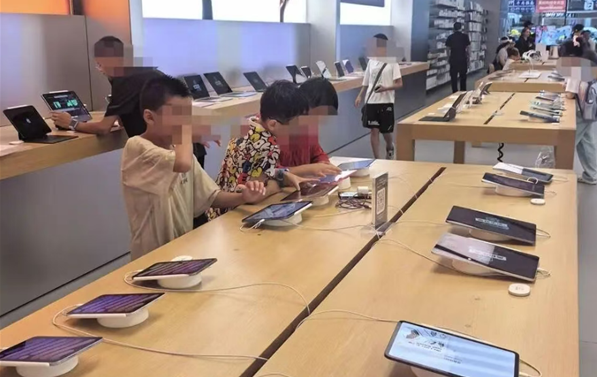
Some parents also leave their children in the store directly when they go shopping, using the store as a place for free custody. They think that there are many people in the store and there are staff, so it is safer for their children to stay here. Children occupying the prototype for a long time also takes away the opportunity for ordinary customers to experience the equipment and interferes with the normal operation of the store.
Facing this phenomenon, store staff said that the store had no right to expel the children who came and could only passively wait for the children to leave on their own. Only when other customers need to try out the equipment will they be reminded to give up the prototype. For safety reasons, stores are unwilling to forcibly remove minors who come to the store alone.
Even if some stores set restrictions in advance and prohibit prototypes from downloading new software without permission, they cannot prevent children from using the Internet for entertainment. Children can open web games through the device browser, or use the device with an account that has not been logged out in the store, easily bypassing various anti-addiction mechanisms.
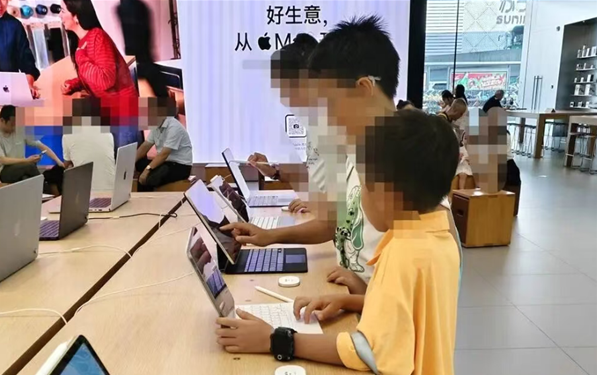
Education experts pointed out that the chaos of experience stores turning into "free Internet cafes" cannot be solved by a single entity, and requires coordinated efforts and joint rectification by multiple parties. Brand merchants should take the initiative to assume social responsibilities, provide timely guidance and reminders to minors who stay in stores for a long time and play with equipment, and standardize the order of store experience.
Communities, libraries, and youth activity centers can set up more public interest activities to provide children with more offline leisure places. Schools can also arrange appropriate transitional learning tasks to help students complete the transition from vacation to campus life.
Comments