
Abstract:
The latest data released by market research organization Counterpoint Research shows that U.S. smartphone shipments fell by 9% year-on-year in the third quarter of 2026. Rising memory costs have put pressure on Android manufacturers, especially the low-end market with thin profit margins. Apple has relied on its relatively strong ability to withstand pressure to increase its market share to 57%.
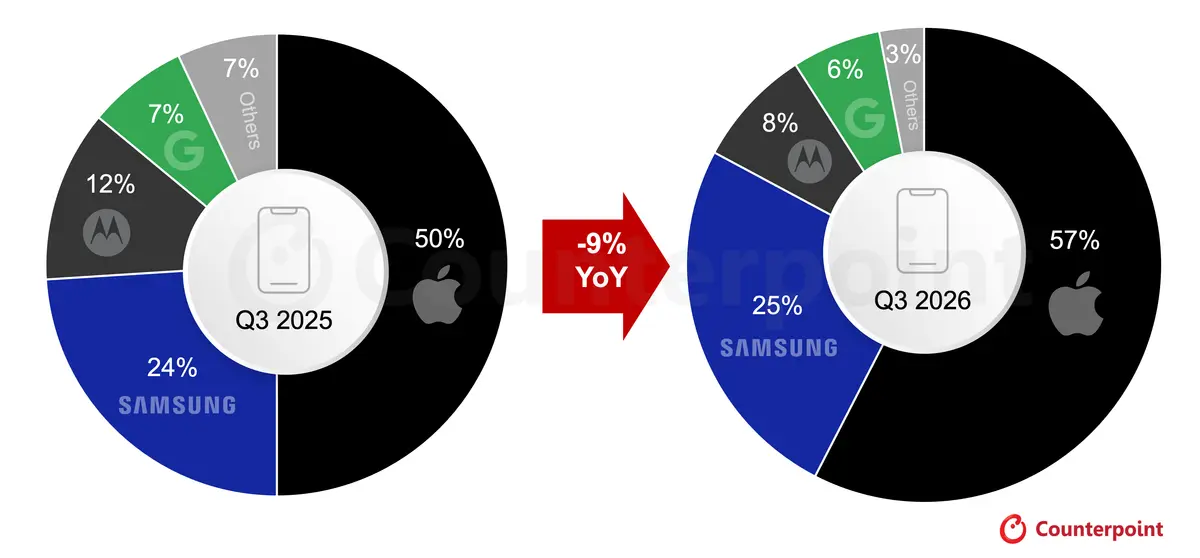
Apple is the only major manufacturer that has not experienced a decline in shipments. Its market share has increased from 50% in the same period last year to 57%, an increase of 7 percentage points year-on-year. Samsung ranked second with a 25% share, a slight increase from 24% in the same period last year, mainly due to the combined performance of the Galaxy S series and Z series flagship models and the low-end Galaxy A series.
Motorola was the hardest hit, with its market share falling 4 percentage points year-on-year to 8%. After achieving year-on-year growth in the second quarter of 2026, its lineup focused on low-end products was squeezed by memory costs, and its share fell back. The launch of Google Pixel 11 failed to prevent its share from declining slightly year-on-year.
Counterpoint Research senior analyst Emily Herbert said that the third quarter of 2026 will be a quarter where rising component costs will seriously affect the U.S. smartphone market. Rising memory prices have hit the low-end Android market the hardest. Manufacturers have little room to absorb higher material costs without raising prices or reducing sales. Apple was the only major player to avoid a decline in shipments, and this resilience allowed its share to rise to 57%. Samsung relied on a product portfolio covering flagship phones and low-end A series to maintain a 25% share. Motorola is under the greatest pressure due to its high proportion of low-end products.
Another senior analyst Maurice Klaehne pointed out that the fourth quarter is usually the strongest quarter of the year for U.S. smartphones, benefiting from holiday promotions and a full quarter of new iPhone sales. However, memory costs are expected to remain high, and the upward trend in the suggested retail prices of Android and iOS products has been established. U.S. carriers may be more cautious in choosing promotional models this holiday season. According to Counterpoint US channel share tracking data, smartphone sales of the three major operators fell 4% year-on-year in the third quarter, and sales are expected to remain weak in the fourth quarter. More than ever, consumers are timing their purchases around the best deals, or even buying less. This year’s holiday sales cycle will be markedly different from previous years.
Comments