
Abstract:
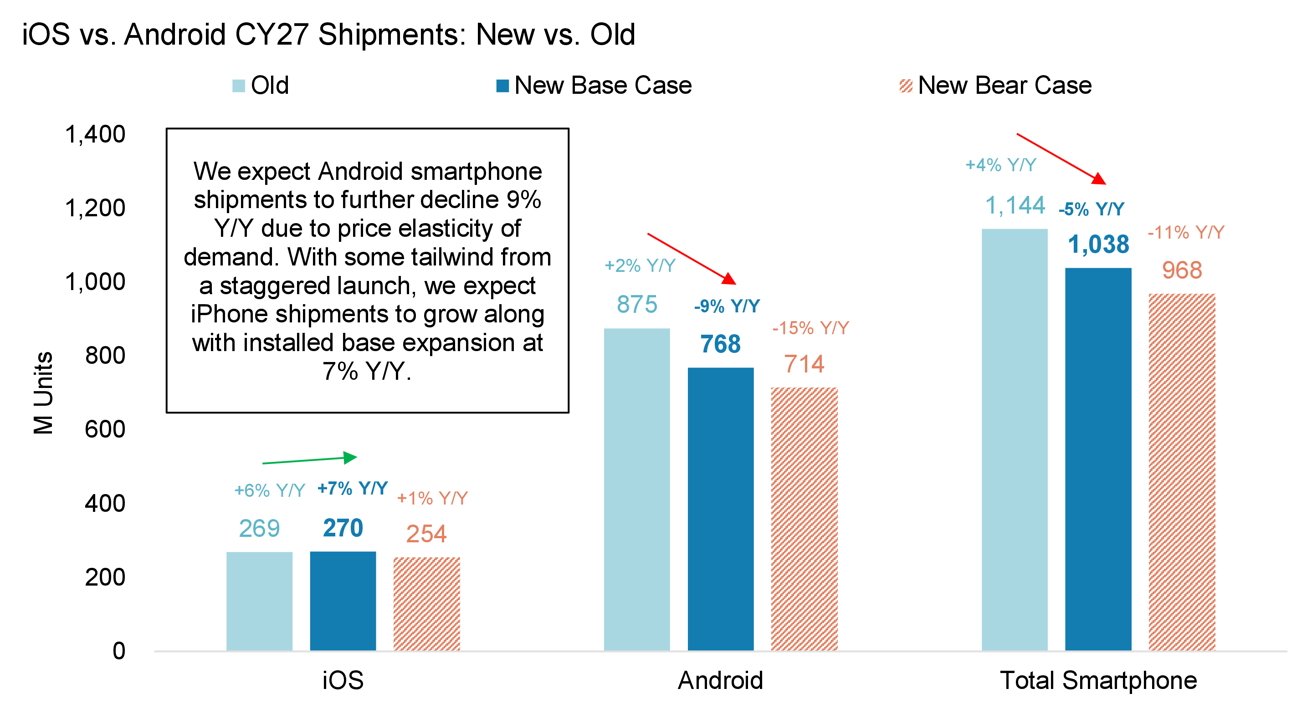
The global smartphone market is being hit by the deterioration of the macroeconomic environment and rising prices of memory and flash memory, and industry shipments are expected to decline for two consecutive years. However, Apple’s iPhone performance has been relatively solid. In its latest research report, Morgan Stanley predicts that Apple’s iPhone shipments will reach approximately 270 million units in 2027, a year-on-year increase of 7%, while the overall global smartphone market shipments will still decline by 5%.
A report released by Morgan Stanley on November 16 predicts that global smartphone shipments will drop to approximately 1.04 billion units in 2027. Previously, the agency originally predicted that the market would achieve 3.6% growth in 2027, but now it has significantly lowered its expectations. At the same time, global smartphone shipments are expected to have contracted by 13.8% in 2026.
The rising cost of parts and components is one of the important reasons for the deterioration of the market outlook. Memory prices continue to rise, which is squeezing the profit margins of mobile phone manufacturers. Cost increases are particularly hard to absorb for lower-priced Android phone makers, which generally don't have much room to pass on costs through higher selling prices. Apple has previously warned that memory costs are rising rapidly.
In contrast, Apple has shown stronger market resilience. In the second quarter of 2026, global smartphone market shipments fell by 11% year-on-year, but iPhone shipments still increased by 3%.
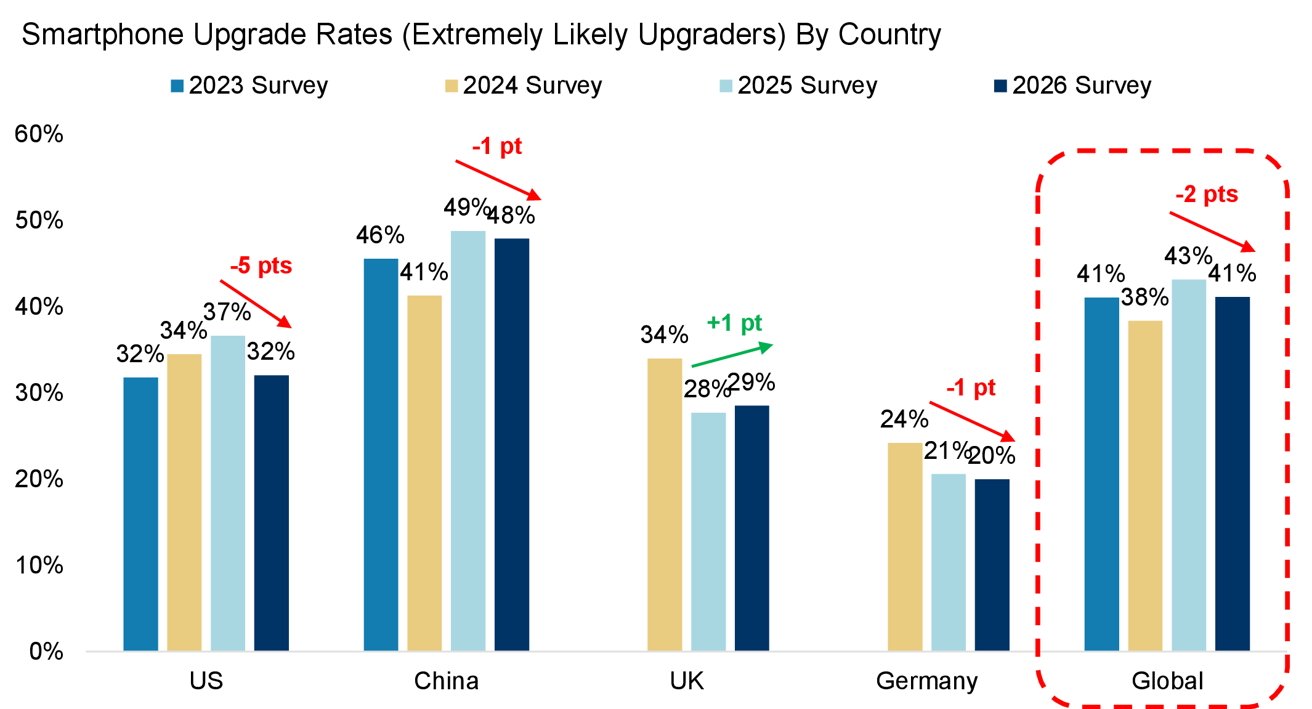
Morgan Stanley's 2026 AlphaWise Consumer Survey shows that about 41% of smartphone users surveyed said they are very likely to change their mobile phones in the next 12 months, a drop of two percentage points from the previous year. As consumers use their mobile phones longer, the agency predicts that the average global smartphone replacement cycle will reach a record high of 4.4 years in 2027.
The survey was conducted from September 22 to October 13, 2026, covering approximately 7,000 adults in the United States, China, the United Kingdom, and Germany. The survey results show that iPhone users’ willingness to change their phones is relatively stable. About 37% of Apple users surveyed said they are very likely to upgrade their devices in the next year, which is basically the same as the previous year.
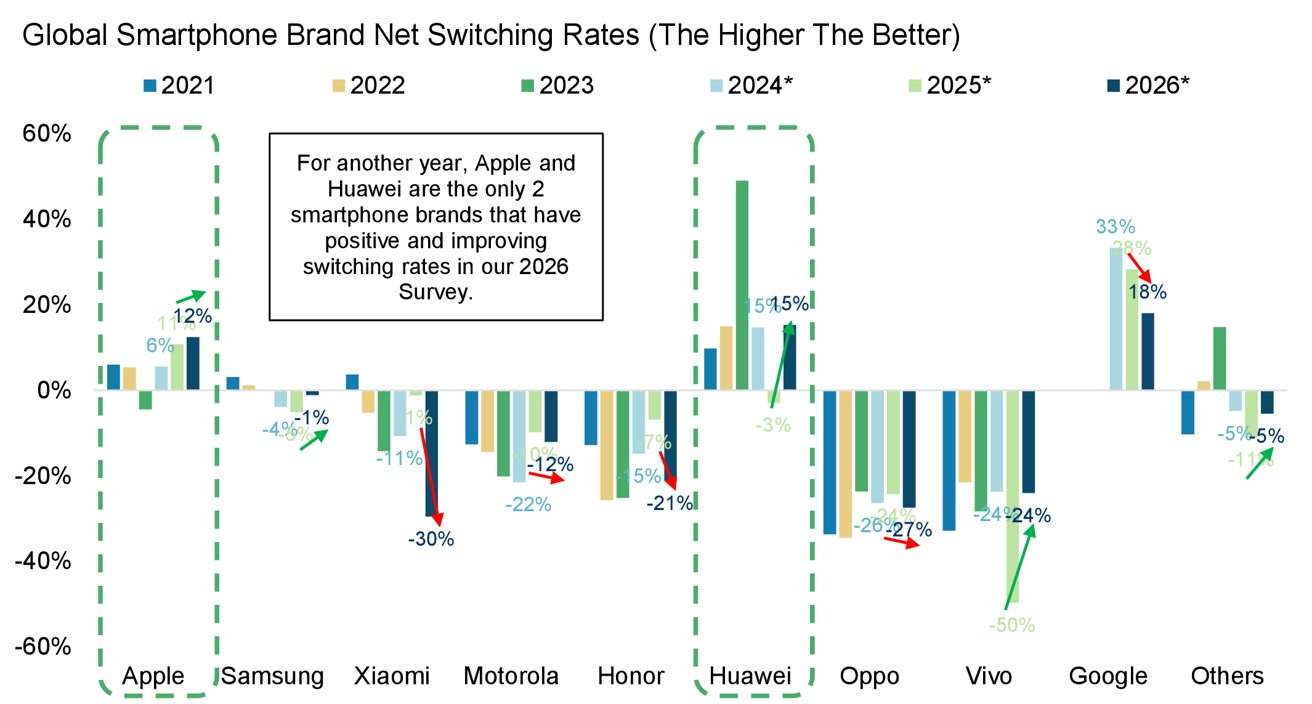
Apple’s user retention rate has also further improved. The survey shows that Apple's user retention rate increased by 3 percentage points year-on-year, reaching a record high of 93%. The net conversion rate, which measures the difference between consumers' willingness to switch in and out of a brand, rose to 12%.
Among the major mobile phone manufacturers, Huawei is another brand with a positive and improving net conversion rate. Samsung and Google performed relatively neutral, while Xiaomi, Motorola, Honor, OPPO and vivo had negative net conversion rates.
Morgan Stanley expects Apple’s share of global smartphone shipments to increase from approximately 23% in 2026 to approximately 26% in 2027. This means that even if the global market as a whole shrinks, Apple may still further expand its market share. The agency also estimates that the number of iPhones in use worldwide will exceed 1.6 billion by the end of 2026, and is expected to exceed 1.7 billion by the end of 2027.
Apple’s future product release pace may also affect shipments. Morgan Stanley predicts that some consumers may choose to wait for the standard iPhone 18 and new iPhone Air to be launched in the spring of 2027, rather than buying existing models at the end of 2026. This release arrangement may postpone part of the purchase demand that originally belonged to 2026 to 2027. Therefore, the expected 7% growth does not fully represent the increase in actual consumer demand, which may also include the impact of adjustments in replacement time.
Apple’s first foldable screen phone, iPhone Duo, is seen by Morgan Stanley as an important opportunity to attract Android users. The survey found that 22% of respondents who currently use non-iPhone phones expressed interest in switching to iPhone Duo. Among them, the Chinese market has the highest interest rate, reaching 34%; the United States is 17%, the United Kingdom is 9%, and Germany is 7%.
However, the survey was conducted before the $1,999 iPhone Duo was officially delivered to consumers on October 23, so it reflects purchase interest rather than actual sales or the number of Android users switching to Apple.
Price and durability remain obstacles to the popularity of foldable iPhones. Among existing iPhone users who are not considering buying this model, 28% think the price is too high, another 28% do not like the folding design, and 26% are worried about the durability of the device. Although delays in early deliveries indicate strong initial market demand, Apple has not released specific sales and production data, making it impossible to determine how many buyers are original iPhone users and how many are from the Android camp.
At the same time, the influence of Apple Intelligence (Apple Intelligence) on consumers’ decision-making to switch to mobile phones is weakening. The survey shows that generative AI functions were still the fourth largest reason for consumers to upgrade their mobile phones in the previous round of surveys, but have dropped to seventh place by 2026. In contrast, battery life and whether the device meets the replacement conditions have become more important.
Consumers’ willingness to pay to use AI functions is also declining. The average amount respondents are willing to pay for unlimited use of Apple Intelligence fell 18% year over year to $6.47 per month. The proportion of eligible iPhone users willing to pay for unlimited access will drop from 68% in 2025 to 58% in 2026; another 28% have clearly expressed their unwillingness to pay, and 14% are undecided.
This suggests that while AI features are influencing which phone brand consumers choose, they are becoming less important in deciding when to replace their existing phones. AI may help Apple attract new users, but it may not prompt existing iPhone users to upgrade their devices early.
Overall, the global smartphone market is entering a stage where replacement cycles are lengthened and component costs are rising. With its high user retention rate, large existing user base, and potential new customer groups brought by folding screen products, Apple is still expected to expand its market share during the industry contraction. However, the growth forecast in 2027 is also affected by the pace of product releases and the delay in replacement demand. The final performance still depends on the actual purchasing behavior of consumers.
Comments