
Abstract:
Affected by the continued rise in memory prices, a phenomenon worthy of attention has emerged in the mobile phone market this year. Not only have the prices of some new phones increased, but even second-hand mobile phones have become more valuable, and some popular models have even experienced price rebounds. According to CCTV Finance, transactions in the second-hand mobile phone market in Huaqiangbei, Shenzhen, Guangdong have continued to heat up recently, with 99-new and only-opened second-hand mobile phones becoming popular items in the market.

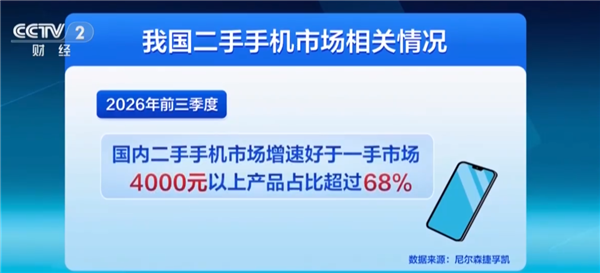
Statistical data from market research institutions show that in the first three quarters, products with an average price of more than 4,000 yuan in my country’s second-hand mobile phone market accounted for more than 68%.
It is understood that according to past market rules, the price of second-hand mobile phones usually continues to decline as the time on the market increases. It is also very common for popular models to depreciate by 20% within a year.
However, the situation is different this year. Affected by the increase in memory prices, the prices of second-hand mobile phones are generally strong, and some popular models have even increased instead of falling.
Among them, Apple iPhone 15 Pro Max is a typical example.
A merchant in Huaqiangbei revealed that
the price of second-hand iPhone 15 Pro Max once dropped to more than 3,000 yuan last year, but has now risen to 4,300 to 4,400 yuan, an increase of about 500 yuan.

For consumers, some second-hand mobile phones with better quality still have a certain appeal.
Compared with the price of new phones, 99 new or only unpacked second-hand phones are generally 500 yuan to 1,000 yuan cheaper.
Affected by the large demand, these mobile phones have become a hot commodity in the market, and merchants are also actively recycling them.
Memory chip prices continue to rise, which is significantly changing the cost structure of smartphones.
According to a report released by market research firm TrendForce in February this year,
the proportion of memory cost in the bill of materials (BOM) of smartphones has risen sharply from 10% to 15% in the past to 30% to 40%.
TrendForce pointed out that rising storage costs are squeezing the profit margins of mobile phone manufacturers, forcing some manufacturers to increase terminal selling prices and adjust product configurations and layouts.
Comments