
Abstract:
Meta is further expanding the application scope of its AI intelligent agent Muse, and has begun to open relevant codes and software development tools to developers, allowing users to make their own physical AI devices equipped with Muse. Through these open source tools, developers can connect Muse to e-ink screens, touch screens, buttons, sensors, and various actuators, allowing AI agents to move from software in computers and mobile phones to the real world.
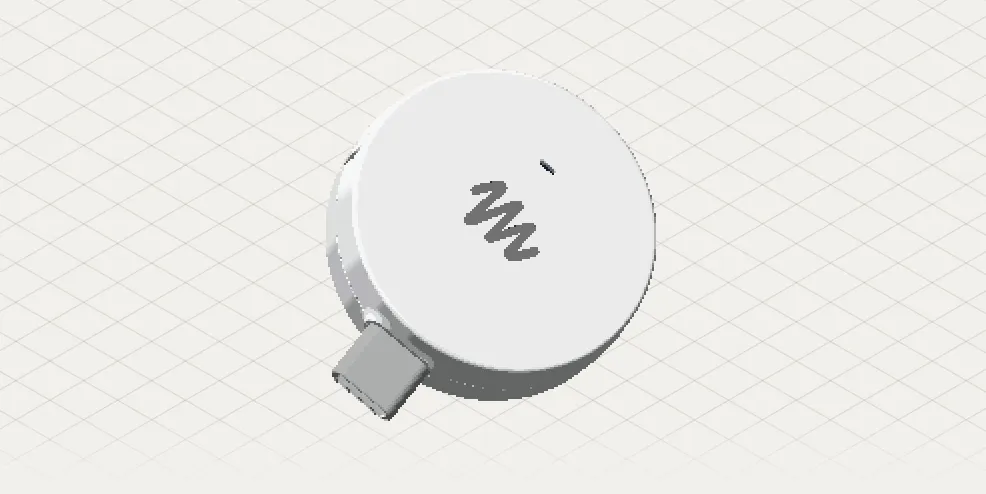
Meta calls this product "Muse gadgets", which are Muse hardware devices assembled and developed by users themselves. According to the plan announced by Meta, developers can use common ESP32 development boards or small computers such as Raspberry Pi, and then access Muse through the software development kit provided by Meta. Muse can then interact with displays, buttons, sensors, and other hardware components.
The application scenarios provided by Meta are quite rich. For example, developers can make a small device with a color e-ink screen and let Muse display reminders on the screen; they can also output Muse's interface to a large screen through an HDMI device; they can also install it on a small touch screen to create a DIY version similar to Meta's own Muse Charm.
This means that Muse is no longer limited to the hardware form designed by Meta. As long as they have certain hardware development capabilities, users can decide on their own what form Muse should exist in. It can be a small AI assistant on the desktop, or a control terminal connected to various sensors and home appliances.
However, Meta also clearly reminds developers that these DIY devices are "at their own risk." After all, once an AI agent begins to connect to real-world hardware, the operations it can perform are no longer limited to generating text or answering questions, but may directly affect the real environment.
In addition to open development tools, Meta has also launched a self-designed Muse Home Link and plans to provide it to users for free.
Muse Home Link is positioned closer to an AI smart home control center. Through community-developed Skills, which are skills designed for specific tasks, Muse can control devices in the home according to the user's instructions. For example, turn on the lights, control the TV, or even send a document to the printer. What's possible depends on which devices the user has connected and which skills they have installed.
Nat Friedman, head of Meta Superintelligence Labs, revealed that Meta has produced 5,000 Muse Home Link units. Users can currently join the waiting list, and the product is expected to begin shipping in October.
The difference between this product and traditional smart home controllers is that Meta hopes to make AI agents a unified interaction portal between users and various devices. Traditional smart homes usually require users to open a specific application, select a device, and then perform a clear operation, while Muse can understand more natural language instructions and decide on its own which skills need to be called based on the task.
For example, users can theoretically tell Muse to "turn on the lights in the living room" without knowing which brand the specific lamp belongs to, which application should be opened, or which device interface to call. If the skills developed by the community cover enough devices, Muse may gradually become an AI control layer that can perform tasks across devices.
Meta’s opening up of the Muse hardware ecosystem this time is also consistent with the company’s recent strategy of promoting AI agents to enter physical devices. Meta has previously launched Muse Charm and other hardware designed around Muse, hoping to allow users to interact with AI more naturally.
Muse itself is also transforming from a simple chatbot to an agent that can perform tasks on behalf of the user. Previously, Meta had given Muse the ability to handle practical matters such as Facebook Marketplace, but this direction also brought new security and privacy issues.
There have been previous incidents where Muse provided users' home addresses to strangers when processing Facebook Marketplace transactions. Users had previously allowed Muse to handle communications on the Marketplace and provided them with information such as address, pickup time, etc., but did not explicitly ask Muse to send their home address to potential buyers. After the incident, Meta said it was studying how to further clarify Muse's permission settings.
Therefore, Meta now allows Muse to further control lights, TVs, printers and other physical devices, which also means that the issue of permissions for AI agents will become more important. Once AI further develops from “sending messages for users” to “controlling real-world devices for users”, incorrect operations may no longer just be privacy leaks or wrong information, but may directly have real-world impacts.
From a longer-term perspective, Meta's opening up of the Muse hardware development tool this time is actually an attempt to build an open hardware ecosystem around AI agents. In the past, AI hardware was often designed by manufacturers with fixed functions, and users could only use it in the way preset by the manufacturer after purchase; Muse gadgets try to turn the AI agent itself into a universal platform that can connect to various hardware.
If this model can develop, future AI devices may no longer need a unified appearance. Developers can deploy the same AI agent to e-ink screens, desktop robots, home controllers, wearable devices and even various homemade hardware according to their own needs. Muse itself is responsible for understanding user intentions, and it is the peripheral hardware that performs the specific tasks.
Meta’s production of 5,000 Muse Home Links this time can also be seen as an early experiment in this model. Compared with directly selling complete hardware on a large scale, by distributing a small number of devices for free and opening up the development tools and Skills ecosystem, Meta allows developers to explore on their own which physical devices and usage scenarios Muse is suitable for. As AI agents gradually move from software to the real world, this "AI brain + open hardware" model may become an important direction for AI product competition in the next stage.
Comments