
Abstract:
Microsoft is launching a new enterprise security feature "Watermarking Protection" for the Edge browser, which is designed to reduce the risk of corporate data being screenshotted, disseminated or leaked by overlaying a semi-transparent watermark that continuously displays on sensitive content. This feature is expected to be officially launched later this year.
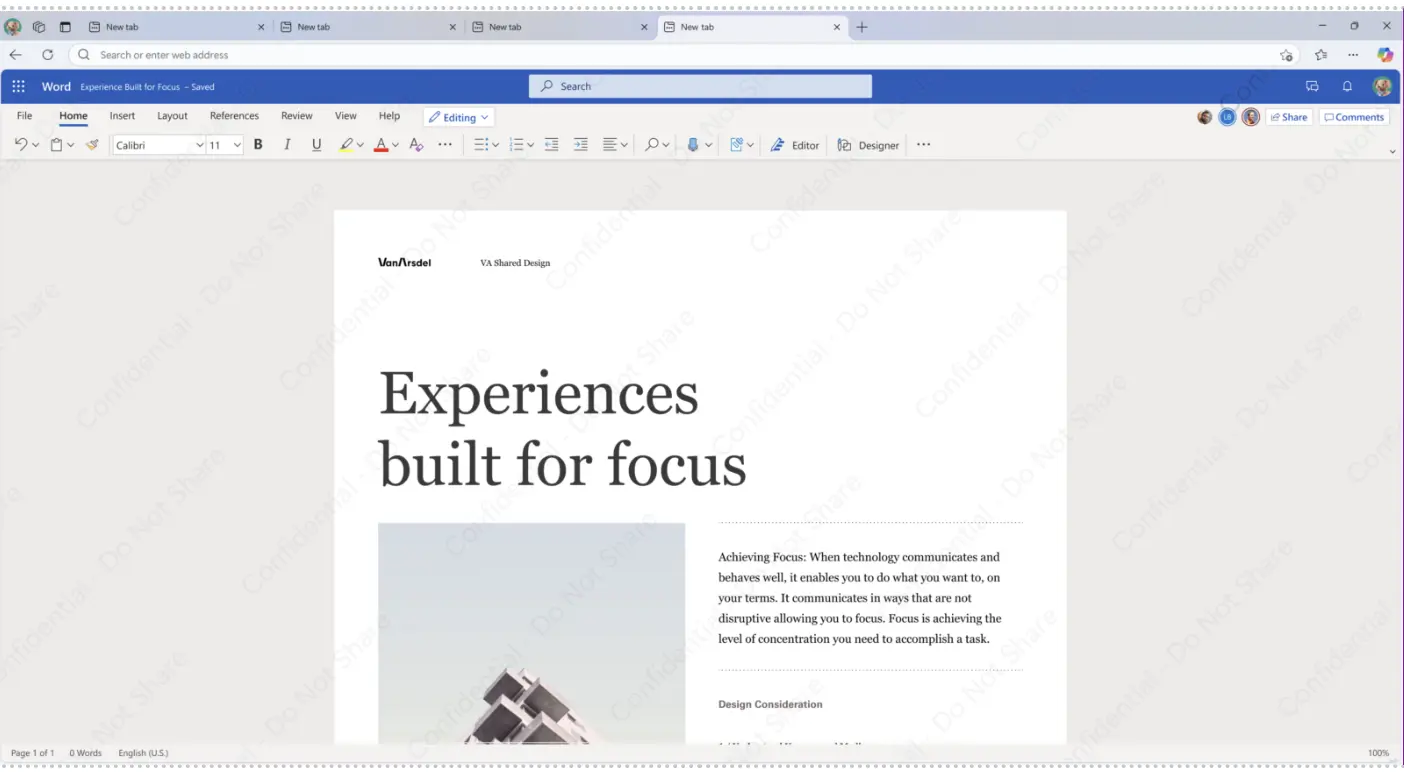
According to information released by Microsoft, the watermark protection function is mainly for Edge for Business users. When employees access websites, documents or corporate content subject to data protection policies, the browser automatically overlays the page with a translucent watermark. This watermark is rendered directly by the browser and cannot be easily removed or hidden by ordinary users.
The current version of the watermark information adopts a fixed format, including the "Confidential - Don't share (Confidential, Do not share)" prompt text, the current user identity and the access timestamp. Microsoft said it plans to add customizable and dynamically generated watermark content in the future to meet the needs of more enterprise scenarios.
This feature is deeply integrated with the Microsoft Purview Data Loss Prevention (DLP) system. When an enterprise configures restrictions on sensitive data, such as prohibiting copying, prohibiting uploading, or prohibiting printing, Edge automatically triggers the watermark display mechanism. It is worth noting that simply adding a sensitivity label to a file or web page will not automatically show a watermark; if the relevant policy is only in audit mode rather than enforcement mode, the watermark will not be displayed either.
Microsoft believes that this feature can effectively improve employees' security awareness of sensitive information and help companies track the source of content when information leaks occur. Although watermarks cannot completely prevent taking photos or screenshots from a technical level, they can significantly increase the cost and risk of unauthorized dissemination of corporate information.
In addition to watermark protection, Microsoft is also testing security capabilities such as "Protected Clipboard". These capabilities further prevent data exfiltration by allowing enterprises to limit the copy-and-paste of sensitive content between managed and unmanaged applications.
Per Microsoft's requirements, enterprises wishing to deploy watermark protection must use an eligible Microsoft 365 E3 or E5 license and configure it through the Edge Management Service. The feature is still in development and preview and is expected to begin rolling out to enterprise customers later this year.
With the popularity of generative artificial intelligence, remote working and cloud applications, enterprises have growing demands for browser-level data security. Microsoft's direct integration of data protection capabilities into Edge this time also shows that the browser is gradually becoming a key component of the enterprise security system.
Comments