
Abstract:
A group of Silicon Valley billionaires took the initiative to show their favor to Donald Trump and donated more than $600 million to Republican candidates. However, they suffered a heavy defeat in the U.S. midterm elections. Voters worried about the expansion of artificial intelligence and big technology giants helped the Democratic Party win a large majority in the House and Senate.
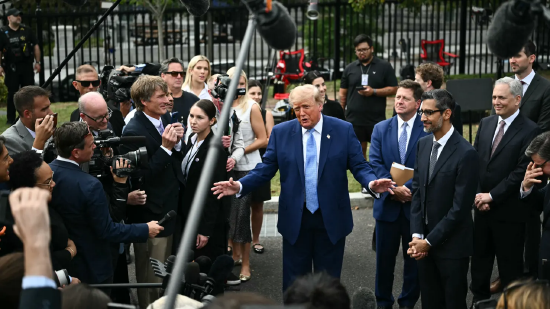
This group of donors includes Elon Musk, who alone has spent more than $470 million on multiple House and Senate races, giving the Republican Party a huge financial advantage at the start of the most expensive election in U.S. history.
Nearly half of Musk's money went to support Texas Republican Ken Paxton, a politician mired in multiple scandals who lost to Democratic candidate James Talarick on Tuesday.
Like Paxton, several Republican candidates running for Senate seats in battleground states lost, as did several Republican House members.
Sasha Haworth, director of the nonprofit Tech Oversight Project, said: "Tech executives spend hundreds of millions of dollars, but in the end they are just paper tigers. The American people have rejected their corrosive monetary influence, and any candidate tied to them has been rejected by voters."
A political trader who was responsible for coordinating the campaign funds of large technology companies in the months before the mid-term elections said bluntly: "Money is not easy to use. Elon Musk spent 500 million US dollars, and all the campaigns he supported lost."
Exit polls show that most voters regard the issue of artificial intelligence data centers as a key or important factor in determining their voting preferences. However, the massive investment in the campaign by technology tycoons has also coincided with voters' strong dissatisfaction with high inflation and the war in Iran.
The trader added that the combination of multiple factors contributed to the Democratic Party's lopsided vote shift: "This blue wave is so powerful that it directly overshadows the money-splitting offensive of technology capital."
In addition to Musk, venture capitalists Mark Andreessen and Ben Horowitz invested more than US$90 million in this midterm election; brothers Cameron Winklevoss and Tyler Winklevoss, co-founders of the Gemini cryptocurrency exchange, invested more than US$5 million.
OpenAI co-founder Greg Brockman and his wife Anna each donated $25 million to Maga Inc and Leading the Future, a super political action committee with a pro-AI stance.
Billionaires on the side of the AI and cryptocurrency industries are also spending heavily to try to prevent Democrat Sherrod Brown from being re-elected as a senator - Brown has long been a core critic of the industry.
The super political action committee Fairshake was originally established to support pro-cryptocurrency candidates. The organization helped bring down the senior senator in 2024; this time it spent more than $50 million in advertising to attack Brown.
Andreessen and Horowitz donated $50 million to Leading the Future, a committee that mainly supports candidates promoted by Trump. South Carolina Republican candidate Darlene Graham received $2.5 million in funding from the PAC, but ultimately lost in an upset, allowing Democrats to capture a Senate seat in the state for the first time in decades.
The technology industry suffered another blow: Many places in the United States voted to suspend bans on new data centers, and voters boycotted such infrastructure projects that support the AI boom.
Legacy of the Democratic Party in the House of Representatives, including Greg Casar, has called on the party to use its new powers in Congress to subpoena AI company executives to testify under oath next year.
Ultimately, these donations are a drop in the bucket relative to their net worth: For Musk, the proportion of expenses is equivalent to $400 from a millionaire.
After it became clear that the Democratic Party’s “blue wave” would win, Musk deleted a post he made on the X platform calling on voters to “Vote Republican today!”
Comments