
Abstract:
The Elon Musk documentary "Musk" directed by Oscar-winning documentary director Alex Gibney encountered an unexpected publicity dilemma before it was released in U.S. theaters on October 9. Video distributor Bleecker Street tried to place paid advertisements for the trailer on YouTube, TikTok, and Meta's Instagram and Facebook, but was rejected by these major social platforms. The X platform, owned by Musk himself, also refused to advertise the film and did not even have normal communication with the distributor on the matter.
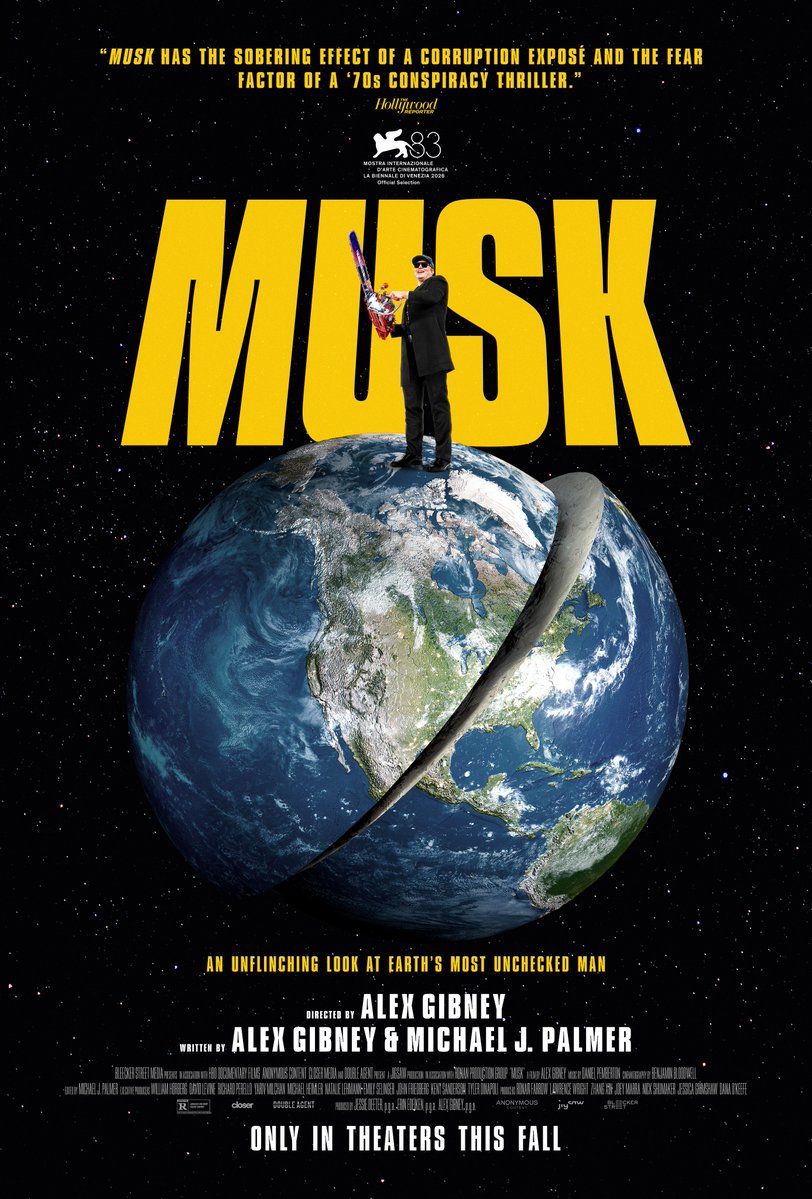
The publisher may not be particularly surprised by X's refusal to promote this documentary, which directly focuses on Musk, but the simultaneous refusal of YouTube, TikTok and Meta to accept advertising was completely beyond Bleecker Street's expectations. Publishers are currently trying internally to figure out why the ads were rejected, people familiar with the matter said.
The reasons YouTube, TikTok and Meta gave to Bleecker Street were all related to "political content." TikTok and Meta have long imposed strict restrictions on political advertising, with Meta's policies largely stemming from the controversy caused by the Cambridge Analytica scandal during the 2016 U.S. election. In contrast, the trailer for "Musk" is not a campaign ad per se, nor does it ask viewers to support a particular candidate.
The currently released trailer does contain politically related scenes, including a political rally in 2024, and the 2024 U.S. presidential election is mentioned at the end of the film. But for a documentary about Musk's business career, political activities and social influence, this kind of historical footage is not unusual, and there is no obvious indication that the film is promoting a particular candidate or political organization.
YouTube's reasons for rejecting ads are particularly confusing because the platform itself doesn't ban political ads outright. Verified candidates and other entities can place campaign ads on YouTube as long as they are marked as "paid ads" in accordance with the platform's requirements. Therefore, Bleecker Street believes that it is questionable to classify the "Musk" movie trailer as a political advertisement.
Bleecker Street subsequently filed complaints with YouTube, TikTok and Meta respectively. Meta has upheld its original rejection decision, while TikTok and YouTube are still reviewing the publisher's appeal so far. Spokespersons for Meta, TikTok, YouTube and X did not immediately respond to the situation.
X's approach is more thorough. In addition to refusing to accept promotional ads for "Musk," X did not even communicate with Bleecker Street about advertising for the film. According to reports, the platform is currently refusing to accept ads for other upcoming movies from Bleecker Street distributors.
"Musk" is a documentary about 4 hours long, directed by Alex Gibney, who won the Oscar for Best Documentary Feature for "Taxi to the Dark Side". The film attempts to examine Musk's business empire, political activities and his influence on public opinion from multiple angles, including a series of events that occurred after he acquired Twitter and renamed it X.
The film involves Tesla and its driver assistance system-related fatal accidents, SpaceX, Musk's acquisition of Twitter, the US Department of Government Efficiency (DOGE), his family and children, etc. People interviewed include Musk’s ex-wife Justin Musk, technology journalists Kara Swisher and Zoe Schiffer, Tesla co-founder Martin Eberhard, artificial intelligence research pioneer Jeffrey Hinton, and former MAGA influencer Ashley St. Clair, who has publicly discussed her relationship with Musk.
Musk himself did not grant an interview with Gibney. The film thus draws on a wide range of public documents, interviews and historical images to construct a portrait of the billionaire and discuss his growing influence in business, technology and politics.
This advertising controversy also has a real impact on the film's theatrical distribution. Compared with commercial blockbusters with huge marketing budgets, documentaries usually rely more on social media communication, audience word-of-mouth, and online discussions to attract audiences. The film is very close to its official release on October 9, and YouTube, TikTok, Instagram, Facebook and X are one of the most important online communication and advertising platforms in the United States.
As a result, Bleecker Street is currently still fighting for YouTube and TikTok to change their decisions, while continuing to try to resolve Meta's rejection issue. A representative of the publisher confirmed that the ad was initially rejected, but the company is continuing to appeal to the other three platforms in addition to X, hoping that the platform will eventually change its decision.
This is not the first time that Musk has encountered resistance during its release. Universal Pictures, which is responsible for the film's overseas distribution, was previously reported to be considering withdrawing from the film's distribution plan, and then continued to promote distribution under external pressure. At the same time, Gibney himself has previously warned Musk of his huge political and technological influence when speaking publicly about the film.
Currently, "Musk" is still scheduled to be released in U.S. theaters on October 9. It is worth noting that social platforms reject paid advertising, which does not mean that the relevant trailers themselves cannot appear on these platforms; film trailers can still be disseminated through non-paid methods. For Bleecker Street, what's really affected is the ability to proactively push trailers to potential viewers using the platform's advertising system.
Comments