
Abstract:
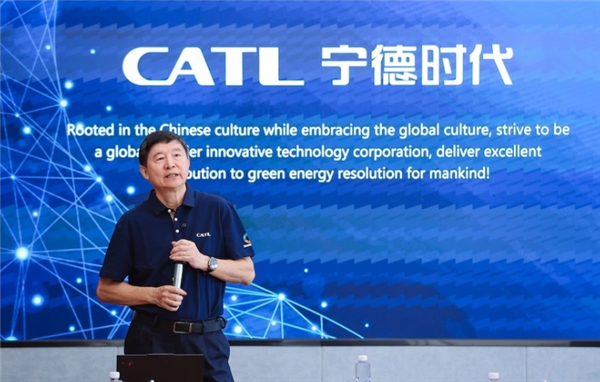
Recently, at the CATL Quality Global Open Month event,
its chief manufacturing officer Ni Jun publicly stated that all-solid-state batteries will be difficult to mature in the short term. Most relevant publicity in the industry is still at the conceptual level, and it will take at least five years for true large-scale implementation.
He cited the core "solid-solid interface" as an example. Traditional liquid batteries rely on electrolyte to form a complete conductive path and have stable performance.
All-solid-state batteries require close contact between the positive and negative electrodes and the solid electrolyte. The industry currently relies on external pressure to ensure the fit. However, volume deformation occurs during the charging and discharging process of the battery, which can easily destroy the interface contact and directly affect the battery performance. There is currently no perfect solution to this core pain point.
In fact, CATL executives have already cooled down on the overheated solid-state battery industry.
The company’s chairman Zeng Yuqun has stated many times before that if the technology maturity is divided into nine levels, the current solid-state battery technology is only in the primary stage of level four, and there is a significant gap between the maturity level of level nine and mass production.
He also bluntly stated that some car companies have over-exaggerated the progress of solid-state battery mass production and misled the market and investors. Compared with all-solid-state batteries that are still in the prototype development stage, CATL is more optimistic about sodium-ion batteries and condensed matter batteries that have stronger technology implementation.
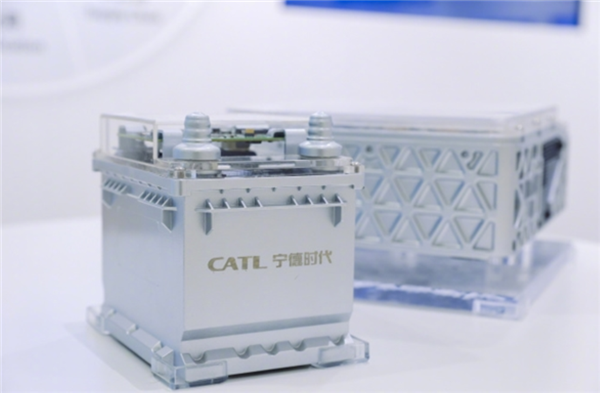
Ni Jun revealed that these two new types of batteries are perfectly compatible with existing lithium battery production lines, without the need for large-scale equipment modifications, and the production line adaptability is extremely high. The company's new production line planning for next year will also reserve compatibility space in advance to adapt to the implementation of multiple mature technology routes.
In view of the industry trend of car companies self-developed batteries and cross-border battery companies entering the power battery field, Ni Jun emphasized that power battery manufacturing has a very high professional threshold, and those who can build cars may not necessarily be able to make batteries.
The core difference between consumer electronics batteries and power batteries lies in the consistency standard. Consumer batteries do not have strict consistency requirements.
The entire vehicle is equipped with hundreds or thousands of cells. The differences in capacity, internal resistance, and self-discharge of a single cell will cause the barrel effect. The worst cell will determine the life and performance of the entire battery pack.
Therefore, the power battery industry needs to adhere to the professional division of labor and ensure the stability and reliability of the vehicle battery system with the ultimate large-scale manufacturing consistency.
Comments