
Abstract:
Nvidia’s stock price fell again on Thursday as uncertainty surrounding Nvidia’s management and future direction continues to weigh. On Thursday, Nvidia's stock price opened higher, boosted by factors such as optimism brought about by Anthropic's initial public offering (IPO), but ended its sixth consecutive trading day of declines.
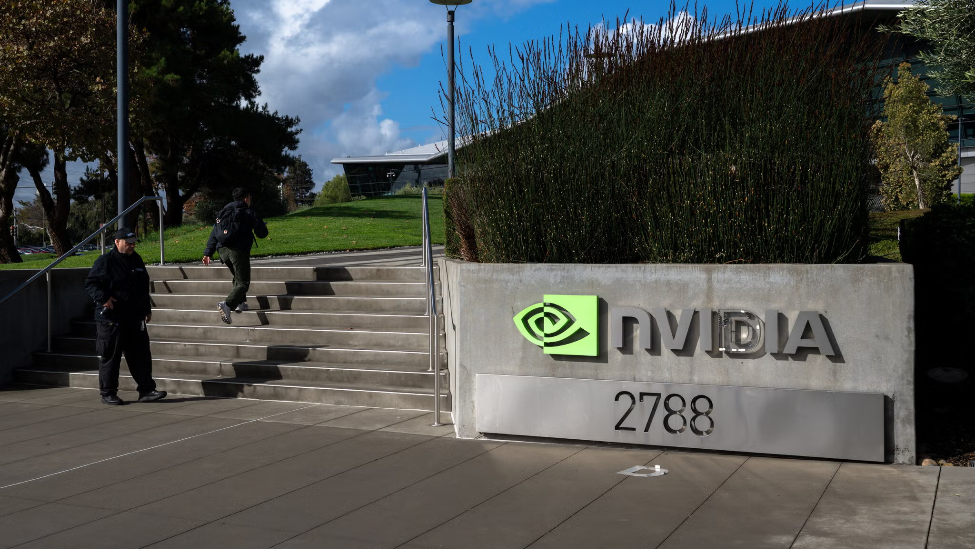
Nvidia shares closed down 3.3% on Thursday at $145.98.
In the past six trading days, the company’s market value has evaporated by a total of US$669 billion (approximately 4.48 trillion yuan)
. During this period, Nvidia's stock price fell by 16%.According to Dow Jones Market Data,
there are only 20 companies with a global market capitalization of US$669 billion or more
.The decline is not over yet?
Iskandar Rakhmatov, portfolio manager at quantitative strategy research platform Zeus Quanto, said: "I don't think the decline is over yet."
Rakhmatov said,
Multiple factors are putting pressure on the stock
, one of which was that credit rating agency Moody's lowered Nvidia's rating outlook to "stable" from "positive" on Wednesday. A "Positive" outlook means there is a higher likelihood that the company's credit rating will be upgraded in the medium term.“This is not a downgrade, and no one questions Nvidia’s ability to pay its debt. But it confirms on paper that there is a leadership gap,” he said.
Last week, Nvidia’s long-time CEO Jensen Huang announced his resignation due to scandals. The board of directors appointed chief financial officer Colette Kress as interim CEO.
Rakhmatov said uncertainty about the CEO position is weighing on the stock. "Investors will put a discount on the stock until a new CEO takes over and the board investigation is completed," he said.
Shay Boloor, chief market strategist at Futurum Equities, said that the market is undergoing "one of the most aggressive de-risking operations" in growth stocks and artificial intelligence stocks in recent years. Although Nvidia delivered a brilliant last fiscal quarter earnings report on Tuesday and raised its full-year guidance, its stock price still fell.
Boloor said he is advising investors to "separate fluctuations in Nvidia's stock price from its business fundamentals."
There is little evidence that demand for computing power is slowing, he said, pointing to rising rental prices for graphics processing units (GPUs), among other factors.
"I still think Nvidia is one of the most important companies in the AI economy, but until these questions are answered, the company will hardly be a safe haven," he said.
Michael Casper, senior market strategist at HB Wealth, pointed out that Nvidia's stock price hit a series of highs between November 2024 and January 2025, and "basically peaked around $150." Technical analysts often focus on "previous highs," especially highs that have been "tested" multiple times.
Casper said traders "are probably lining up to buy around $150." But if the price falls below that level, then "Nvidia stock prices will see further downside as traders with positions at that level fall into losses and try to cut their losses."
It is worth noting that Nvidia shares closed below $150 on Thursday.
Sentara Capital founder Will Allen pointed out that when Huang Renxun announced his resignation last Thursday morning, $148.80 was the "panic selling low." "This is an important support level in the short term," he said.
Comments