
Abstract:
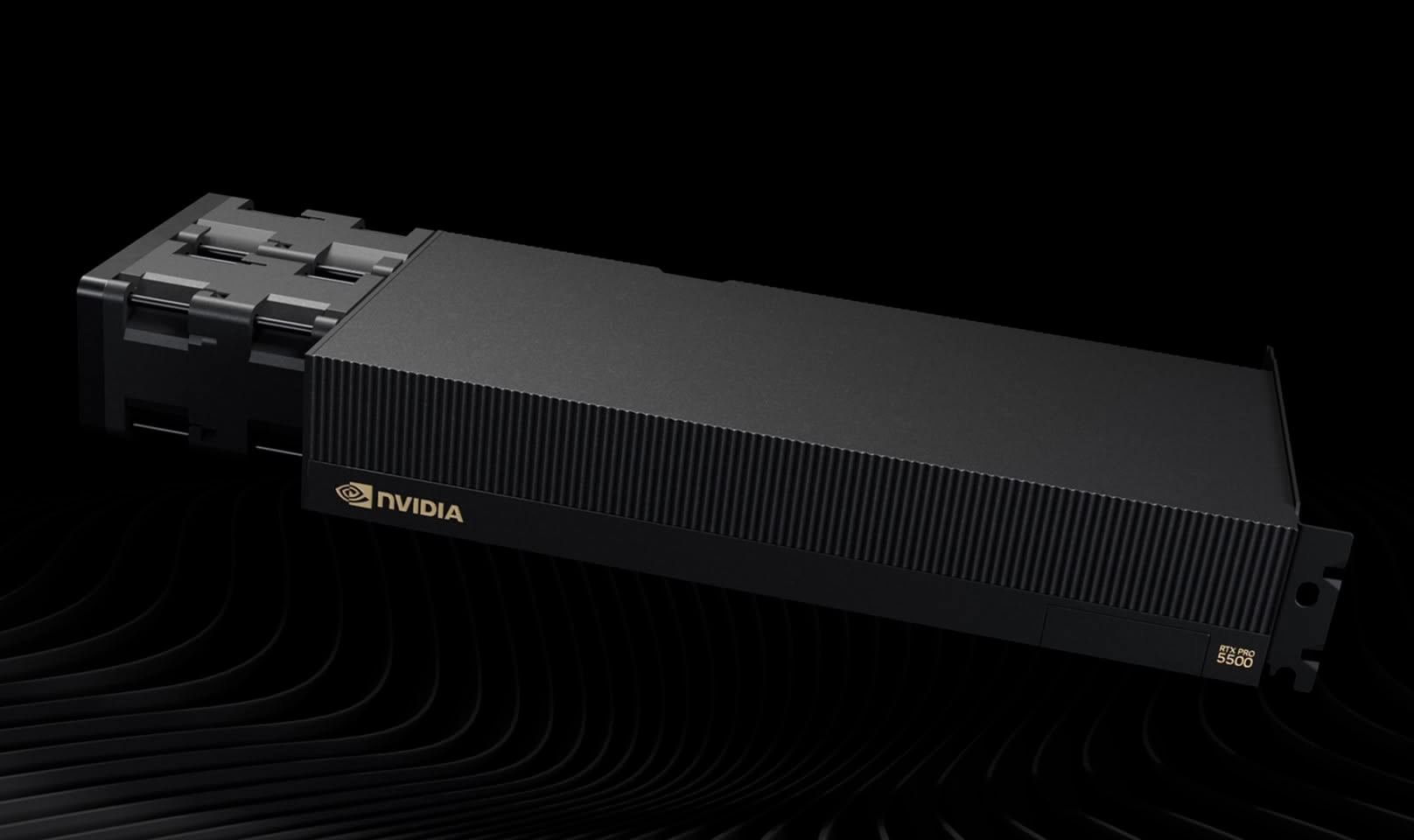
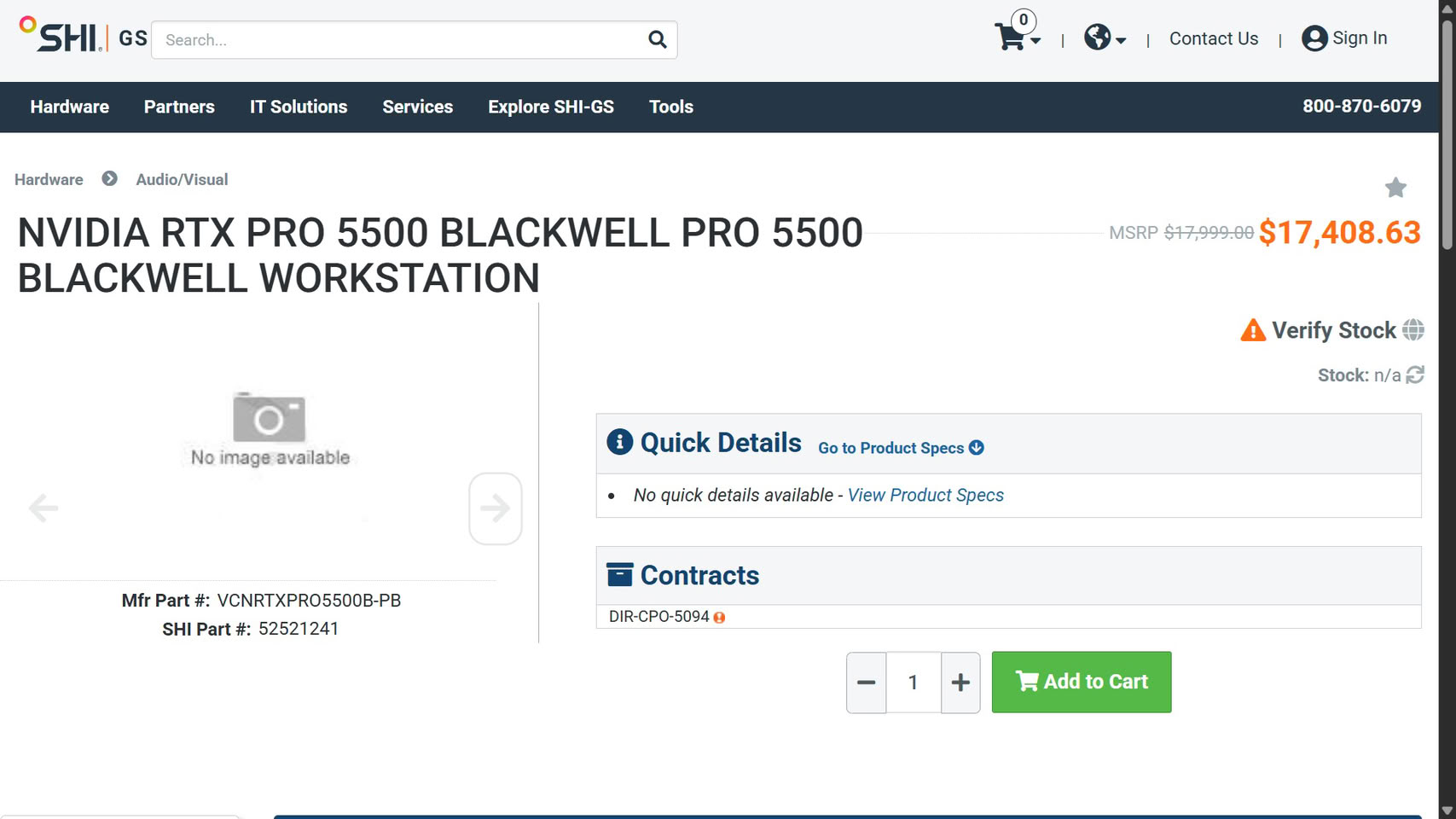
NVIDIA's new generation Blackwell architecture professional graphics card RTX PRO 5500 recently appeared in the product catalog of US retailer SHI Government Solutions, with a price tag of up to US$17,999, and the price after discount is still US$17,408.63. Surprisingly, this workstation graphics card, which is positioned lower than the flagship model RTX PRO 6000, is actually priced higher than the latter. ≈
What is exposed this time is the RTX PRO 5500 Blackwell Workstation Edition produced by PNY, with the product number VCNRTXPRO5500B-PB. American retailer SHI marked it with a suggested retail price of $17,999 and provided a discount of about 3.3%, with the final price being $17,408.63.
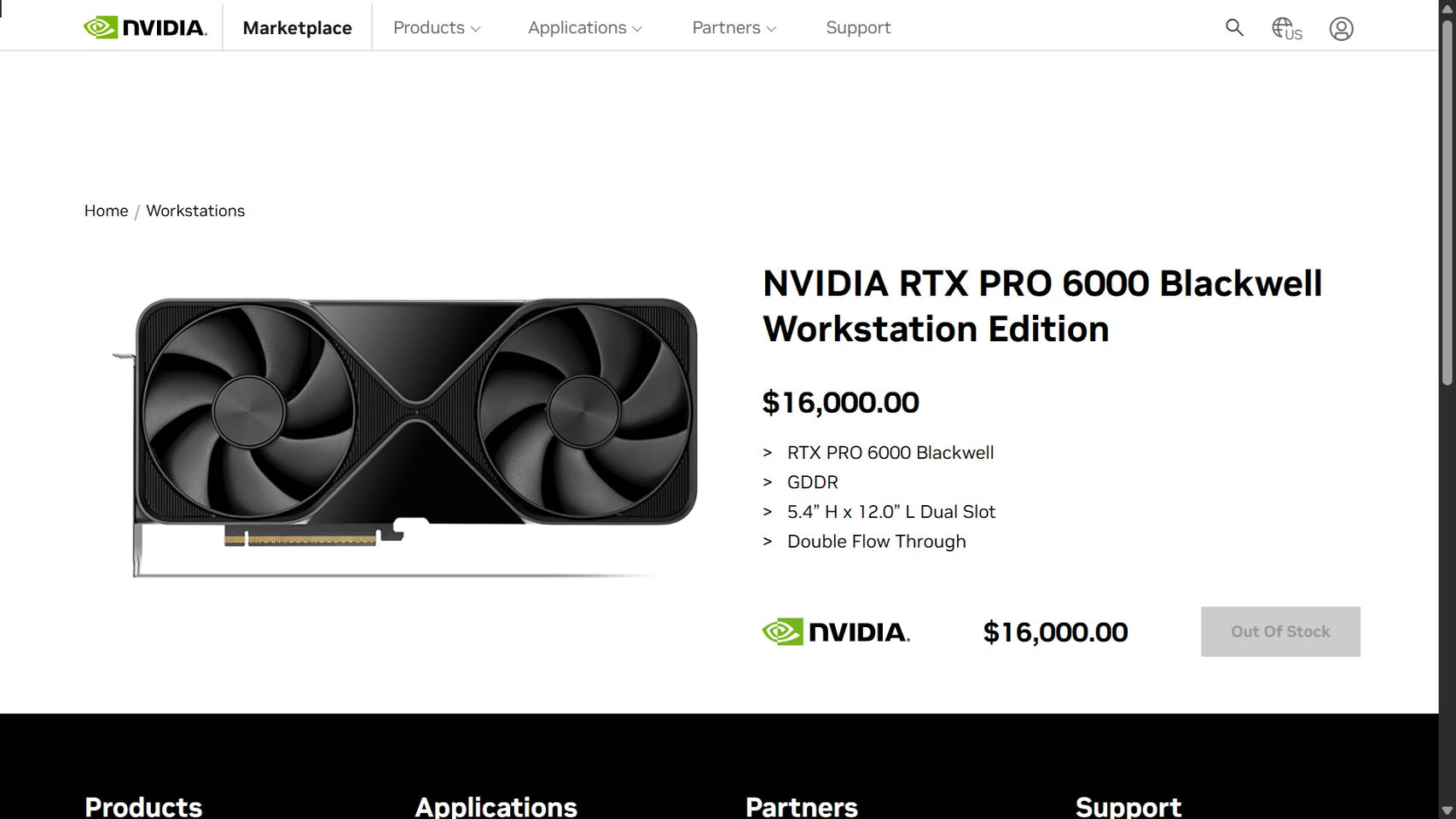
In comparison, Nvidia’s official U.S. mall currently lists the flagship RTX PRO 6000 Blackwell Workstation Edition at $16,000. In other words, even at the discounted price, the RTX PRO 5500 with relatively lower specifications is still about $1,409 more expensive.
From the perspective of hardware specifications, this price inversion is really puzzling.
RTX PRO 5500 is equipped with a Blackwell architecture GPU, with 21,760 CUDA cores, 84GB GDDR7 ECC memory, a memory width of 416bit, a memory bandwidth of 1398GB/s, and a maximum power consumption of 600W.
The RTX PRO 6000 has 24064 CUDA cores, equipped with 96GB GDDR7 ECC memory, and the memory bandwidth reaches 1792GB/s. Whether it is the number of computing cores, video memory capacity or bandwidth, RTX PRO 6000 has an advantage. According to conventional product positioning, it should have a higher price.
It should be noted that US$17,999 is currently only the price marked on the SHI retailer page, and is not the official pricing officially announced by NVIDIA. Although NVIDIA has listed the RTX PRO 5500 in its product catalog, its official product page has previously marked this model as coming soon, so the retailer quotation cannot be directly regarded as a unified market price set by NVIDIA.
An important factor causing this price anomaly may be the huge demand for this model of graphics card in the Chinese market.
Previously, Reuters reported that Chinese technology companies such as ByteDance, Alibaba and Tencent have ordered more than 3 million RTX PRO 5500s, and the price of a single card for related orders is approximately US$11,400. Other reports indicate that the total number of related orders in the Chinese market may have exceeded 6 million.
According to reports, NVIDIA expects to produce only about 3 million RTX PRO 5500 units in 2027, which is far from being able to meet the current scale of orders. If the relevant demand and production capacity data are true, then this graphics card will face a serious supply and demand imbalance.
This phenomenon is closely related to the supply constraints of high-end AI computing chips currently faced by Chinese companies. Since high-end products such as the NVIDIA B300 are subject to export restrictions to China, and the export of the H200 needs to be reviewed on a case-by-case basis, the RTX PRO 5500 has become one of the high-performance NVIDIA products that Chinese companies still have the opportunity to obtain. For companies that need to build large-scale AI computing clusters, whether products can be obtained and when they are delivered may be more important than pure hardware specifications.
In addition, RTX PRO 5500 also requires a large number of GDDR7 memory chips. This model uses an 84GB video memory configuration, involving 28 GDDR7 video memory chips. In the current context of strong demand and rising prices for memory chips, the supply of video memory may also further increase production costs and supply pressure.
Therefore, the fact that the RTX PRO 5500 has a higher retail price than the RTX PRO 6000 does not necessarily mean that NVIDIA has changed its product positioning, but more likely reflects the market premium generated by specific models under tight supply conditions.
From the perspective of the professional graphics card market, this is also a representative phenomenon: Traditionally, graphics card prices are mainly determined by computing performance, video memory capacity and product positioning; however, with the explosion of AI computing power demand, export controls and supply chain tensions coexisting, product availability is becoming an important factor affecting price.
If the large-scale purchase orders from Chinese companies are finally implemented and NVIDIA is unable to expand production capacity in time, the market price of RTX PRO 5500 may continue to be affected by supply and demand. For companies that really need to purchase this type of equipment, the actual delivery capabilities of the graphics card may be more important than the performance differences on the product specification sheet.
Comments