
Abstract:
Artificial intelligence is opening up a new development direction for bionic vision technology. Researchers from the University of California, Santa Barbara, the Swiss Federal Institute of Technology in Zurich, and the Miguel Hernandez University in Spain have used deep learning technology to improve the electrical stimulation method of visual cortex implants, allowing the brain to produce visual perception in a more precise and power-saving manner. This research is expected to promote the development of a new generation of bionic eyes, providing the possibility of restoring partial vision to people who are blind due to eye or optic nerve damage.
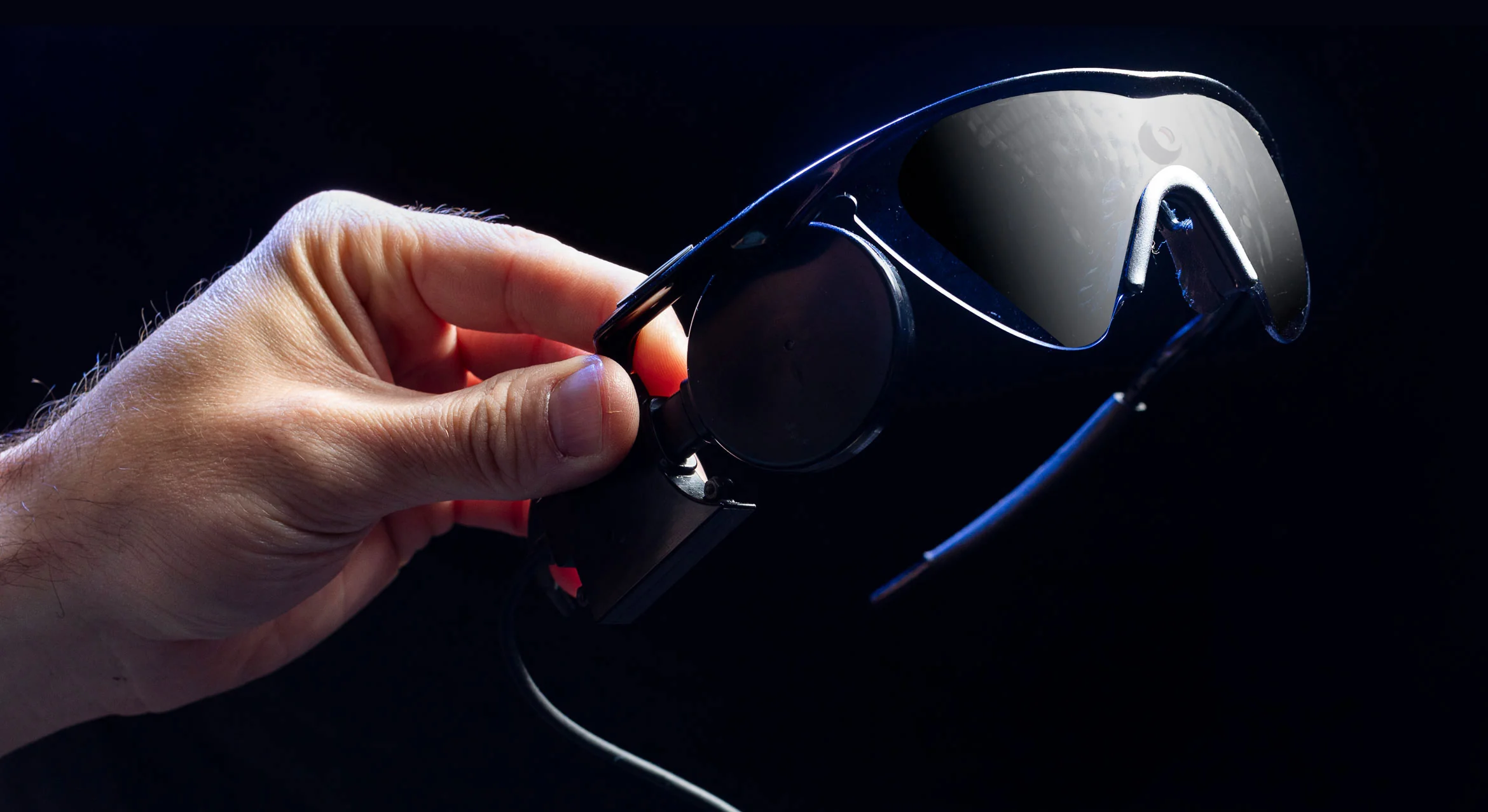
Traditional visual prostheses usually try to capture external images through cameras, and then convert the images into electrical signals to stimulate the retina or the visual cortex of the brain, allowing the user to perceive light points or simple shapes. However, vision systems are far more complex than ordinary displays. Even if precise electrical signals are input to multiple electrodes, the final visual experience produced by the brain may not correspond to the input signals one-to-one. Electrodes may interact with each other, and neuron responses may change over time and brain state.
The focus of this research is to solve the difference between electrical stimulation signals and actual human visual perception.
The research team conducted a human experiment in a hospital in Spain, and the participant was a 27-year-old man. He had previously lost his vision due to a severe traumatic brain injury. Researchers implanted a temporary electrode array containing 96 electrodes in his visual cortex that can send electrical signals directly to the area of the brain responsible for visual processing.
When electrodes stimulate the visual cortex, participants can experience a visual phenomenon called "phosphenes," in which the brain still produces the sensation of flashes, light spots, or simple shapes even when no external light enters the eyes. This phenomenon is an important basis for research into visual cortical prostheses, as it demonstrates that by directly stimulating the brain, visual experiences can be produced, to a certain extent, bypassing the damaged eye and optic nerve.
In order to improve the stimulation effect, researchers trained a set of deep neural networks to allow artificial intelligence to learn the relationship between different electrical stimulation modes and brain neural responses.
Unlike traditional methods, this AI system not only analyzes what signals are input from the electrodes, but also refers to the resting brain activity recorded before each test. The brain is not always in the same state, and even using the exact same electrical stimulus can produce different neural responses at different times. By incorporating this background activity into the model, the AI is able to more accurately predict how the brain will respond to specific stimuli and adjust how the electrodes work accordingly.
Experimental results show that the AI-optimized stimulation mode can activate target neural responses more accurately and requires lower current. The researchers also found that directly recording brain activity was actually better at predicting the participants' final visual experiences than simply observing the electrical parameters of the electrodes.
This discovery is of great significance. Traditional engineering thinking often treats the visual cortex as a display screen that can be lit point by point through electrodes, and believes that stimulating more electrodes can form a more complete image. But this is not the case. There are interactions between electrodes, and neuronal responses also fluctuate. The electrical signals input to the brain are not equal to what people ultimately see.
In this experiment, researchers not only recorded neural activity, but also asked participants to describe the light spots they felt, including information such as brightness, size, shape, and color. These subjective visual experiences combined with objective neural recordings provide a data basis for artificial intelligence to build more accurate stimulation models.
What is more noteworthy is that this implanted device has the ability to stimulate neurons and record neural responses at the same time. This means that future visual prostheses do not always have to work according to preset fixed parameters, but can continuously observe the brain's response, and then use artificial intelligence to dynamically adjust the stimulation plan.
Research leader Michael Beyeler, a professor at the University of California, Santa Barbara, said that a truly useful visual prosthesis cannot rely on a fixed stimulation program that is suitable for everyone, but should learn the response characteristics of each person's brain and continuously adjust according to individual differences. The ultimate goal is to adapt the device to the user's brain, rather than requiring the user to adapt to the device.
This technology may one day help people who have lost their vision due to genetic eye diseases, accidents or neurological diseases. In particular, those who once had normal vision and later became blind may retain some degree of visual experience and related neural processing capabilities, so regaining some vision may be of special significance.
However, the researchers emphasized that the current results are still early proof of concept, and there is still a long way to go before it can truly help blind people restore their daily vision. This experiment only involved one participant. The study showed that artificial intelligence can improve the effect of electrical stimulation of the visual cortex under certain conditions, but it does not mean that the participant has restored normal vision.
In addition, the phosphenes currently produced through electrodes are still quite limited, and there is a huge gap between the complex scenes that the human eye can perceive. Future research also needs to address issues such as how to form stable, clear, and spatially continuous visual information, and how to enable long-term safe operation of implanted devices.
The results of this research were published in the journal Neuron on August 7, 2026. The paper is titled "Control of electrically evoked activity in human visual cortex based on deep learning."
The most important breakthrough of this research is not to simply increase the number of electrodes in the visual prosthesis, but to use artificial intelligence to establish a more precise connection between electrical stimulation, neural activity and subjective visual experience. With the continuous integration of brain-computer interface and artificial intelligence technology, future bionic eyes may no longer be just electronic devices that send preset signals to the brain, but can gradually learn each person's unique neural responses to achieve more personalized artificial vision.
Comments