
Abstract:
According to data provided by market research firm IDC, in the first half of 2026, Nvidia's share of China's data center artificial intelligence chip market dropped to 34%, while Huawei's market share has risen to 28%. The U.S. export restrictions on advanced chips to China continue to affect Nvidia's supply capabilities in China. China's local chip manufacturers are using domestic substitution policies and expanding market demand to accelerate development, which is changing the competitive landscape of China's AI computing infrastructure.
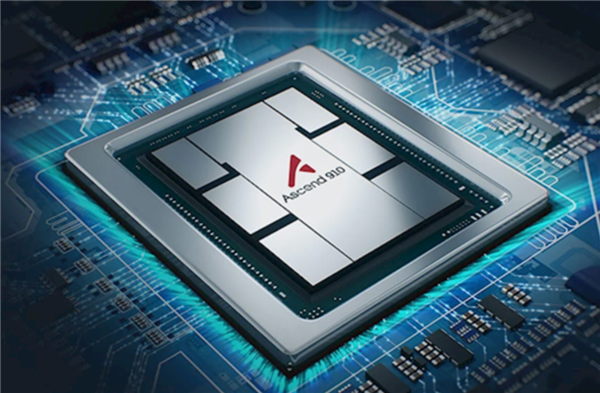
Reuters reported on October 13 that IDC data showed that from January to June 2026, Nvidia shipped approximately 678,000 AI accelerators in the Chinese market, a year-on-year decrease of 44%. At the same time, Huawei's shipments in the same period reached 572,000 units, higher than more than 300,000 units in the same period last year, and its market share also rose to 28%.
Currently, Nvidia is still the supplier with the highest market share of AI chips in China’s data centers, but Huawei is rapidly narrowing the gap. The difference in market share between the two is only 6 percentage points, which means that local Chinese manufacturers have become one of Nvidia's most important competitive forces in this market.
Nvidia’s changes in the Chinese market are closely related to the United States’ continued tightening of export restrictions on advanced artificial intelligence chips. The U.S. government has restricted China's access to Nvidia's most advanced AI chips, limiting the range of products the company can sell to China. At the same time, the Chinese government is actively promoting the substitution of domestic chips and requires Chinese companies to complete relevant approval procedures when importing Nvidia chips that comply with export regulations.
Nvidia CEO Jensen Huang has repeatedly criticized the United States’ export restriction policies. He once said that relevant U.S. policies are actually handing over China's AI chip market worth about US$50 billion to Huawei. For Nvidia, China is not only an important potential sales market, but also a key link in the global competition for artificial intelligence infrastructure construction.
However, IDC did not specify which models of products NVIDIA’s 34% share in the Chinese market consists of, nor did it clarify whether this statistic includes B200, B300 and other advanced chips that are prohibited from being exported to China. Reuters pointed out that relevant high-end products have been smuggled into China, so there is still uncertainty about the specific product composition. Nvidia did not respond to Reuters' request for comment.
In contrast to Nvidia's significant decline in shipments, China's local AI chip manufacturers are expanding their market size as a whole. In addition to Huawei, Alibaba's chip design department Pingtou Ge also occupies a certain share of the market, reaching 7% in the first half of 2026. Cambrian ranked second with a share of 5%, followed by Baidu's Kunlun Core with 4% and Haiguang Information with 3%.
Among the 11 local Chinese chip manufacturers tracked by IDC, 9 have experienced year-on-year shipment growth. This shows that the growth of China's AI chip industry is not entirely dependent on a single company, but is forming an industrial structure involving multiple chip design companies.
From the overall market perspective, China’s total AI accelerator shipments in the first half of 2026 reached 2.008 million units. It is worth noting that shipments of traditional GPUs are declining, while other types of AI accelerators are growing rapidly.
IDC data shows that GPU shipments during the same period fell by 26% year-on-year to 991,000 units. As related products that can be legally supplied to the Chinese market are still restricted, GPU supply has been affected to a certain extent. In contrast, the shipments of other types of AI accelerators increased by nearly 80% to 1.016 million units, surpassing GPUs in shipments for the first time.
Other AI accelerators mentioned here mainly include specialized chips designed for specific artificial intelligence tasks, such as processors used to run AI models that have been trained. This type of chip is different from traditional GPUs in terms of architecture and design goals, and usually pays more attention to computing efficiency, power consumption and system deployment costs under specific workloads.
Four companies, Huawei, Alibaba Pingtouge, Baidu Kunlun Core and Cambrian, together account for 95% of China’s non-GPU AI accelerator market. IDC pointed out that this type of chips is being adopted by government agencies, Internet companies and telecom operators, and has gradually become an important part of China's AI computing infrastructure.
This change shows that the focus of competition in China's AI chip market is shifting. In the past, industry discussions often focused on indicators such as the computing performance, memory capacity, and manufacturing process of a single chip; now, how to connect a large number of chips to form a large-scale computing cluster that can operate stably has become increasingly important.
For artificial intelligence training and inference tasks, the performance of a single chip is important, but the performance of the entire computing system also depends on the data transmission speed between chips, network interconnection capabilities, software adaptation degree, and cluster scheduling efficiency. If the performance gap of some individual chips can be made up through system design, domestic AI chips will have the opportunity to become competitive in specific application scenarios.
Huawei has continued to promote the development of Ascend AI chips and related computing systems in recent years, which is a reflection of this trend. Rather than simply selling chips, Huawei is also building overall solutions covering processors, interconnection networks, servers and computing clusters, hoping to improve the practical application capabilities of domestic chips through system-level optimization.
At the same time, companies such as Alibaba, Baidu and Cambrian are also expanding their product layouts. As Chinese Internet companies and government agencies invest more in artificial intelligence infrastructure, local chip manufacturers have gained more practical deployment opportunities. A large number of application scenarios can help companies accumulate experience in software adaptation, system optimization and product iteration, and further improve the availability of domestic chips.
However, the growth in market share does not mean that domestic chips have surpassed Nvidia in all technical indicators. The actual competitiveness of AI chips not only depends on shipments, but also involves many aspects such as single chip performance, software ecosystem, development tools, cluster expansion capabilities, power consumption, and stability. Chips of different architectures may also be suitable for training, inference or other specific tasks. Therefore, it is impossible to directly judge their overall computing power or commercial value based on the number of shipments.
Nvidia’s long-term accumulation of CUDA software ecosystem is still one of its important competitive advantages. A large number of artificial intelligence models, development frameworks and enterprise applications are built around NVIDIA platforms. For developers and data center operators, moving to other chips means not only replacing hardware, but may also involve software migration, code optimization, operating environment adjustments and system revalidation.
China’s local chip manufacturers need to continue to improve hardware performance while further improving the software tool chain and developer ecosystem so that more artificial intelligence applications can run stably on domestic platforms. As more and more governments, Internet and telecommunications companies adopt domestic AI accelerators, the related ecosystem will also have the opportunity to develop faster.
From a market perspective, IDC predicts that China’s total AI accelerator shipments will grow by 19% in 2026. Even though GPU shipments are expected to decline by 9% for the full year, the overall AI accelerator market will continue to expand. This means that the growth of China's artificial intelligence computing demand has not stopped due to the limited supply of advanced GPUs, but is being met by more types of chips and computing systems.
For Nvidia, the decline in China's market share not only reflects the direct impact of export restrictions, but also shows that the local alternative industry chain is gradually maturing. For Huawei and other domestic chip manufacturers, the growth in shipments and market share provide opportunities to further expand R&D investment and improve the product ecosystem.
In the future, competition in China's AI chip market may no longer be just a competition between NVIDIA and a certain domestic manufacturer, but will gradually evolve into a comprehensive competition between chip design, manufacturing supply, software ecosystem, system interconnection and large-scale deployment capabilities. As domestic AI accelerator shipments continue to grow, whether China can establish an artificial intelligence computing system that balances performance, cost and supply capabilities will become an important observation point for global AI industry competition.
Related articles:
Huawei: Ascend AI chip share in China has surpassed NVIDIA
Comments