
Abstract:
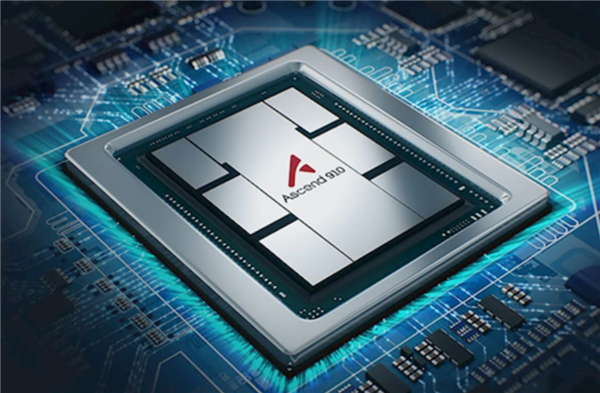
Huawei's rotating chairman Xu Zhijun said that Ascend chips have surpassed Nvidia in China's market share.
Huawei focuses on SuperPoD solutions based on Peerium computing architecture and UnifiedBus high-speed bus technology, which can support million-level processor collaboration.
According to agency statistics and the latest data released by Huawei’s Full Connect Conference, Huawei’s Ascend series AI chips have reached 50% market share in China, surpassing Nvidia’s 8% in one fell swoop.
Compared with the situation in 2022, when Nvidia monopolized 95% of China's market share and Ascend only accounted for 3%, the market structure has achieved a significant reversal in four years.
Xu Zhijun said frankly that if we only look at a single chip, the bottleneck Huawei faces is the limited available advanced process nodes; however, by interconnecting a large number of chips to form a large computer, Huawei has achieved a global leading position.
Huawei's new Peerium computing architecture and UnifiedBus (Lingqu Bus) technology can support up to one million processors for peer-to-peer interconnection, breaking the traditional master-slave design paradigm and greatly improving the model floating point operation utilization (MFU) of large model training.
Regarding the software ecosystem and chip cluster scale, Dr. Liao Heng, chief scientist of HiSilicon, pointed out that the biggest obstacle to growth two years ago was the software barrier formed by PyTorch and CUDA.
However, as the complexity of model mathematics and programming has increased in the past 18 months, new compiler languages have continued to emerge, cutting-edge laboratories no longer rely too much on CUDA, and the software gap is greatly narrowing and even balancing.
In addition, Huawei is deploying and testing 256,000 computing cards Atlas 950 SuperPoD super nodes, Liao Heng revealed that this scale is to support 6 to 7 cutting-edge AI laboratories in China in the next two years to train basic large models with a parameter scale of 10 trillion to 40 trillion. It is also a rational choice to consider the carrying capacity of the data center power grid and power transmission.
Comments