
Abstract:
OpenAI recently publicly called on the British government to formulate a legally binding artificial intelligence regulatory framework and require the implementation of mandatory safety rules for the most advanced cutting-edge artificial intelligence models. This statement marks a new change in the attitude of the world's leading AI companies towards supervision, and also further heated up the discussion around artificial intelligence governance in the UK.
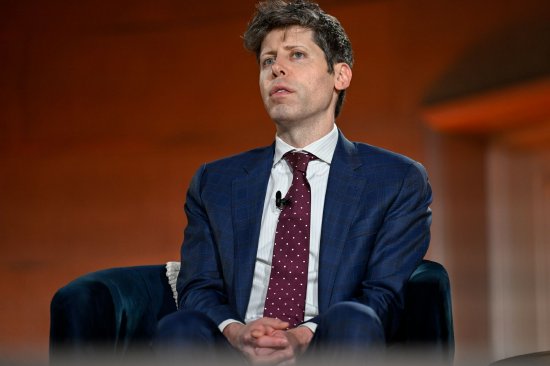
Tom Duff Gordon, head of policy for Europe, the Middle East and Africa at OpenAI, said in an interview that the British government should take immediate action to establish a stronger artificial intelligence safety regulatory system. He believes that there is currently a rare "political window period" and the UK should seize this opportunity to establish long-term, stable and legally binding security requirements for the most advanced artificial intelligence systems through legislation.
According to the concept proposed by OpenAI, the new regulatory system should be based on the voluntary commitments of existing companies, but it will no longer rely entirely on corporate self-discipline, but will shift to an enforceable legal framework. The company expressed its willingness to accept such regulatory constraints and believed that companies developing the most powerful artificial intelligence models should be included in more stringent regulatory scope in the future.
The stance comes as calls for tighter regulation of artificial intelligence are growing rapidly in the UK. In the past few months, a number of leading artificial intelligence companies have successively disclosed risk incidents related to model security, triggering social and political concerns. At the same time, a researcher who previously worked at Anthropic and OpenAI recently publicly criticized the direction of the industry after leaving his job, saying that some companies are "betting on everyone's lives," further intensifying the outside world's attention to the risks of cutting-edge AI.
In fact, in its 2024 election platform, the British Labor Party promised to establish a binding regulatory system for a small number of companies that develop the most powerful artificial intelligence models. However, after taking office, the government gradually abandoned the line of large-scale unified legislation and instead adopted a model of decentralized management by industry regulators and voluntary safety testing by companies. At present, the British Artificial Intelligence Safety Research Institute mainly conducts model testing through cooperation with technology companies, and lacks formal law enforcement powers.
OpenAI believes that relying solely on existing models is no longer enough to deal with future risks. Duff Gordon said that if the UK establishes a new legal framework, it will bring it in line with the EU and some emerging regulatory systems in the United States in the field of artificial intelligence governance. He pointed out that the United States is also promoting a mandatory artificial intelligence safety supervision plan based on model capability levels, and OpenAI also supports this.
However, OpenAI also emphasized that the new law should not cover the entire AI industry, but should focus on a small number of laboratories and models that are truly at the forefront of technology. The company believes that regulatory focus should be on national security, cybersecurity and advanced artificial intelligence systems that may bring systemic risks, rather than imposing the same level of restrictions on start-ups or general AI applications.
According to OpenAI’s recommendations, the future legal framework should contain multiple core elements. These include mandatory security testing of models by independent third-party agencies, rigorous review of cybersecurity capabilities, and the establishment of a security incident monitoring and reporting system. Once a major abnormal behavior or risk event occurs in the model, the development company must report to the regulatory agency in accordance with regulations.
OpenAI also recommends that the British Artificial Intelligence Safety Institute play a central role in the future regulatory system. The company believes that the organization has accumulated rich technical experience and professional capabilities and is able to assume key responsibilities such as model evaluation, standard setting and ongoing supervision.
In addition, OpenAI emphasizes that future rule design should be flexible and adaptable. Since AI technology is developing at an extremely fast pace, the regulatory framework should not adopt a rigid model but should be able to be adjusted in a timely manner based on technological advancements. At the same time, the UK should strive to promote the compatibility of international standards and lay the foundation for the formation of a global consensus on artificial intelligence governance in the future.
Analysts pointed out that this statement shows that the artificial intelligence industry is gradually shifting from "opposing regulation" to "participating in the formulation of regulation." As model capabilities continue to improve and security disputes continue to increase, more and more leading companies are beginning to accept the need for legal restraint. However, how to strike a balance between promoting innovation and controlling risks will remain a core challenge for UK and global regulators in the future.
Comments