
Abstract:
An important project that has long been active in the Nintendo Switch emulator community recently released its last major update. After bringing significant performance improvements and bringing the running efficiency of some games close to the level of native PC programs, the development team also announced that it would stop subsequent development work. This means that although the project has achieved an important technological breakthrough, it is also coming to an end as it reaches new heights.
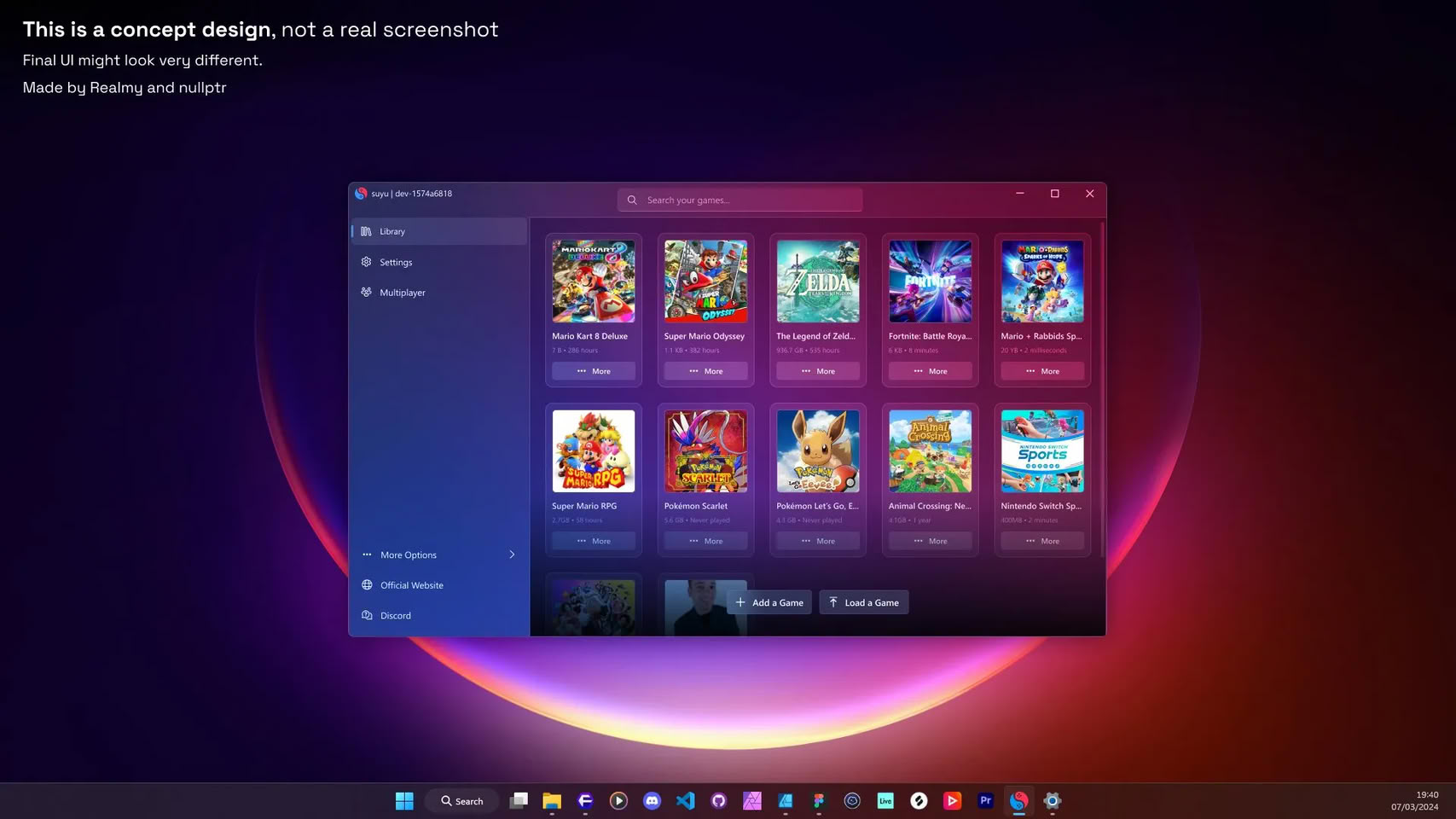
According to information released by the developer, the biggest highlight of this update is the introduction of new native code execution technology. Traditional Switch emulators usually require real-time conversion and interpretation of game code so that Switch games designed based on ARM architecture can run on personal computers based on x86 architecture. The new execution mechanism further reduces the performance loss during the conversion process, allowing the game to run closer to native programs.
The development team stated that this improvement has brought significant performance improvements in some games. Test results show that some games that are originally limited by CPU performance can achieve more stable frame rate performance, and the operating efficiency in certain scenarios is even close to native platform programs. For high-end PC gamers, this means less system overhead and a smoother gaming experience.
In addition to performance improvements, the new version also fixes a large number of compatibility issues and improves graphics rendering and memory management mechanisms. Several games that previously had abnormal performance have achieved better running results, and some long-standing stability issues have also been resolved.
However, just as the community was excited about this technological advancement, the development team also announced a disappointing decision: the current version will become the last major update version of the project.
Developers said that as Nintendo has continued to strengthen its legal crackdown on emulator projects in recent years, the entire emulator ecosystem has undergone significant changes. In the past few years, many well-known Switch emulator projects have closed or stopped development, and relevant developers have faced increasing legal and operational pressure. In this environment, the team decided that it had become unfeasible to move forward with the project.
According to the announcement, the currently released version will continue to be publicly available, but there will be no subsequent feature development plans. The team also won't continue to add new features or push for large-scale compatibility improvements.
Industry observers believe that this outcome is not surprising in the current environment. As Nintendo continues to strengthen its intellectual property protection, the field of Switch emulators has entered a stage of significant contraction. Many formerly active projects have either shut down completely or moved into private development, while the number of large projects maintained publicly continues to decrease.
It's worth noting that despite the cessation of development, the update itself remains significant. It demonstrates the new levels of performance optimization that modern emulator technology can achieve, and proves that the performance gap between emulators and native runs is shrinking through more advanced execution mechanisms.
This is certainly a complicated time for the emulator community. On the one hand, the developers successfully achieved an important technical goal that they had long pursued; on the other hand, the future development path of the project came to an end. In the end, this Switch emulator, which completed a major performance breakthrough before leaving the market, may become an important node in the development history of the entire Switch emulator with its last update.
Comments