
Abstract:
OpenAI announced that it will test a new visual advertising format in ChatGPT. When users generate pictures, advertisements showing product inspiration, product usage, or service experience may appear on the interface. OpenAI said that ads will be clearly labeled and separated from the images being generated, and will not directly embed or change user-created images; the company also reiterated that ads will not affect the answers given by ChatGPT.
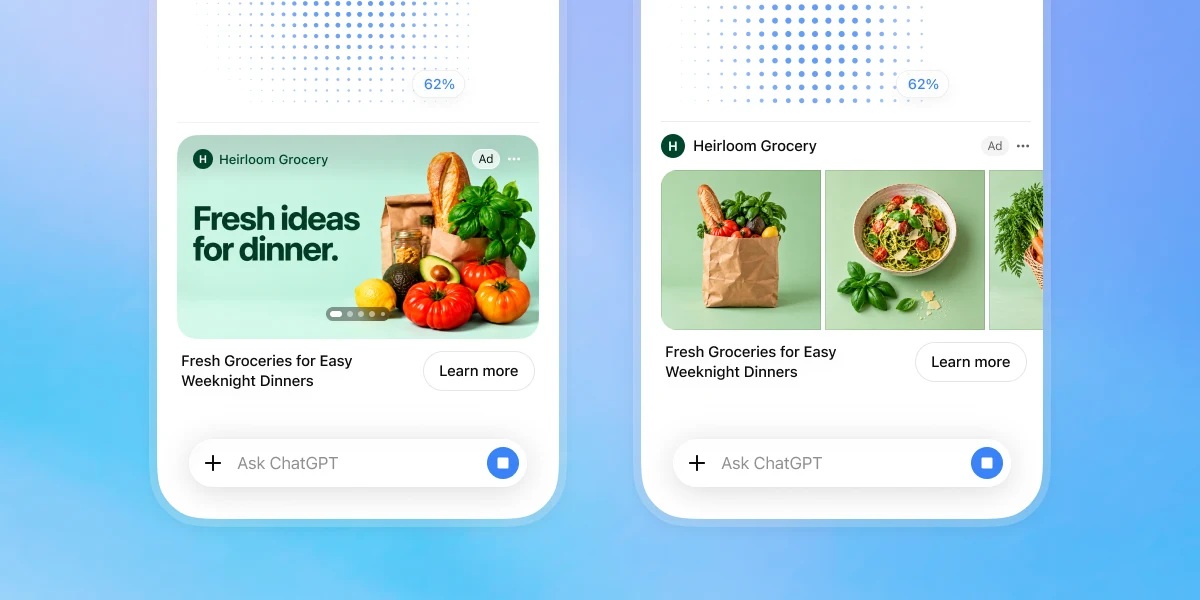
This test is expected to launch in the United States in late October and will only be available to a group of advertisers initially. OpenAI did not specify in the announcement which users or subscription levels will see visual ads. The launch this time is a new advertising format for ChatGPT’s existing advertising business, and it is not the first time advertising has entered ChatGPT. OpenAI said that ChatGPT currently reaches 1.2 billion people every week, and the advertising business will help it reach a larger user group that is difficult to reach through subscription services alone.
In addition to visual advertising, OpenAI will also expand advertising effect measurement tools and partner networks, allowing advertisers to access conversion data through services such as Hightouch, Tealium and LiveRamp, and use partners such as AppsFlyer, Adjust and Branch for website or app attribution. The company also works with DoubleVerify and Integral Ad Science to evaluate whether the ad display environment complies with brand safety requirements. OpenAI stated that relevant independent partners will check security measures in a controlled environment and will not obtain the content of users' private conversations.
OpenAI stated that the system will evaluate whether the conversation is suitable for displaying advertisements and avoid advertisements appearing in situations where the user is emotionally fragile, involves sensitive issues, or other inappropriate communication scenarios. Its advertising policy also restricts ads around sensitive topics such as politics, child safety, health, and self-harm, and requires ads to be clearly distinguished from ChatGPT’s own answers. The official announcement has not yet detailed the placement and frequency of ad placements in the specific test and how users can manage ad preferences.
Comments