
Abstract:
“I prefer to call it verification rather than proof.” Regarding the recent proof of the Riemann Hypothesis by AI-assisted mathematicians, Peter Sarnak, winner of the first Pan Chengdong Prize and Eugene Higgins Professor of Mathematics at Princeton University, said on the 25th.
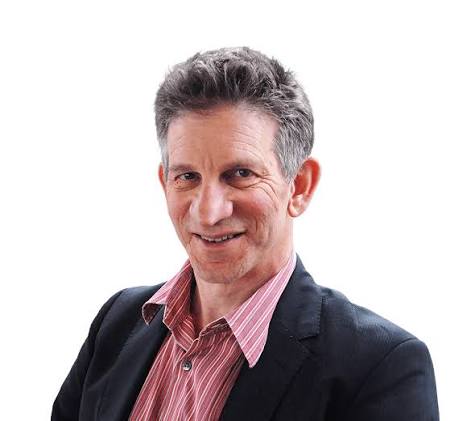
“The essence of mathematics is not only to discover ‘what is true’, but also to understand ‘why it is true’.” Sanak said. In his view, mathematical research is not only about getting a correct answer, but more importantly, understanding the logic behind the answer and transforming it into knowledge that humans can learn and communicate. "Once a proposition is proven, it becomes a theorem, which can be used as an established fact to deduce other conclusions. It can be traced back to the axiom itself. So I would like to make this distinction: In my opinion, only when we can understand it, explain it, and explain it clearly in an academic report, can this result be called a mathematical theorem. AI's verification of the Riemann Hypothesis has undoubtedly provided us with strong support, and a complete proof that humans can understand may not be far away."
Although AI has shown amazing capabilities in mathematical research, Sarnak still believes that AI cannot "start from scratch" in the field of mathematics. Its breakthroughs rely on the mathematical knowledge and theories accumulated by humans over a long period of time.
"The foundation of AI is mathematics. Now, AI is feeding back mathematics, which is exciting and disturbing." Sanak said that AI can not only help mathematicians solve difficult problems, but also help humans discover problems that have been ignored before. This also prompts mathematicians to rethink the way mathematical research is done.
“Mathematics is becoming ‘industrialised’.” Sanak said frankly that many mathematicians initially engaged in research work because they like to think quietly and independently. Today, AI has greatly accelerated the research process and changed the competitive landscape of scientific research. "In the past, mathematicians could openly share their ideas with their peers; now, some people are afraid to share their ideas easily because others may use your ideas and put them into AI to get results."
Faced with the opportunities and challenges brought by AI, Sarnak believes that the mathematics community needs to think about how to use this tool to enhance human understanding of mathematics. "Mathematics will get better and better, and we should remain optimistic," Sanak said.
For young mathematics scholars, Sarnak believes that they have a rare opportunity to define what mathematics will look like in the future.
Comments