
Abstract:
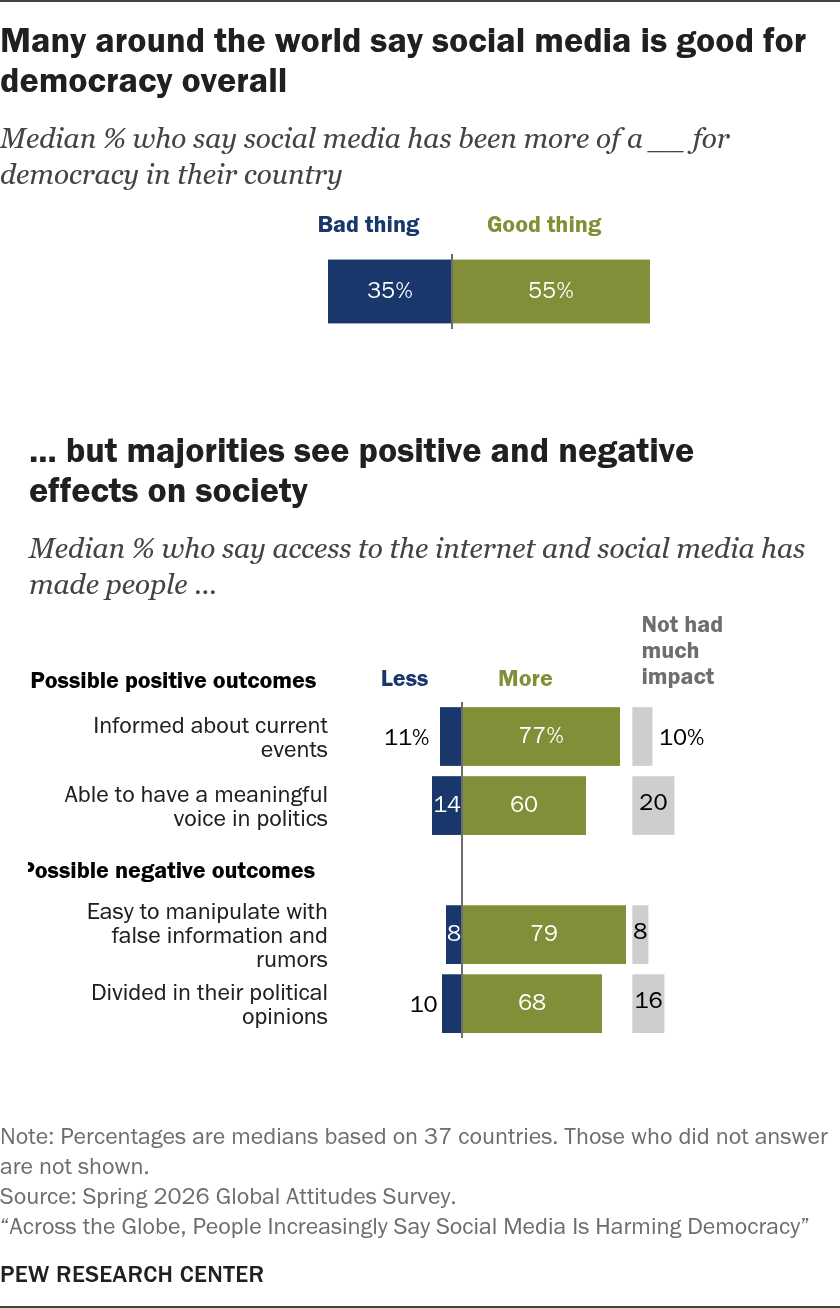
A Pew Research Center survey covering 37 countries shows that more and more people believe that social media is damaging democracy, and are particularly worried about disinformation and political polarization. However, the result is not that the majority of people around the world believe that social media is harmful: according to the national median, 55% believe that social media has generally done more harm than good to their country’s democracy, and 35% believe that it does more harm than good. The survey reflects respondent perceptions and is not a measurement of the actual causal impact of social media.
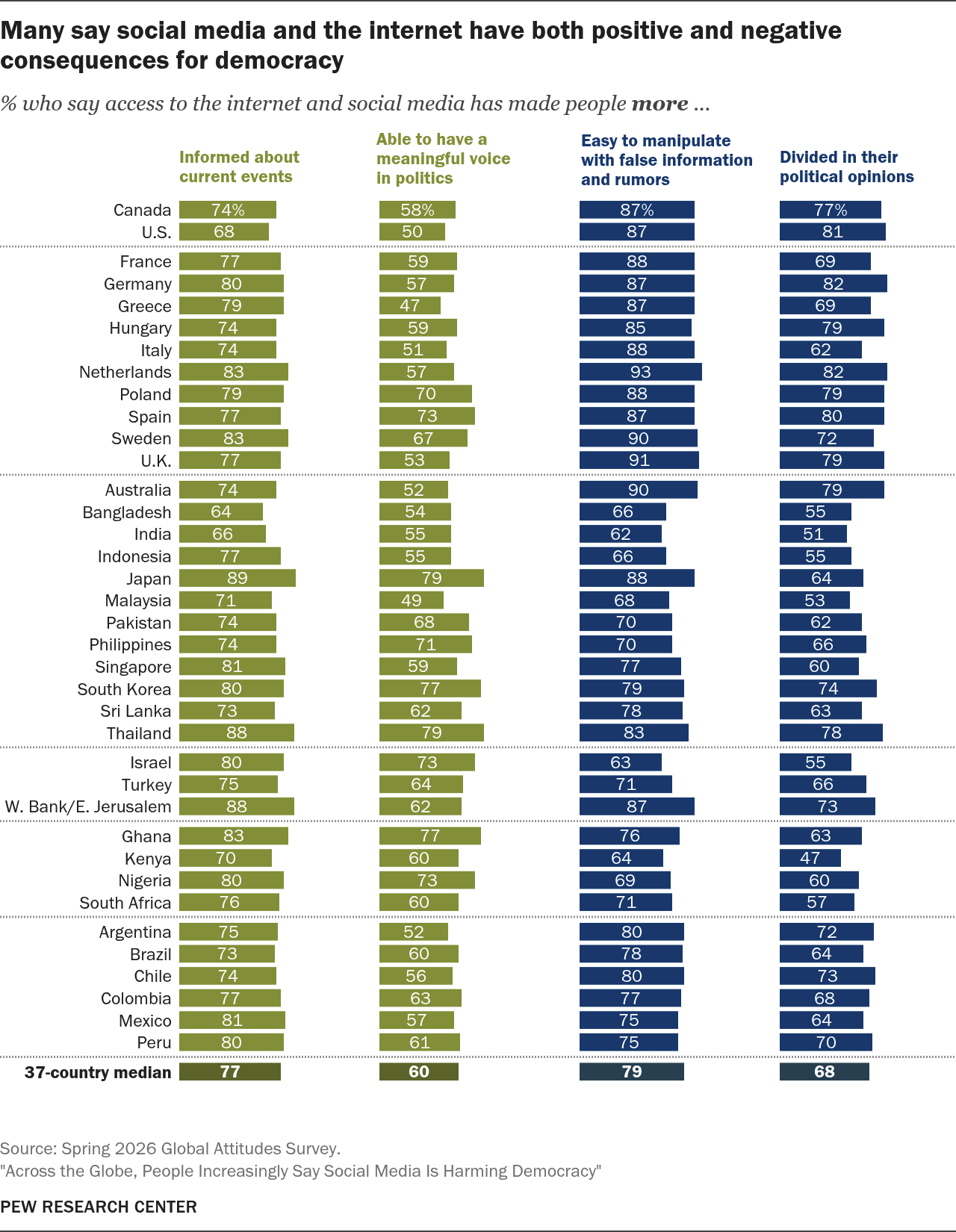
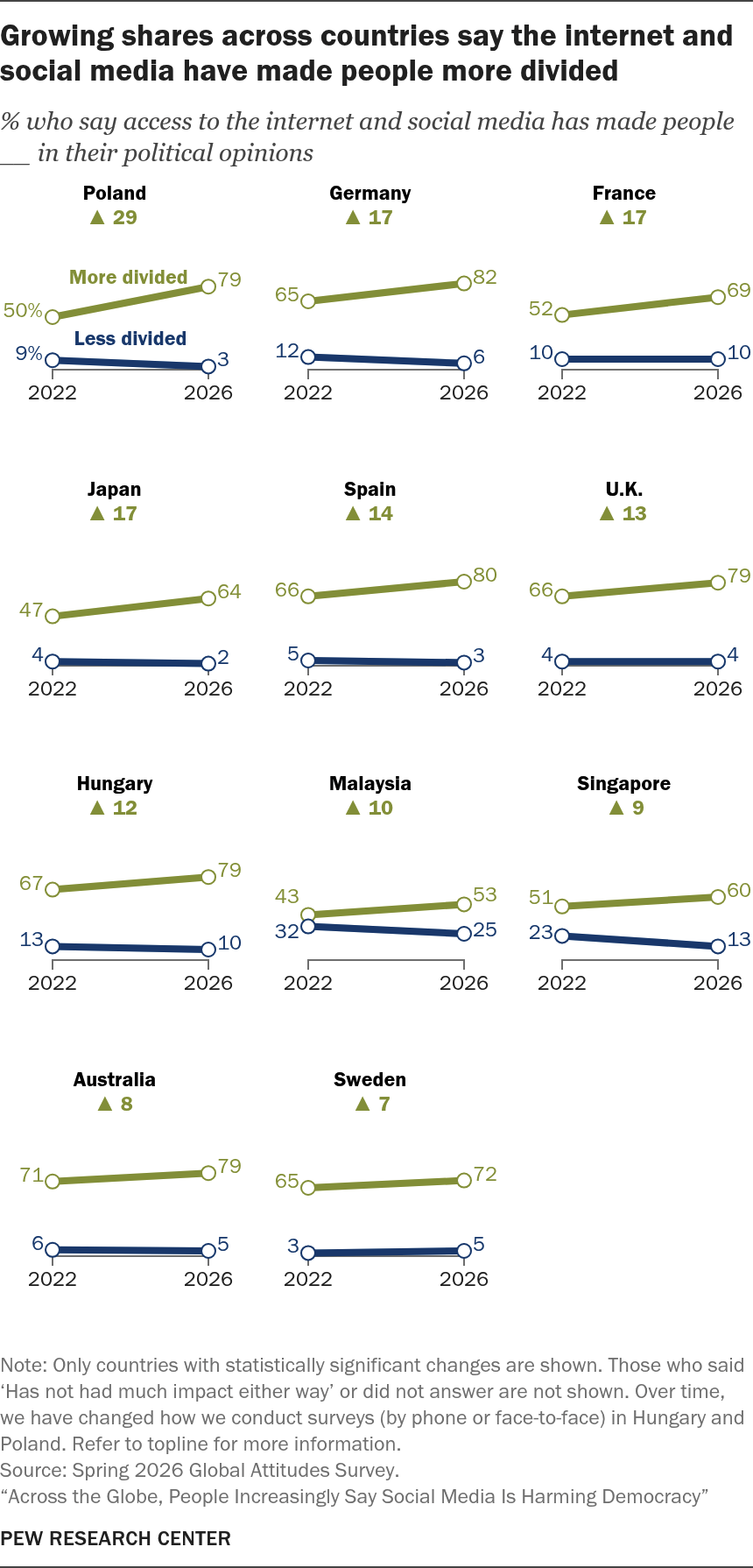
When asked about the specific impact of the Internet and social media on society, a cross-national median of 79% of respondents believed that these channels made people more susceptible to manipulation by false information and rumors; 68% believed that they made people's political views more divided. At the same time, 77% believe that social media makes people more aware of current affairs, and 60% believe that it gives people more opportunities to express their opinions in politics. Surveys reveal conflicting public assessments of its impact: it can expand access to information and political participation, but it can also foster misinformation and confrontation.
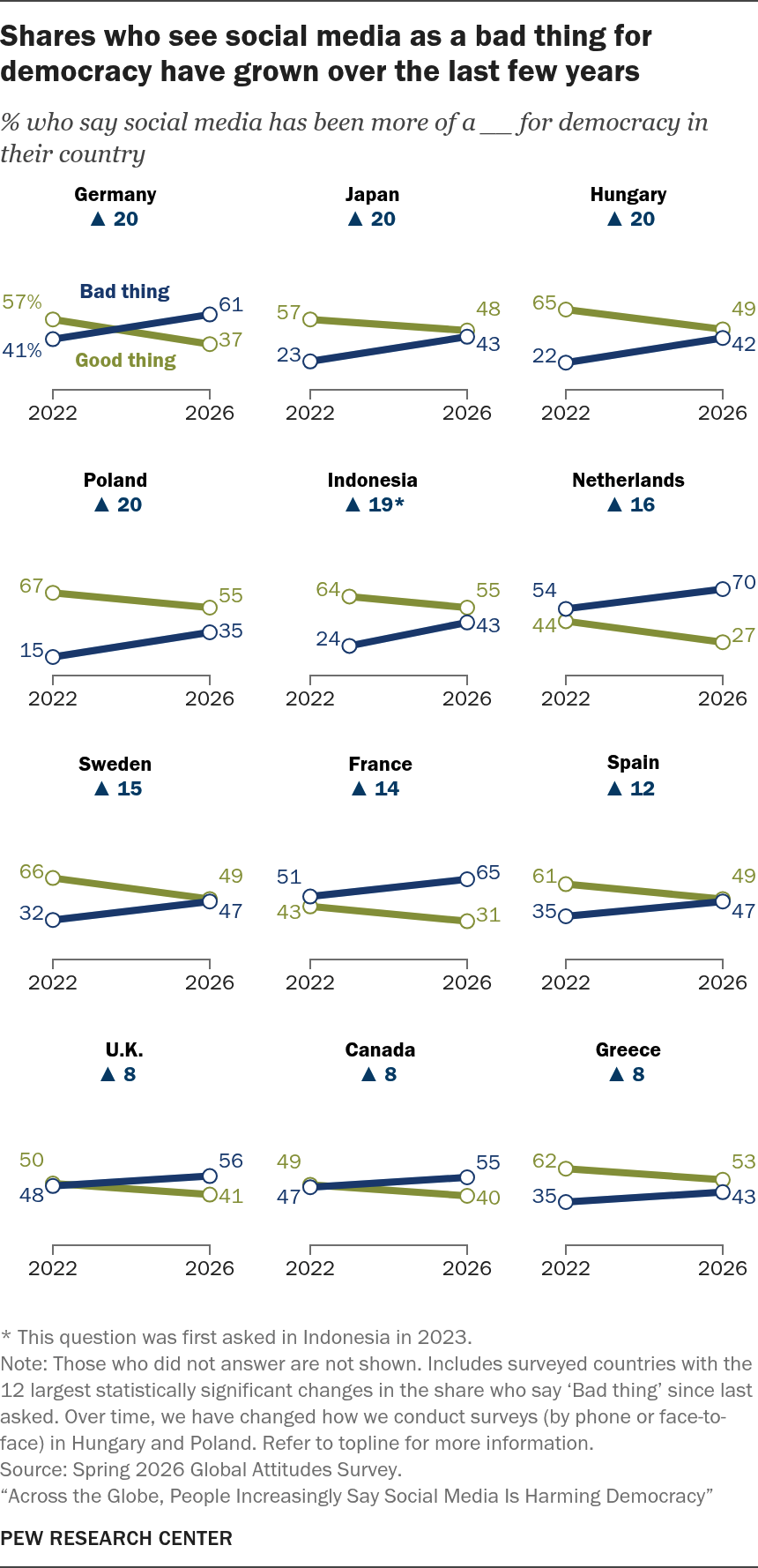
Among 26 countries with comparable historical data, 16 countries have seen a significant increase in the proportion of people who believe that social media is "bad for democracy" compared with the previous survey. 64% of adults surveyed in the United States believe that social media harms democracy, but this proportion is roughly the same as in 2022. The negative views in some European countries are more prominent: 70% in the Netherlands hold this view, up from 54% in 2022; 65% in France, up from 51% previously; and 61% in Germany, up from 41% previously. In contrast, most respondents in Thailand, Singapore, the Philippines and other places still believe that social media is generally beneficial to democracy.
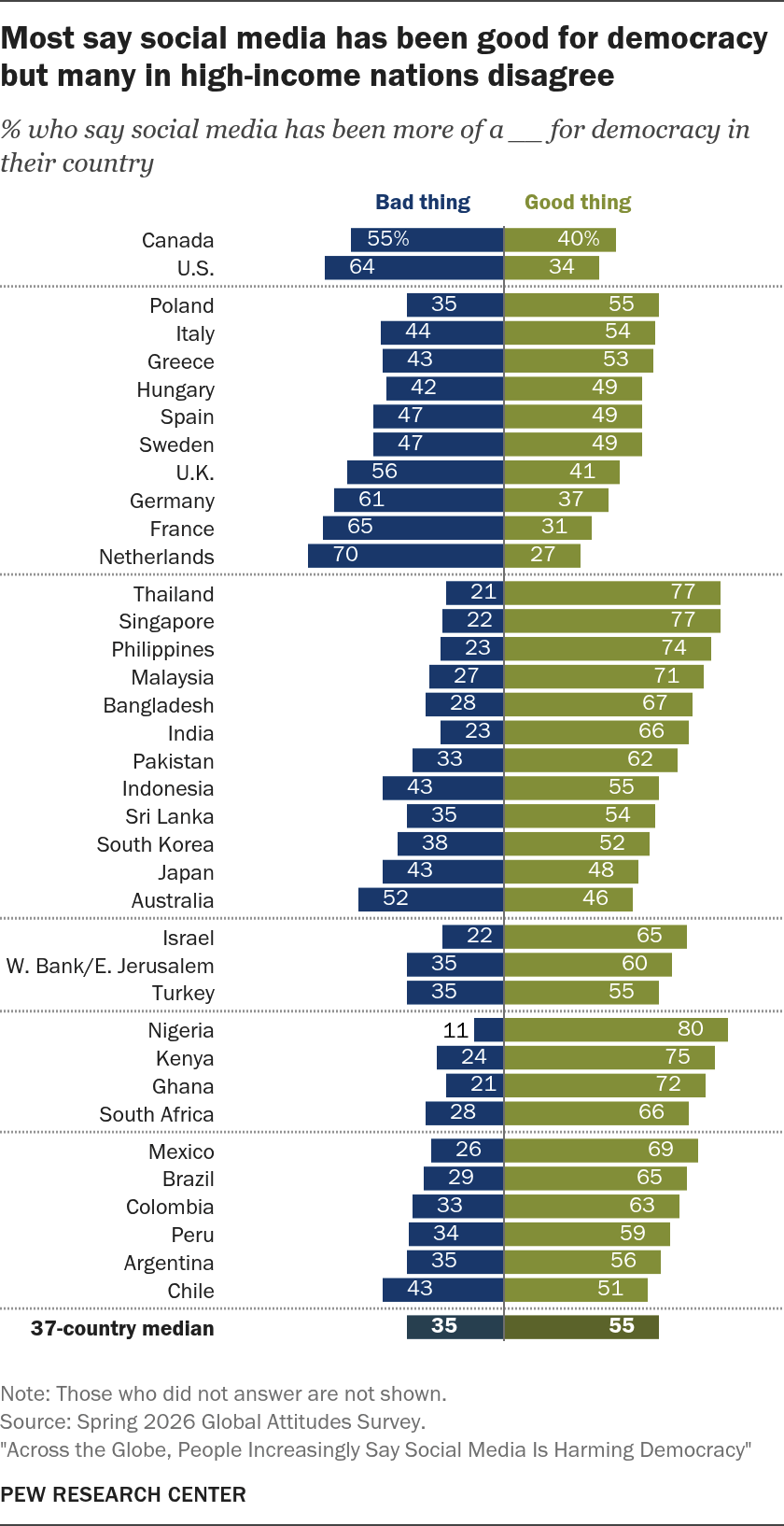
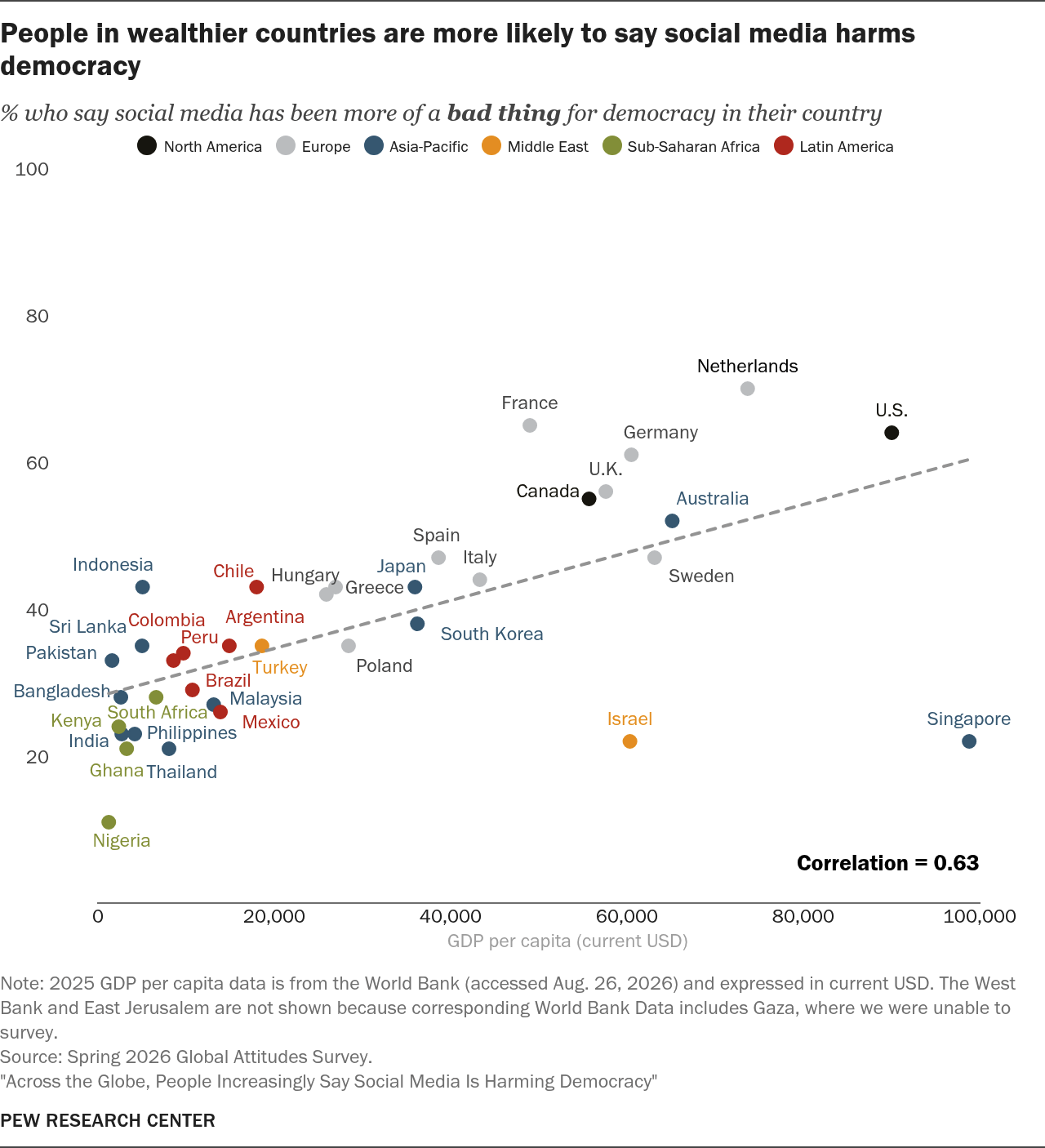
The survey also shows that respondents in high-income countries are generally more likely to believe that social media harms democracy, with at least half of the respondents in Australia, Canada, France, Germany, the Netherlands, the United Kingdom and the United States holding a negative view. However, this correlation is not absolute, as Singapore and Israel have relatively low proportions of negative reviews. Young people are generally more likely to believe that social media helps democracy; 60% of those aged 18 to 34 in the UK believe its impact is positive, compared with 31% of those aged 50 and over.
In Australia, 82% of adults support the government restricting the use of social media by people under the age of 16. The country has also proposed rules that would let users opt out of algorithmically recommended feeds. Platforms such as Meta, Snap and TikTok have faced multiple lawsuits related to user harm in recent years, and governments around the world are also increasing their scrutiny of platform privacy and content governance.
Pew interviewed 42,151 adults in 36 countries from February 8 to May 13, 2026, and combined data from two national surveys in the United States to make the results cover 37 countries. The U.S. samples were 3,507 and 5,511 respectively. The cross-country figures of 55%, 35%, etc. are the median proportions of each country, not the overall proportion calculated by combining all respondents; the differences between countries are large, so it cannot be generalized as a global opposition to social media.
Comments