
Abstract:
Scientists recently proposed a new theory that can predict how much heating power a future nuclear fusion device will need to enter an efficient confinement state, providing an important tool for solving one of the core problems faced by controllable nuclear fusion.
The story goes back to 1982. At that time, scientists studying nuclear fusion discovered an unexpected phenomenon in the experimental device: when the heating power reached a certain critical level, the fuel suddenly became better at retaining heat. The discovery provides clues to overcoming a major obstacle in fusion research, but more than four decades later, how to accurately predict the power required to trigger this change remains a problem.
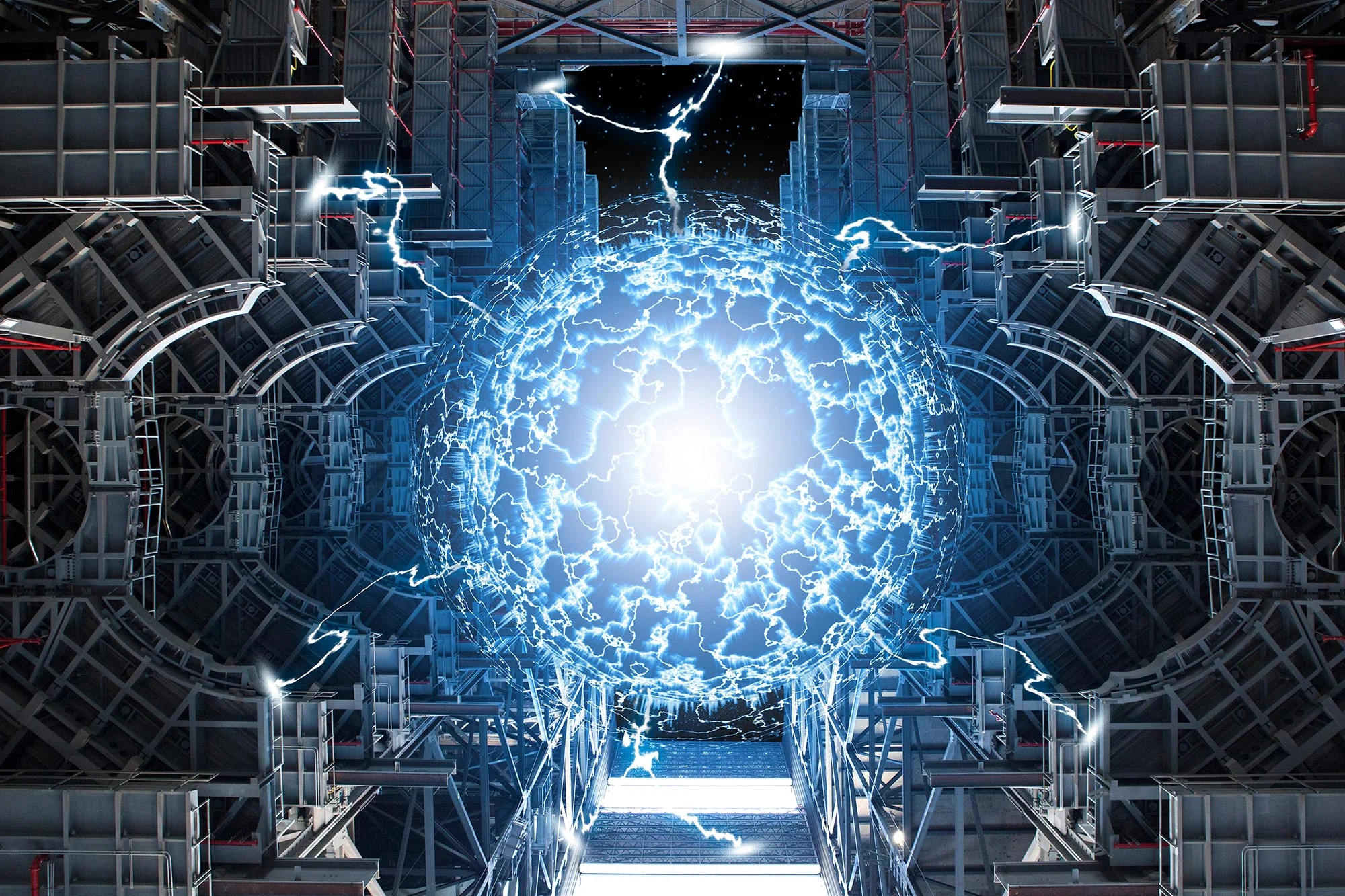
Nuclear fusion is the process in which light atomic nuclei combine and release energy. It is this mechanism that the sun relies on to generate heat and light. To recreate this process in a human-built device, the gas must be heated to extremely high temperatures, turning it into a plasma of charged particles. Tokamak devices use powerful magnetic fields to confine plasma in a donut-shaped vacuum chamber. However, fixing the plasma does not mean keeping it hot. Turbulence inside the plasma carries heat away, making it difficult to maintain the conditions needed for fusion.
The phenomenon discovered in 1982 occurs when the heating power exceeds a certain critical value. At this time, the turbulence near the edge of the plasma will suddenly weaken significantly, and the plasma will change from a low-confinement mode to a high-confinement mode. In high-constraint mode, energy is conserved more efficiently. Entering high-confinement mode is critical for future fusion reactors, but the heating power required depends on several factors, including the density of plasma particles and the direction of the magnetic field. Existing theories have struggled to explain these effects simultaneously.
In a study published in Physical Review Letters, Brenno DeLuca, a doctoral assistant at the Swiss Plasma Center at the Ecole Polytechnique Fédérale de Lausanne in Switzerland, led a team to propose a unified theoretical framework that incorporates the above effects into the same set of physical descriptions. The researchers used computer simulations to reproduce the changes in the plasma inside the tokamak as the heating power increases, identify the physical processes that lead to the mode conversion, build a mathematical model, and compare the predictions with experimental measurements of existing tokamak.
The results show that turbulence produces flows with different speeds inside the plasma. In the peripheral regions, adjacent plasma layers slide past each other at different speeds, disrupting the turbulent motions that create these flows in the first place. When turbulence is suppressed, heat loss is reduced and the plasma is able to retain more energy. The researchers also found that the direction of the magnetic field, the motion of the plasma, and collisions between particles all work together to make highly constrained modes easier to achieve in one magnetic field configuration than another.
Plasma density brings another layer of complexity. Increasing density sometimes reduces the heating power required to enter high-confinement mode, and sometimes increases it. The researchers derived equations that describe these changes and other operating conditions, explaining why there is a specific density that minimizes heating power requirements.
This model can also help determine whether future fusion devices will have enough heating capacity to enter high-confinement mode. For ITER, the world's largest international fusion project under construction in France, researchers predict that its minimum heating demand will be 43 megawatts, significantly lower than its planned heating capacity of 73 megawatts. For the compact tokamak SPARC developed by Federal Fusion Systems, the prospects are even more tense. Its forecast minimum heating demand is 26 MW, slightly higher than the planned 25 MW heating capacity, leaving little room for uncertainty.
This research is titled "Power Threshold Theory for Transition from Low Constraint to High Constraint in Tokamak" and was jointly completed by DeLuca, Ricci, Rabbitt, Mancini, Stenger and Techioli, and was published on November 13, 2026. The research was supported by the European Fusion Consortium, the European Union's Euroatomic Research and Training Programme, the Swiss Federal Secretariat of State for Educational Research and Innovation, the Swiss National Science Foundation and the Swiss National Supercomputing Center.
Comments