
Abstract:
Researchers at the Karlsruhe Institute of Technology (KIT) in Germany recently confirmed that ordinary Wi-Fi communication traffic is enough to identify specific individuals with close to 100% accuracy. The entire process does not require cameras or special sensing hardware, and the monitored person does not even need to carry any equipment with him.
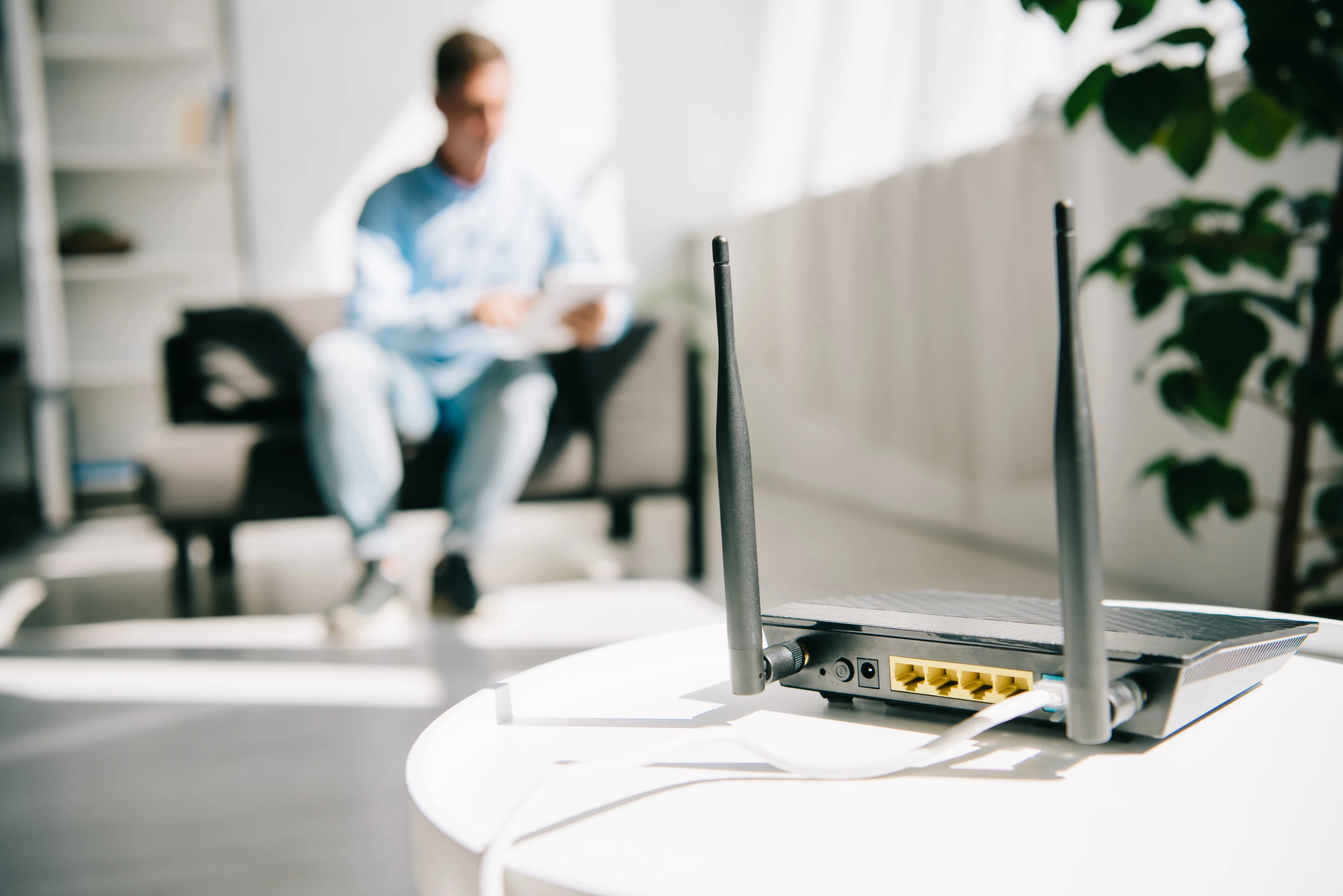
研究团队开发的这套系统利用机器学习技术,分析Wi-Fi设备本就持续发往路由器的信息。当一个人在房间内移动时,其身体会以特定方式扰动空间中传播的无线电波,这些扰动携带着足够的生物特征信息,使系统能够"学习"识别出某个人,并将其与其他人区分开来,效果堪比一种"无线电指纹"。
In a study involving 197 participants, the system was able to accurately identify individuals regardless of the viewing angle or changes in walking posture. Once the underlying machine learning model is trained, tagging someone's identity takes only seconds.
关键在于一种名为"波束成形反馈信息"(Beamforming Feedback Information,简称BFI)的数据。为了维持连接稳定,手机或笔记本电脑会持续向路由器反馈其接收信号的具体情况,以便路由器更精准地调整发射方向,而Wi-Fi设备会不断产生这类BFI反馈数据。
无线电波在房间内四处反弹并覆盖房间中的一切物体,包括人体本身。每个人独特的体型、身高与姿态都会以带有个人特征的方式扭曲这些电波。只要人工智能模型获取了足够多的这类扭曲数据,就能学习到某人独有的"无线电签名",其原理与基于摄像头的人脸识别系统颇为相似。
Worryingly, BFI data is not encrypted during transmission. A malicious device can intercept this data without breaking into the Wi-Fi network - since the beamforming reports are sent back to the access point in clear text, any Wi-Fi adapter in listening mode within the signal range can passively record this information. More importantly, the identified subject does not even need to own any of the devices involved: whether it is in a cafe or an airport, as long as there is communication traffic between someone else's router and someone else's laptop, it is enough to form a radio field that disturbs the body and generates a personal signature.
There’s also something troubling about this technology: it’s not fooled by common evasions. If a system only relies on gait to identify people, it can get away by changing the way it walks; if the system can only identify people head-on, it can avoid them by walking sideways. However, after testing, this radio signature maintains stable recognition accuracy under different observation angles and different gaits, and its reliability even exceeds camera recognition.
需要说明的是,该系统的工作原理类似指纹扫描仪:它能够捕捉到一个人的"签名",却并不会自动知晓这个人是谁,必须先有参考记录作为比对基础。在研究人员的主要实验中,机器学习模型先通过每位参与者的若干段记录进行训练,随后被要求判断新记录出自哪位已知参与者。不过,这一限定条件几乎无法消除公众对隐私问题的担忧。
Unlike fingerprint recognition, someone typically has to capture your fingerprint first and associate it with your identity, often knowingly when you press a fingerprint scanner. In contrast, a person just walks through a space covered by Wi-Fi signals, without touching anything, carrying any equipment, or even knowing it, and his or her radio fingerprint may be collected.
Even more worrisome is the fact that Wi-Fi devices are almost everywhere. Wi-Fi networks are running all the time in homes, offices, airports, cafes and shops around the world, providing an extremely large application space for this type of technology. By contrast, the camera, however unsettling, is at least visible—people can see it, avoid its lens, or point directly at it in meetings to raise objections.
The monitoring layer built based on the Wi-Fi network that already exists in the wall will not arouse any suspicion at all. Researchers warn that this is precisely the danger. In particular, they note that in some authoritarian institutional settings, this method may be used to surveil protesters without leaving obvious hardware traces that usually reveal surveillance operations.
研究团队并未止步于发出警告,而是致力于从标准层面推动解决方案。他们希望将隐私保护机制直接内置于即将出台的Wi-Fi新标准IEEE 802.11bf之中——该标准将使无线感应能力正式化,团队将此视为在这项能力大规模扩散之前、将保护措施植入协议本身的最后一次"干净"机遇。这项研究获得了德国亥姆霍兹联合会"工程安全系统"项目的资助,研究团队采集的197人数据集已面向非商业研究用途公开发布,供其他团队进一步探究这种攻击手段及相应防御措施。
The team’s research results, "BFId: Identity Inference Attack Using Beamforming Feedback Information," were published at the ACM Conference on Computer and Communications Security (CCS) in Taipei.
Comments